Small family farmer tending to organic vegetables
1344×768 · AVIF · CC BY 4.0
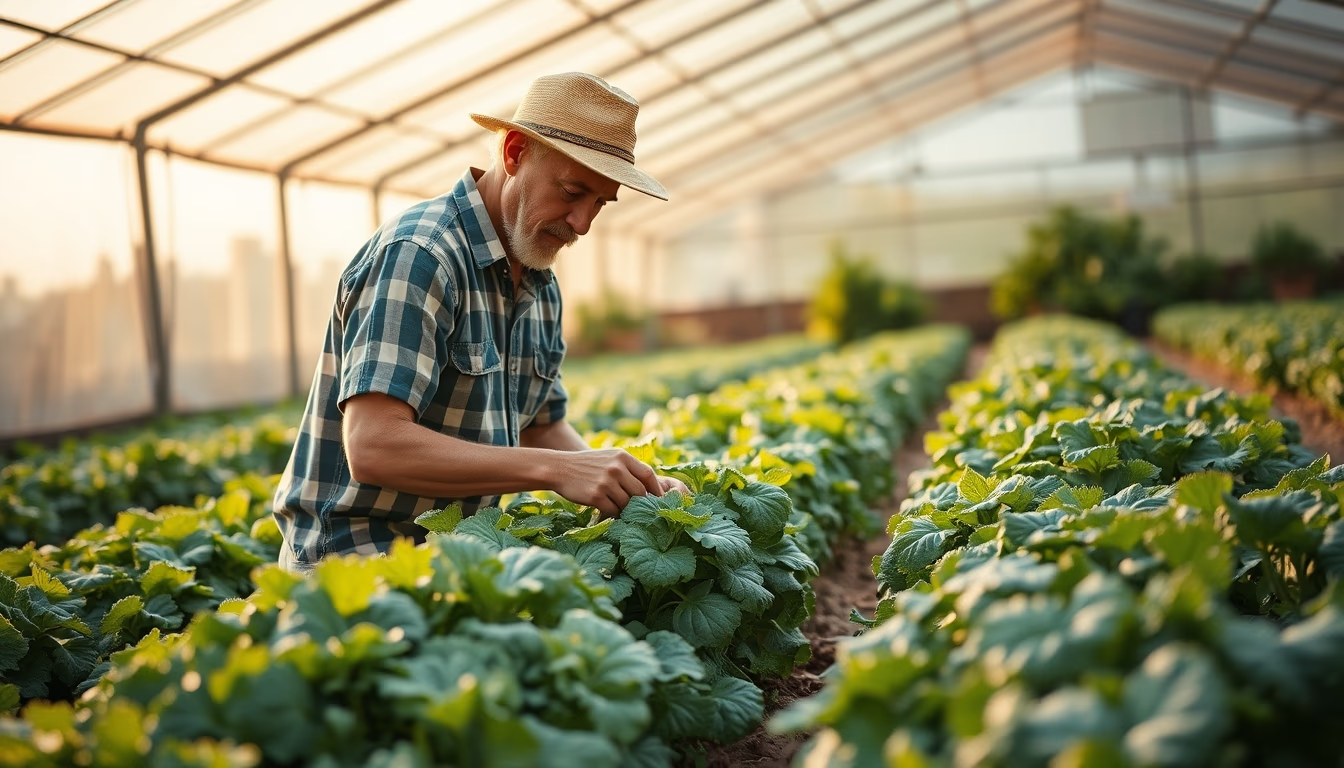
Small family farmer tends to organic vegetables in an agroecological system in Brazil.
About this subject
Family organic farming is a cornerstone of food security in Brazil, responsible for about 70% of food consumed in the country, according to IBGE. These producers, working on areas up to 4 fiscal modules, use practices like crop rotation, composting, and biological pest control to maintain soil fertility without pesticides. Growing organic vegetables such as lettuce, arugula, and tomatoes is common on small rural properties, especially in the South and Southeast regions, where demand for healthy food is steadily increasing.
Agroecology, the foundation of this system, combines traditional knowledge with modern sustainable management techniques. Unlike conventional agriculture, it prioritizes biodiversity and conservation of natural resources. In Brazil, organic production is regulated by Law 10.831/2003, which requires certification for commercialization. Many family farmers organize into cooperatives to obtain the Organic Brazil seal and access local markets, such as street fairs and institutional purchase programs.
Beyond environmental benefits, family organic farming generates income and keeps families in rural areas. Data from the 2017 Agricultural Census show that over 80% of Brazilian rural establishments are family-run, and organic production has grown at double-digit annual rates. Practices like green manure and biofertilizers reduce costs and improve long-term soil quality.
The farmer pictured works on a cloudy day, a condition that favors vegetable management by reducing plant water stress. Small-scale crop diversification is a common strategy to ensure harvests throughout the year and minimize economic risks. This approach contrasts with large-scale agribusiness, focusing on resilience and local food sovereignty.
Frequently Asked Questions
What is family organic farming?
It is a production system where the family owns and manages the land, using organic methods without pesticides, prioritizing sustainability and biodiversity.
Why is family farming important for Brazil?
It is responsible for about 70% of food consumed domestically, contributing to food security, job creation, and keeping rural populations in the countryside.
How does a family farmer obtain organic certification?
The producer must follow the rules of Law 10.831/2003, undergo an audit by an accredited certification body, or participate in a participatory guarantee system.
Direct URL
https://pub-c7d6a6ea828543ac903a74a341ccb2e1.r2.dev/imagens/small-family-farmer-tending-to-organic-vegetables-editorial-overcast-daytime-6.avifHow to credit
Include a visible link back to UtilizAí. Copy one of the snippets below:
<a href="https://xn--utiliza-eza.com/en/midia/imagens/small-family-farmer-tending-to-organic-vegetables-editorial-overcast-daytime-6">Small family farmer tending to organic vegetables</a> by <a href="https://xn--utiliza-eza.com">UtilizAí</a>, licensed under <a href="https://creativecommons.org/licenses/by/4.0/">CC BY 4.0</a>.
[Small family farmer tending to organic vegetables](https://xn--utiliza-eza.com/en/midia/imagens/small-family-farmer-tending-to-organic-vegetables-editorial-overcast-daytime-6) by [UtilizAí](https://xn--utiliza-eza.com), CC BY 4.0
License: CC-BY-4.0