Small family farmer tending to organic vegetables
1344×768 · AVIF · CC BY 4.0
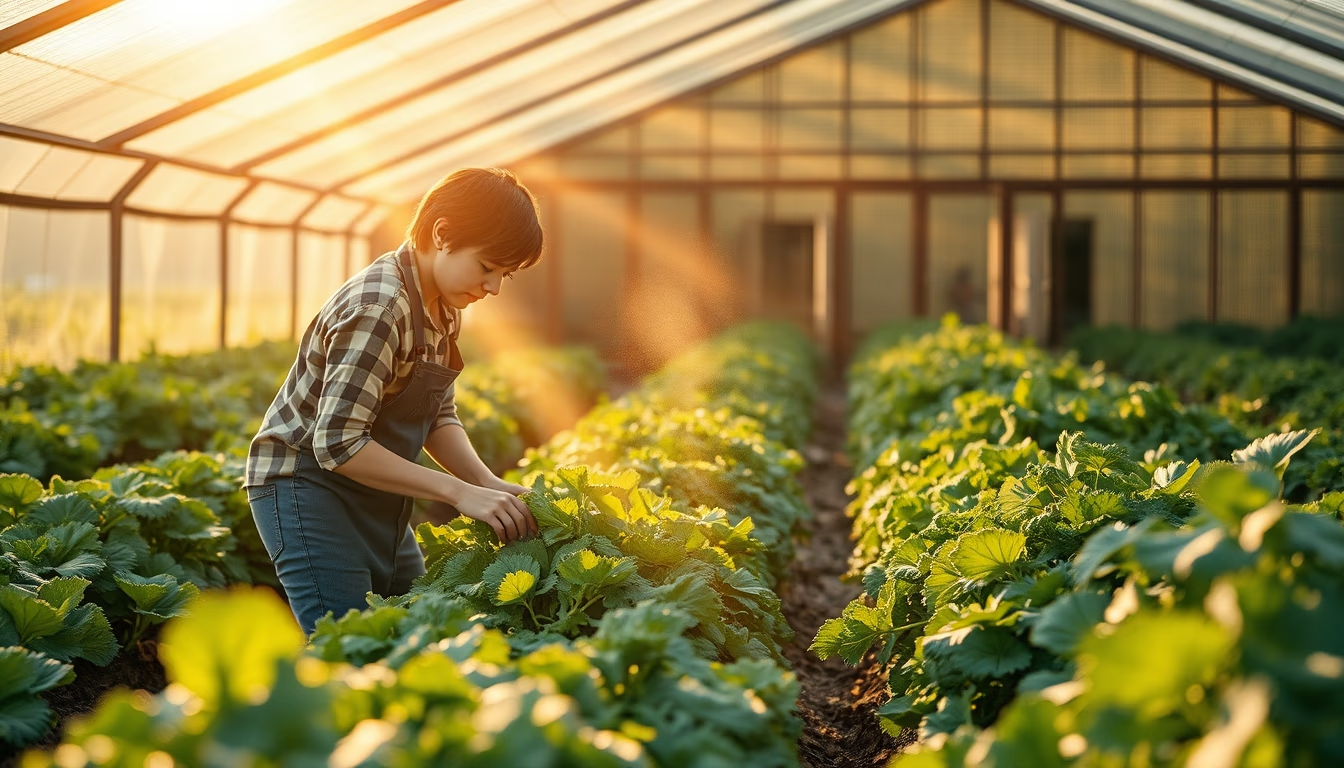
Small family farmer tends to organic vegetables on a rural property under overcast skies, a practice that strengthens local food security.
About this subject
Family-based organic farming is a cornerstone of healthy food production in Brazil. According to the 2017 Agricultural Census by IBGE, around 77% of agricultural establishments in Brazil are family farms, responsible for 23% of total agricultural production value. A growing share of these adopt organic practices, which exclude synthetic pesticides and fertilizers, prioritizing soil and consumer health.
Growing organic vegetables requires technical knowledge of crop rotation, composting, and biological pest control. Many small producers follow Law 10.831/2003, which regulates organic production in the country, and seek participatory or third-party certification. In regions such as Serra Gaúcha and southern Minas Gerais, cooperatives of organic family farmers organize to sell at farmers' markets and through school feeding programs like PNAE (National School Feeding Program).
Overcast weather, as depicted in the image, is favorable for planting leafy greens like lettuce, arugula, and spinach, as it reduces evapotranspiration and water stress on plants. However, very cloudy days may require monitoring for fungi, since high humidity favors diseases. Experienced farmers use mulch and drip irrigation systems to maintain balance.
Small-scale organic production also has social impact: it generates income for rural families, keeps people on the land, and provides more nutritious food for the community. Studies by Embrapa indicate that organic vegetable gardens can produce up to 30% more nutrients per hectare compared to conventional ones, while also contributing to soil carbon sequestration.
Frequently Asked Questions
What certifications are required to sell organic products in Brazil?
Organic production in Brazil is regulated by Law 10.831/2003. To sell, producers must obtain third-party certification or participate in Participatory Guarantee Systems (PGS), recognized by the Ministry of Agriculture.
Is family organic farming more productive than conventional farming?
In terms of yield per area, organic farming can be similar or slightly lower. However, studies show it generates higher added value, lower environmental impact, and higher nutrient content, such as antioxidants and vitamins.
How does overcast weather affect vegetable cultivation?
Overcast days reduce evapotranspiration and water stress, benefiting leafy greens. However, high humidity can increase fungal incidence. Farmers should monitor and, if needed, use biofungicides or improve ventilation.
Direct URL
https://pub-c7d6a6ea828543ac903a74a341ccb2e1.r2.dev/imagens/small-family-farmer-tending-to-organic-vegetables-editorial-overcast-daytime.avifHow to credit
Include a visible link back to UtilizAí. Copy one of the snippets below:
<a href="https://xn--utiliza-eza.com/en/midia/imagens/small-family-farmer-tending-to-organic-vegetables-editorial-overcast-daytime">Small family farmer tending to organic vegetables</a> by <a href="https://xn--utiliza-eza.com">UtilizAí</a>, licensed under <a href="https://creativecommons.org/licenses/by/4.0/">CC BY 4.0</a>.
[Small family farmer tending to organic vegetables](https://xn--utiliza-eza.com/en/midia/imagens/small-family-farmer-tending-to-organic-vegetables-editorial-overcast-daytime) by [UtilizAí](https://xn--utiliza-eza.com), CC BY 4.0
License: CC-BY-4.0