Small family farmer tending to organic vegetables
1344×768 · AVIF · CC BY 4.0
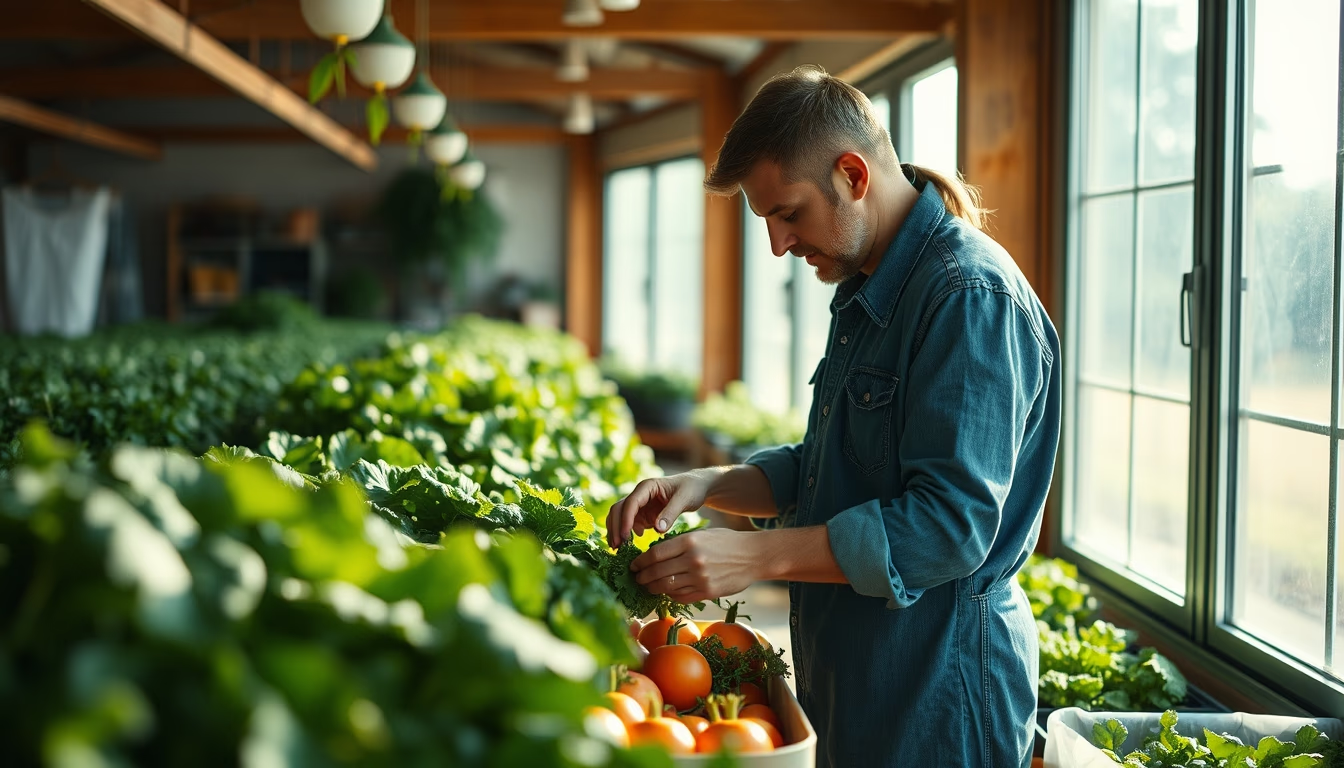
A small family farmer tends organic vegetables at dawn, a growing practice in Brazil that combines food security and environmental preservation.
About this subject
Family organic farming is gaining ground in Brazil, especially among small producers seeking sustainable alternatives to conventional models. According to the 2017 Agricultural Census, over 80% of rural establishments in Brazil are family farms, responsible for about 70% of the food consumed in the country. A growing share of these adopt organic methods, free from pesticides and synthetic fertilizers, prioritizing soil health and biodiversity.
Work often starts early, still under the morning dew. The farmer checks the development of vegetables like lettuce, arugula, and tomatoes, and performs manual harvesting, ensuring the quality of products that will supply farmers' markets and local food baskets. Organic management requires specific technical knowledge: crop rotation, composting, biological pest control, and the use of green manures, such as sunn hemp, which fixes nitrogen in the soil.
Beyond environmental benefits, family organic production strengthens local economies and preserves culinary traditions. Studies by Embrapa indicate that each Brazilian real invested in organic family farming generates up to three reais in socio-environmental benefits. However, producers face challenges such as costly certification and competition with large monocultures. Even so, the number of organic family farmers grew 30% between 2017 and 2022, driven by public policies like the Food Acquisition Program (PAA) and incentives for organic markets.
The scene depicted in the image is common in regions like southern Brazil, where family farming has a strong tradition, but is also expanding to the Northeast and the Cerrado. The practice not only ensures healthier food but also promotes rural succession, with young people increasingly interested in agroecological techniques. The small family farmer who cultivates organics is thus an agent of transformation, connecting food production, land care, and social justice.
Frequently Asked Questions
What is organic family farming?
It is an agricultural production system carried out by small rural producers, based on sustainable practices that exclude the use of pesticides and synthetic fertilizers, valuing biodiversity and ecological balance.
What are the main challenges for organic family farmers in Brazil?
The main challenges include the high cost of organic certification, competition with large conventional producers, lack of specialized technical assistance, and limited market access.
How does organic family farming contribute to sustainability?
It promotes soil and water conservation, reduces pesticide contamination, increases local biodiversity, and decreases greenhouse gas emissions, while strengthening the local economy and food security.
Direct URL
https://pub-c7d6a6ea828543ac903a74a341ccb2e1.r2.dev/imagens/small-family-farmer-tending-to-organic-vegetables-documentary-morning-5.avifHow to credit
Include a visible link back to UtilizAí. Copy one of the snippets below:
<a href="https://xn--utiliza-eza.com/en/midia/imagens/small-family-farmer-tending-to-organic-vegetables-documentary-morning-5">Small family farmer tending to organic vegetables</a> by <a href="https://xn--utiliza-eza.com">UtilizAí</a>, licensed under <a href="https://creativecommons.org/licenses/by/4.0/">CC BY 4.0</a>.
[Small family farmer tending to organic vegetables](https://xn--utiliza-eza.com/en/midia/imagens/small-family-farmer-tending-to-organic-vegetables-documentary-morning-5) by [UtilizAí](https://xn--utiliza-eza.com), CC BY 4.0
License: CC-BY-4.0