Small family farmer tending to organic vegetables
1344×768 · AVIF · CC BY 4.0
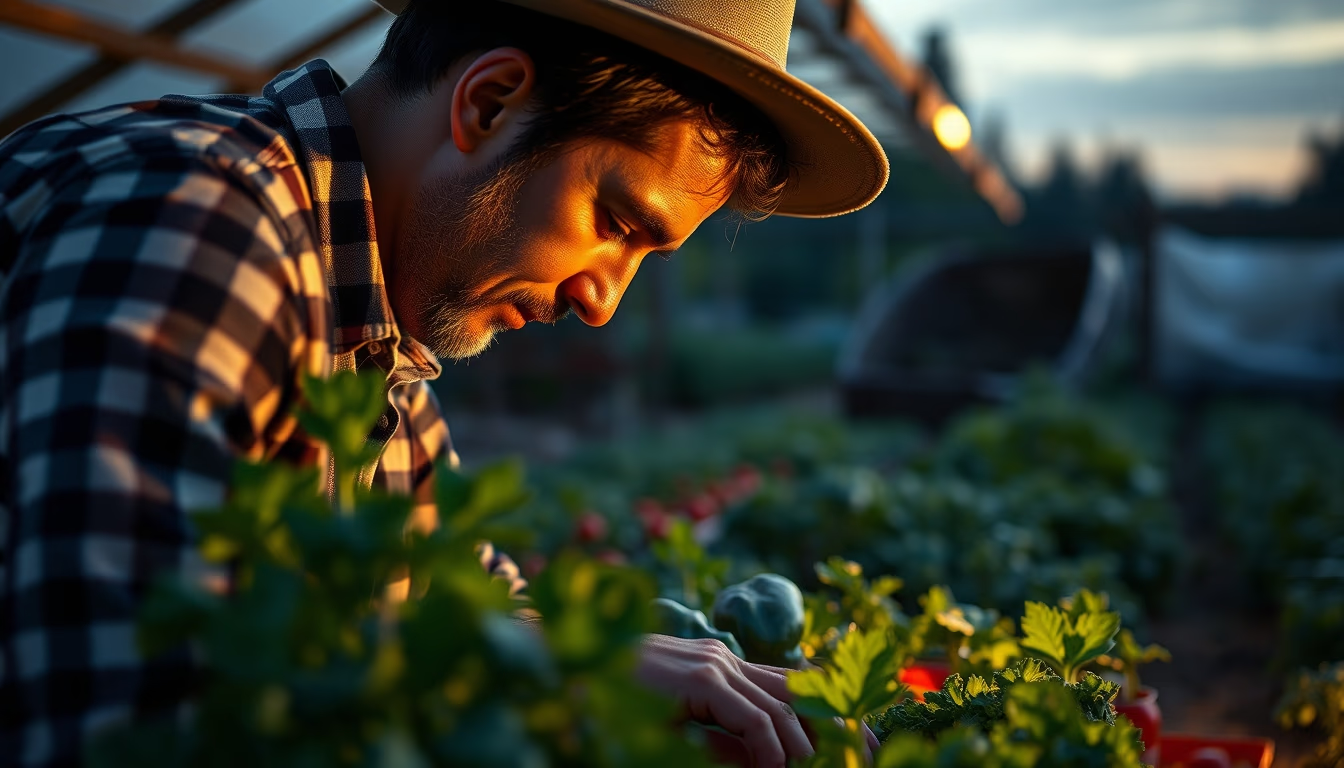
Family farmer tends organic vegetables at dusk, a practice that strengthens food security and local economies in Brazil.
About this subject
Family organic farming is a cornerstone of healthy food production in Brazil. According to the latest IBGE agricultural census, family farms account for 77% of all agricultural establishments, occupying 23% of the total area, yet they produce 87% of cassava, 70% of beans, and 34% of rice. Organic production grows at double-digit rates annually, driven by demand for pesticide-free food and sustainable practices. Family farmers, often linked to rural and traditional communities, play a crucial role in biodiversity conservation, water management, and preserving native seed varieties.
Organic vegetable cultivation, including lettuce, tomatoes, carrots, and kale, follows ecological principles: green manure, composting, crop rotation, and biological pest control. Organic certification, regulated by the Ministry of Agriculture, ensures strict compliance without synthetic inputs. In Brazil, organic farming is strongest in the South and Southeast, but is expanding into the Northeast and Midwest, especially in agroforestry systems for vegetables.
Beyond nutrition, family organic farming generates income and keeps people in rural areas. Programs like the Food Acquisition Program (PAA) and the National School Feeding Program (PNAE) prioritize purchasing organic products from family farms, benefiting millions of students and low-income families. The twilight work captured in the image reflects the farmer's dedication, often performing manual harvesting and soil preparation with traditional tools, ensuring direct contact with the land and high-quality food.
Frequently Asked Questions
What is family organic farming?
It is an agricultural system run by families, without synthetic pesticides or fertilizers, using ecological practices such as composting and crop rotation.
Why is family farming important in Brazil?
It produces a large share of the country's food, including cassava, beans, and vegetables, while creating rural jobs and preserving biodiversity.
How to get organic certification in Brazil?
Producers must follow Ministry of Agriculture standards and undergo audits by accredited certifying bodies to verify the absence of synthetic inputs and sustainable practices.
Direct URL
https://pub-c7d6a6ea828543ac903a74a341ccb2e1.r2.dev/imagens/small-family-farmer-tending-to-organic-vegetables-closeup-twilight-6.avifHow to credit
Include a visible link back to UtilizAí. Copy one of the snippets below:
<a href="https://xn--utiliza-eza.com/en/midia/imagens/small-family-farmer-tending-to-organic-vegetables-closeup-twilight-6">Small family farmer tending to organic vegetables</a> by <a href="https://xn--utiliza-eza.com">UtilizAí</a>, licensed under <a href="https://creativecommons.org/licenses/by/4.0/">CC BY 4.0</a>.
[Small family farmer tending to organic vegetables](https://xn--utiliza-eza.com/en/midia/imagens/small-family-farmer-tending-to-organic-vegetables-closeup-twilight-6) by [UtilizAí](https://xn--utiliza-eza.com), CC BY 4.0
License: CC-BY-4.0