Small family farmer tending to organic vegetables
1344×768 · AVIF · CC BY 4.0
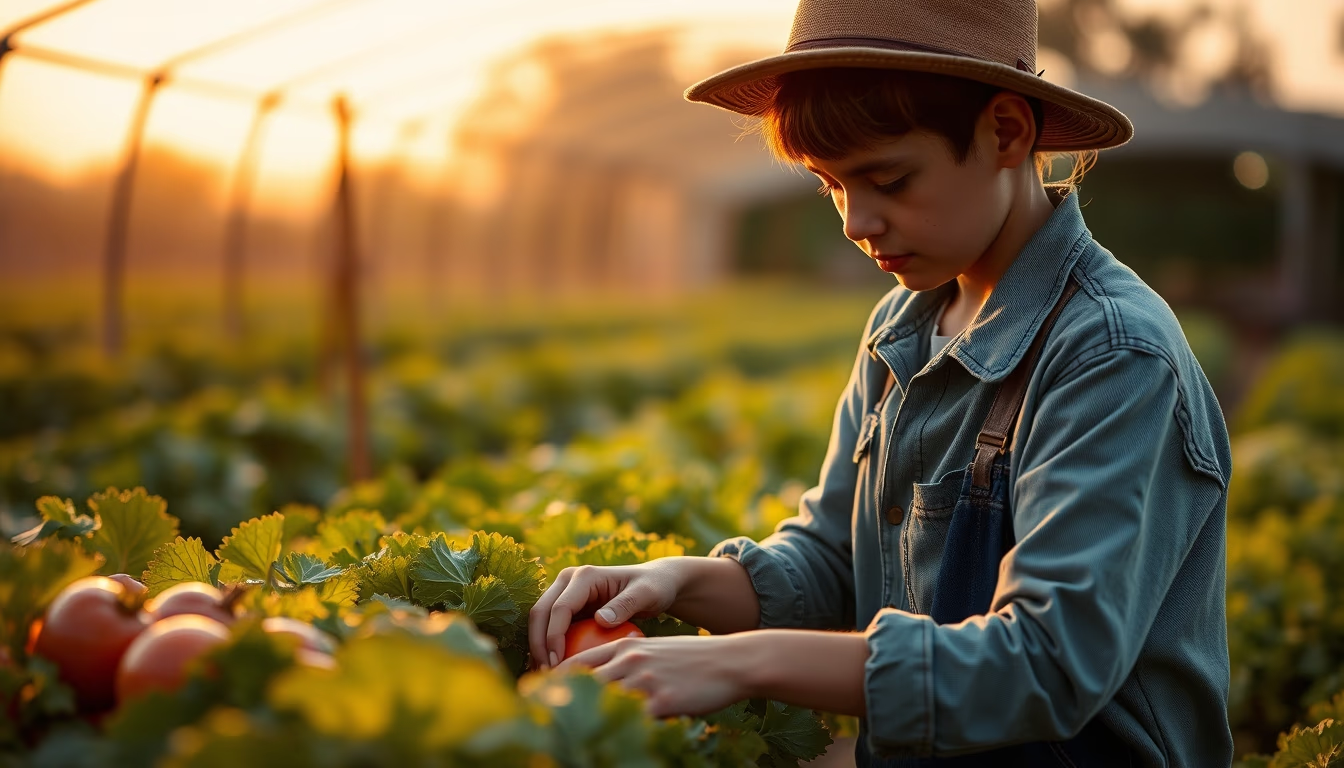
A small family farmer tends organic vegetables at twilight, a practice that strengthens food security and local economies in Brazil.
About this subject
Family farming accounts for about 70% of the food consumed in Brazil, according to IBGE data. This production model, which relies primarily on family labor, is essential for the country's food security, especially for vegetables, fruits, and legumes. Organic cultivation, free from synthetic pesticides, has been gaining ground in this segment, driven by growing demand for healthy food and environmental sustainability concerns.
In Brazil, organic family farming is regulated by Law 10.831/2003 and supervised by accredited certifiers. Small farmers often adopt practices such as crop rotation, composting, and biological pest control to maintain soil fertility and biodiversity. Organic family production not only generates income in rural areas but also reduces workers' exposure to hazardous chemicals.
The twilight scene highlights the manual and careful work required for managing organic vegetables. Harvesting at the end of the day is common to preserve freshness, with vegetables often sold at local markets or delivered directly to consumers through organic baskets. This direct producer-consumer link strengthens local economies and values high-quality food.
Interestingly, Brazil has over 4 million family farming establishments, occupying about 80 million hectares. Although they represent only 24% of the total agricultural area, they produce 87% of cassava, 70% of beans, and 46% of corn. Transitioning to organic has been a way to add value and access specialized markets, such as gourmet and health food products.
Frequently Asked Questions
What is the difference between family farming and agribusiness?
Family farming is characterized by family management and labor, focusing on crop diversification and local markets. Agribusiness involves large estates, monoculture, and high mechanization, aimed at exports and industry.
How can I tell if an organic product is truly certified?
Certified organic products in Brazil must display the seal of the Brazilian Organic Conformity Assessment System (SisOrg), ensuring the producer follows Law 10.831/2003.
What are the main challenges for small organic farmers in Brazil?
Challenges include access to rural credit, specialized technical assistance, high certification costs, and competition with cheaper conventional products. Distribution logistics and lack of infrastructure are also obstacles.
Direct URL
https://pub-c7d6a6ea828543ac903a74a341ccb2e1.r2.dev/imagens/small-family-farmer-tending-to-organic-vegetables-closeup-twilight-3.avifHow to credit
Include a visible link back to UtilizAí. Copy one of the snippets below:
<a href="https://xn--utiliza-eza.com/en/midia/imagens/small-family-farmer-tending-to-organic-vegetables-closeup-twilight-3">Small family farmer tending to organic vegetables</a> by <a href="https://xn--utiliza-eza.com">UtilizAí</a>, licensed under <a href="https://creativecommons.org/licenses/by/4.0/">CC BY 4.0</a>.
[Small family farmer tending to organic vegetables](https://xn--utiliza-eza.com/en/midia/imagens/small-family-farmer-tending-to-organic-vegetables-closeup-twilight-3) by [UtilizAí](https://xn--utiliza-eza.com), CC BY 4.0
License: CC-BY-4.0