Small family farmer tending to organic vegetables
1344×768 · AVIF · CC BY 4.0
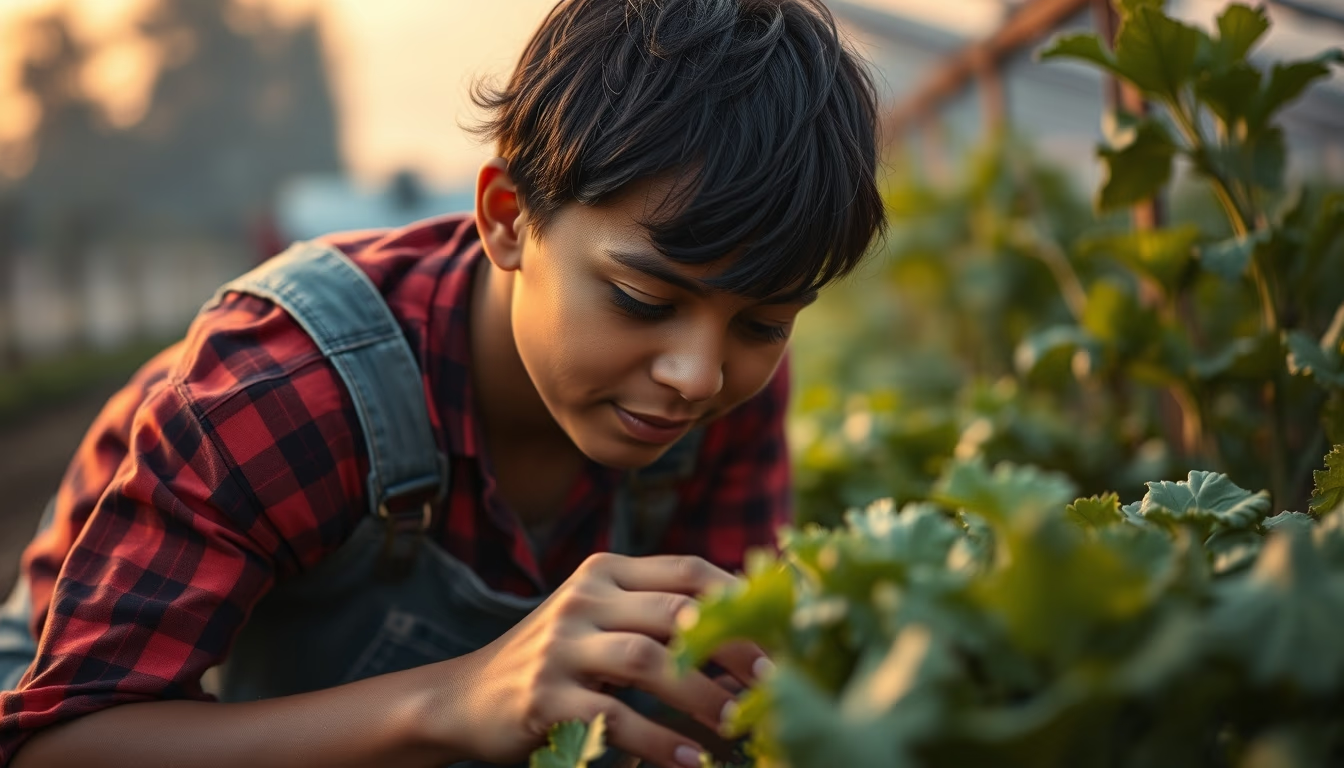
Family farmer handling organic vegetables at twilight, a practice that underpins food security in Brazil.
About this subject
Family farming is responsible for about 70% of the food that reaches Brazilian tables, according to IBGE. Small-scale producers, like the one depicted, cultivate organic vegetables in diversified systems that prioritize soil health and biodiversity. Organic farming, regulated by Law 10.831/2003, prohibits synthetic pesticides and chemical fertilizers, adopting practices such as composting, crop rotation, and biological pest control. In Brazil, organic family farming has grown driven by programs like PAA (Food Acquisition Program) and PNAE (National School Feeding Program), which guarantee a market for these producers. Twilight harvesting is common: milder temperatures and diffuse light facilitate the collection of leafy greens and maintain post-harvest quality. Additionally, proximity to urban centers allows delivery of fresh produce at farmers' markets and community-supported agriculture boxes, reducing the carbon footprint. This image represents a production model that generates income for millions of rural families and promotes food sovereignty. FAO data indicate that family farming produces 80% of the world's food by value, using only 30% of agricultural land. In Brazil, the sector employs over 10 million people, being essential for local economies and the preservation of native seed varieties.
Frequently Asked Questions
What is the difference between family farming and organic farming?
Family farming is a production model based on family management and predominantly family labor, which can be conventional or organic. Organic farming is a production system that follows specific standards, without synthetic pesticides or fertilizers, and can be practiced by large or small producers.
How does family farming contribute to food security in Brazil?
Family farming provides most of the staple foods consumed in the country, such as beans, rice, vegetables, and fruits. It diversifies production, reduces import dependence, and promotes fresh, healthy food in local communities.
What certifications guarantee that a product is organic?
In Brazil, organic products must be certified by entities accredited by the Ministry of Agriculture, such as IBD and Ecocert. Alternatively, family farmers can sell directly at fairs with a declaration of conformity, without individual certification, as long as they are registered in the National Register of Organic Producers.
Direct URL
https://pub-c7d6a6ea828543ac903a74a341ccb2e1.r2.dev/imagens/small-family-farmer-tending-to-organic-vegetables-closeup-twilight-2.avifHow to credit
Include a visible link back to UtilizAí. Copy one of the snippets below:
<a href="https://xn--utiliza-eza.com/en/midia/imagens/small-family-farmer-tending-to-organic-vegetables-closeup-twilight-2">Small family farmer tending to organic vegetables</a> by <a href="https://xn--utiliza-eza.com">UtilizAí</a>, licensed under <a href="https://creativecommons.org/licenses/by/4.0/">CC BY 4.0</a>.
[Small family farmer tending to organic vegetables](https://xn--utiliza-eza.com/en/midia/imagens/small-family-farmer-tending-to-organic-vegetables-closeup-twilight-2) by [UtilizAí](https://xn--utiliza-eza.com), CC BY 4.0
License: CC-BY-4.0