Silk thread spool
1344×768 · AVIF · CC BY 4.0
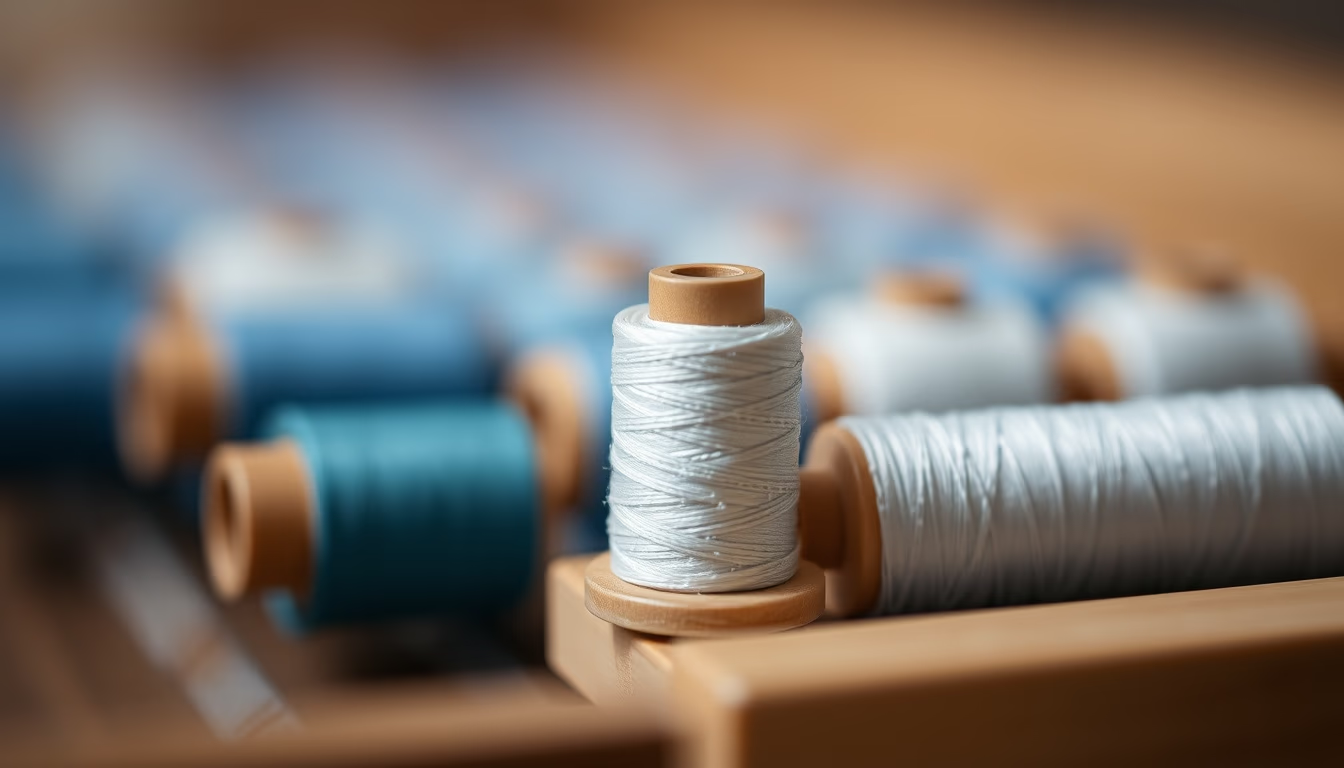
Silk thread spool: one of the most noble materials in textile history, used in embroidery, fine sewing, and luxury handicrafts.
About this subject
Silk is a natural fiber produced by the silkworm (Bombyx mori) during cocoon formation. Each cocoon can yield a continuous filament up to 1,500 meters long. Silk thread is renowned for its strength, characteristic luster, and soft touch, historically associated with high-value items such as Chinese imperial robes, European embroidery, and Japanese kimonos.
The manufacturing process involves boiling cocoons to soften the sericin (natural gum) and then extracting filaments, which are twisted together to form thread. China is the world's largest silk producer, accounting for about 70% of global output, followed by India and Uzbekistan. The Silk Road, a network of trade routes connecting East and West, was named after this precious commodity.
In sewing and embroidery, silk thread is favored for its controlled elasticity and vibrant dye absorption. Unlike synthetic threads, silk does not melt under heat and has low electrical conductivity, making it useful in technical applications such as protective clothing for welders. Additionally, silk is biodegradable and renewable, though its production is labor-intensive.
Interestingly, the word "silk" derives from the Greek "serikos," referring to the Seres people (Chinese). For centuries, China kept the silk-making process a secret, punishing with death anyone who revealed the techniques. Today, silk is celebrated not only for its beauty but also for its hypoallergenic and thermoregulating properties, making it ideal for bedding and luxury garments.
Frequently Asked Questions
What is the difference between silk thread and cotton thread?
Silk thread is finer, stronger, and has a natural luster, while cotton thread is more matte and absorbent. Silk also has greater elasticity and heat resistance, making it ideal for delicate embroidery and fine fabric sewing.
How to care for garments sewn with silk thread?
Hand wash in cold water with mild soap, dry in the shade, and iron at low temperature. Avoid bleach and wringing, as they can damage the fibers.
Is silk production ethical regarding silkworms?
Traditional methods kill pupae during cocoon boiling. There is "Ahimsa" or "peace silk," where cocoons are pierced after moths emerge, resulting in shorter, less lustrous threads.
Direct URL
https://pub-c7d6a6ea828543ac903a74a341ccb2e1.r2.dev/imagens/silk-thread-spool-tilt-shift-miniature-fresh11.avifHow to credit
Include a visible link back to UtilizAí. Copy one of the snippets below:
<a href="https://xn--utiliza-eza.com/en/midia/imagens/silk-thread-spool-tilt-shift-miniature-fresh11">Silk thread spool</a> by <a href="https://xn--utiliza-eza.com">UtilizAí</a>, licensed under <a href="https://creativecommons.org/licenses/by/4.0/">CC BY 4.0</a>.
[Silk thread spool](https://xn--utiliza-eza.com/en/midia/imagens/silk-thread-spool-tilt-shift-miniature-fresh11) by [UtilizAí](https://xn--utiliza-eza.com), CC BY 4.0
License: CC-BY-4.0