Silk thread spool
1344×768 · AVIF · CC BY 4.0
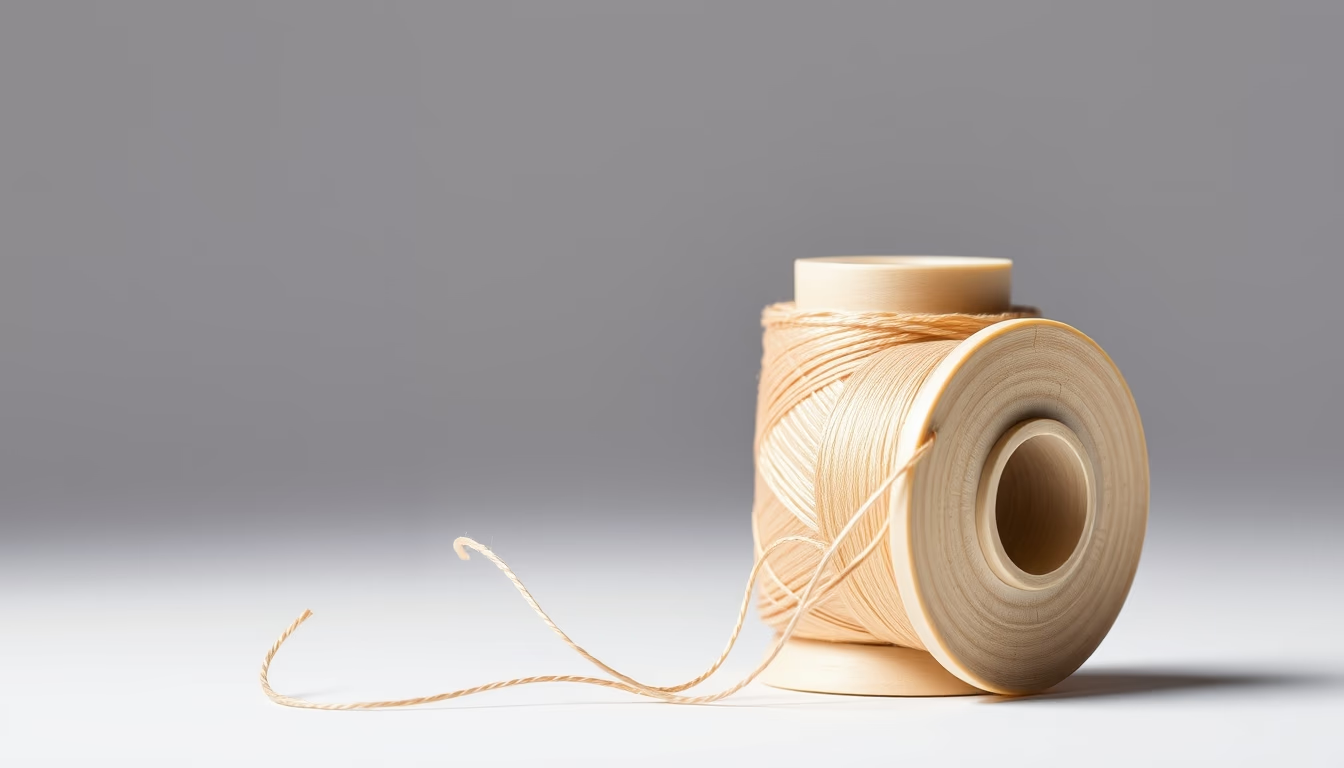
The silk thread spool, a central object in sewing and weaving crafts, traces back millennia of textile history in ancient China.
About this subject
The silk thread spool is a fundamental item for sewing, embroidery, and weaving. Silk, a natural fiber produced by the silkworm (Bombyx mori), was discovered in China around 5,000 years ago. For centuries, the Chinese guarded the secret of sericulture, making silk a luxury product traded along the Silk Road. Silk thread is valued for its strength, natural luster, and smooth texture, used in fine clothing, tapestries, and traditional embroidery such as Chinese cross-stitch and Japanese embroidery.
In the production process, cocoons are boiled to soften the sericin binding the fibers, allowing a single continuous filament up to 1,500 meters to be unwound. This filament is twisted into thicker strands to form sewing thread. The spool, usually made of wood or plastic, keeps the thread organized and prevents tangles. Silk has hygroscopic properties, absorbing moisture without feeling wet, and is hypoallergenic, making it suitable for sensitive skin. Today, China remains the world's largest producer of silk, followed by India and Brazil.
Culturally, silk thread appears in various traditions: in traditional wedding dresses across many cultures, in religious vestments, and in contemporary textile art. The act of winding thread onto a spool is a meticulous step in manual production, still preserved in haute couture workshops and hand embroidery.
Frequently Asked Questions
What is the difference between silk thread and synthetic threads?
Silk thread is natural, stronger, and has a natural sheen, while synthetic ones (polyester, nylon) are petroleum-based, less breathable, and may melt under excessive heat.
How to store silk thread spools?
Keep them in a dry place away from direct sunlight to prevent fading. Avoid humidity, which can weaken the fibers. Use fabric bags or organizer boxes.
Can silk be dyed easily?
Yes, silk accepts natural and synthetic dyes very well due to its protein structure. However, care is needed in the process to avoid damaging the fiber.
Direct URL
https://pub-c7d6a6ea828543ac903a74a341ccb2e1.r2.dev/imagens/silk-thread-spool-studio-still-life-fresh7.avifHow to credit
Include a visible link back to UtilizAí. Copy one of the snippets below:
<a href="https://xn--utiliza-eza.com/en/midia/imagens/silk-thread-spool-studio-still-life-fresh7">Silk thread spool</a> by <a href="https://xn--utiliza-eza.com">UtilizAí</a>, licensed under <a href="https://creativecommons.org/licenses/by/4.0/">CC BY 4.0</a>.
[Silk thread spool](https://xn--utiliza-eza.com/en/midia/imagens/silk-thread-spool-studio-still-life-fresh7) by [UtilizAí](https://xn--utiliza-eza.com), CC BY 4.0
License: CC-BY-4.0