Silk thread spool
1344×768 · AVIF · CC BY 4.0
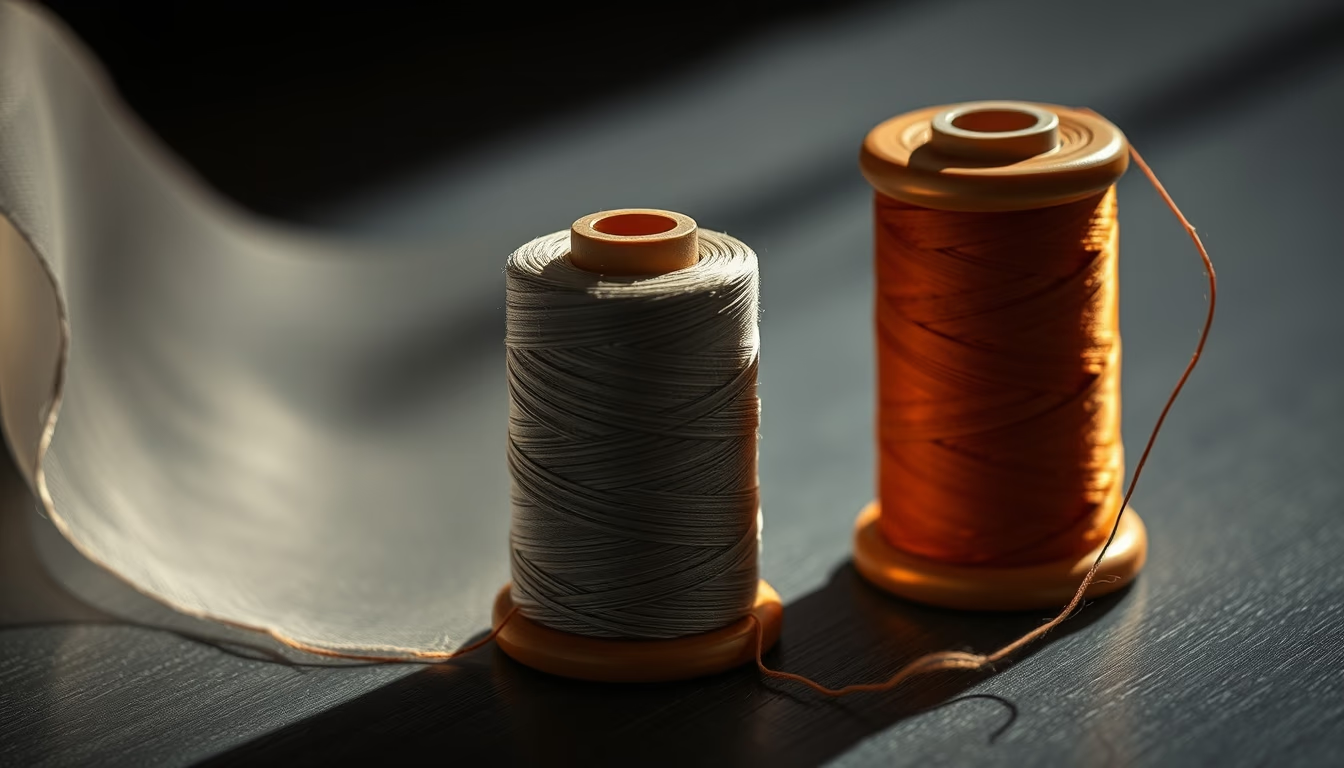
The silk thread spool is an icon of textile tradition, representing centuries of craftsmanship and luxury in fabric manufacturing.
About this subject
Silk is a natural protein fiber produced by the silkworm (Bombyx mori), whose cultivation, sericulture, originated in ancient China over 5,000 years ago. The silk thread is obtained from the insect's cocoon, which is boiled to soften the sericin and allow the continuous unwinding of a single filament that can reach up to 1.5 km in length. This artisanal process requires skill and patience, traditionally carried out in regions such as the Yangtze River Valley; in Brazil, states like São Paulo and Paraná also have significant production, although smaller than that of Asia.
The silk thread spool is how this precious thread is traded and stored. Unlike synthetic threads, silk has natural luster, tensile strength, and moderate elasticity, making it highly valued in the manufacture of haute couture garments, scarves, ties, and fine embroidery. Fabrics like chiffon, satin, and crepe de chine are direct derivatives of silk and require high-quality threads stored on spools.
Historically, the Silk Road was fundamental for cultural and commercial exchange between East and West, and the silk trade drove entire economies. Today, China accounts for about 80% of global production, followed by India and Uzbekistan. Silk is considered a symbol of status and refinement, and its manufacturing process still involves traditional techniques that ensure the uniqueness of each thread.
Interestingly, producing one kilogram of raw silk requires approximately 10,000 cocoons, demonstrating the intensive labor behind each spool. Beyond textile use, silk is also used in surgical sutures and parachute manufacturing due to its lightness and strength. The silk thread spool, therefore, is not just a functional object, but a link to a millennia-old history of innovation and art.
Frequently Asked Questions
What is the difference between natural and artificial silk?
Natural silk is produced by silkworms, while artificial silk (such as acetate silk) is made from synthetic or cellulose fibers. Natural silk has unique luster and feel, along with higher strength and durability.
How to identify a high-quality silk thread spool?
A quality silk spool has uniform threads with intense luster and slight elasticity. The label usually indicates the silk type (e.g., mulberry silk) and thickness (denier). Burning a thread releases a smell of burnt protein (similar to hair).
Where can I buy silk thread spools in Brazil?
Silk spools can be found in specialized embroidery and haberdashery stores, especially in major cities like São Paulo and Rio de Janeiro. There are also online options on craft websites and textile importers.
Direct URL
https://pub-c7d6a6ea828543ac903a74a341ccb2e1.r2.dev/imagens/silk-thread-spool-rembrandt-lighting-dramatic-shadows-fresh12.avifHow to credit
Include a visible link back to UtilizAí. Copy one of the snippets below:
<a href="https://xn--utiliza-eza.com/en/midia/imagens/silk-thread-spool-rembrandt-lighting-dramatic-shadows-fresh12">Silk thread spool</a> by <a href="https://xn--utiliza-eza.com">UtilizAí</a>, licensed under <a href="https://creativecommons.org/licenses/by/4.0/">CC BY 4.0</a>.
[Silk thread spool](https://xn--utiliza-eza.com/en/midia/imagens/silk-thread-spool-rembrandt-lighting-dramatic-shadows-fresh12) by [UtilizAí](https://xn--utiliza-eza.com), CC BY 4.0
License: CC-BY-4.0