Silk thread spool
1344×768 · AVIF · CC BY 4.0
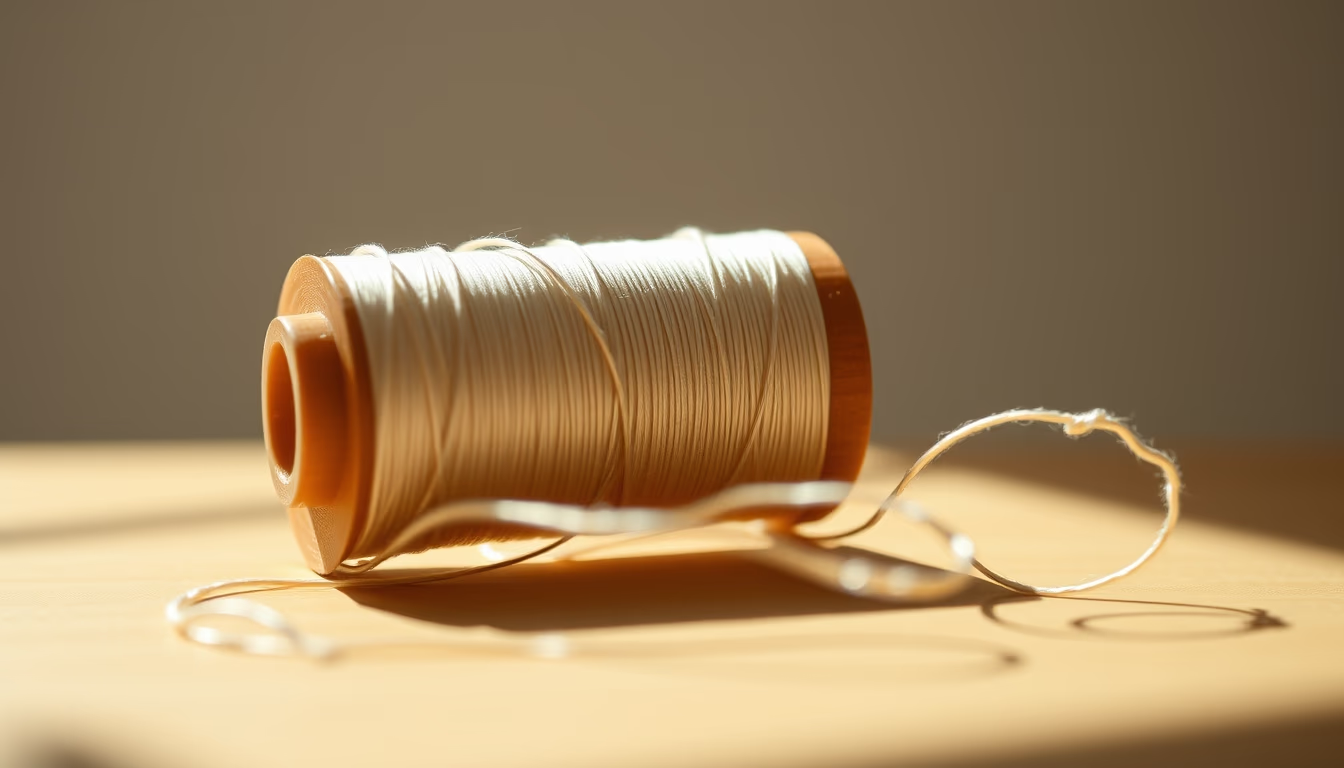
Silk thread spool: production, uses, and cultural significance of this ancient natural fiber originating from China.
About this subject
Silk thread is produced from the cocoons of the silkworm (Bombyx mori), an insect domesticated for thousands of years in China. Each cocoon consists of a single continuous fiber of protein that can reach up to 1,500 meters in length. To obtain raw silk, the cocoons are immersed in hot water to soften the sericin, the gum that holds the fiber together, and then carefully unwound. This artisanal process, known as sericulture, was kept a secret by China for centuries, becoming one of the most valuable trades along the Silk Road.
Silk is prized for its softness, natural sheen, and tensile strength. Silk thread is widely used in fine embroidery, high-end garment sewing, and the production of surgical sutures due to its biocompatibility. In India, silk embroidery is a centuries-old tradition, while in Brazil it appears in regional handicrafts such as Seridó embroidery. Silk's versatility also makes it ideal for accessories like scarves and ties.
Spools of silk thread are common in haberdasheries and craft stores, especially in regions with strong textile traditions, such as northeastern Brazil. Proper storage requires keeping them away from direct sunlight and humidity, as the protein fiber can degrade over time. Unlike synthetic fibers, silk is biodegradable and more sustainable, although its high cost reflects the manual production process.
Interestingly, producing one kilogram of silk requires about 6,000 cocoons. China remains the world's largest producer, accounting for over 70% of global silk. Silk thread also has thermoregulating properties, keeping the body cool in summer and warm in winter, which explains its use in bedding and high-quality clothing.
Frequently Asked Questions
How is silk thread produced?
Silk thread is obtained from silkworm cocoons. The cocoons are heated in hot water to soften the gum binding the fiber, which is then unwound in a continuous process. Each cocoon can yield a thread up to 1,500 meters long.
What are common uses of silk thread?
Silk thread is used in fine embroidery, luxury garment sewing, surgical sutures, accessories like scarves and ties, and textile handicrafts. Its strength and sheen make it ideal for work requiring a refined finish.
Is silk a sustainable material?
Yes, silk is biodegradable and made from natural fibers. However, its production is resource-intensive and not vegan, as it involves raising and killing silkworms. Traditional sericulture is artisanal and has a lower environmental impact than synthetic fibers.
Direct URL
https://pub-c7d6a6ea828543ac903a74a341ccb2e1.r2.dev/imagens/silk-thread-spool-minimalist-composition-fresh18.avifHow to credit
Include a visible link back to UtilizAí. Copy one of the snippets below:
<a href="https://xn--utiliza-eza.com/en/midia/imagens/silk-thread-spool-minimalist-composition-fresh18">Silk thread spool</a> by <a href="https://xn--utiliza-eza.com">UtilizAí</a>, licensed under <a href="https://creativecommons.org/licenses/by/4.0/">CC BY 4.0</a>.
[Silk thread spool](https://xn--utiliza-eza.com/en/midia/imagens/silk-thread-spool-minimalist-composition-fresh18) by [UtilizAí](https://xn--utiliza-eza.com), CC BY 4.0
License: CC-BY-4.0