Silk thread spool
1344×768 · AVIF · CC BY 4.0
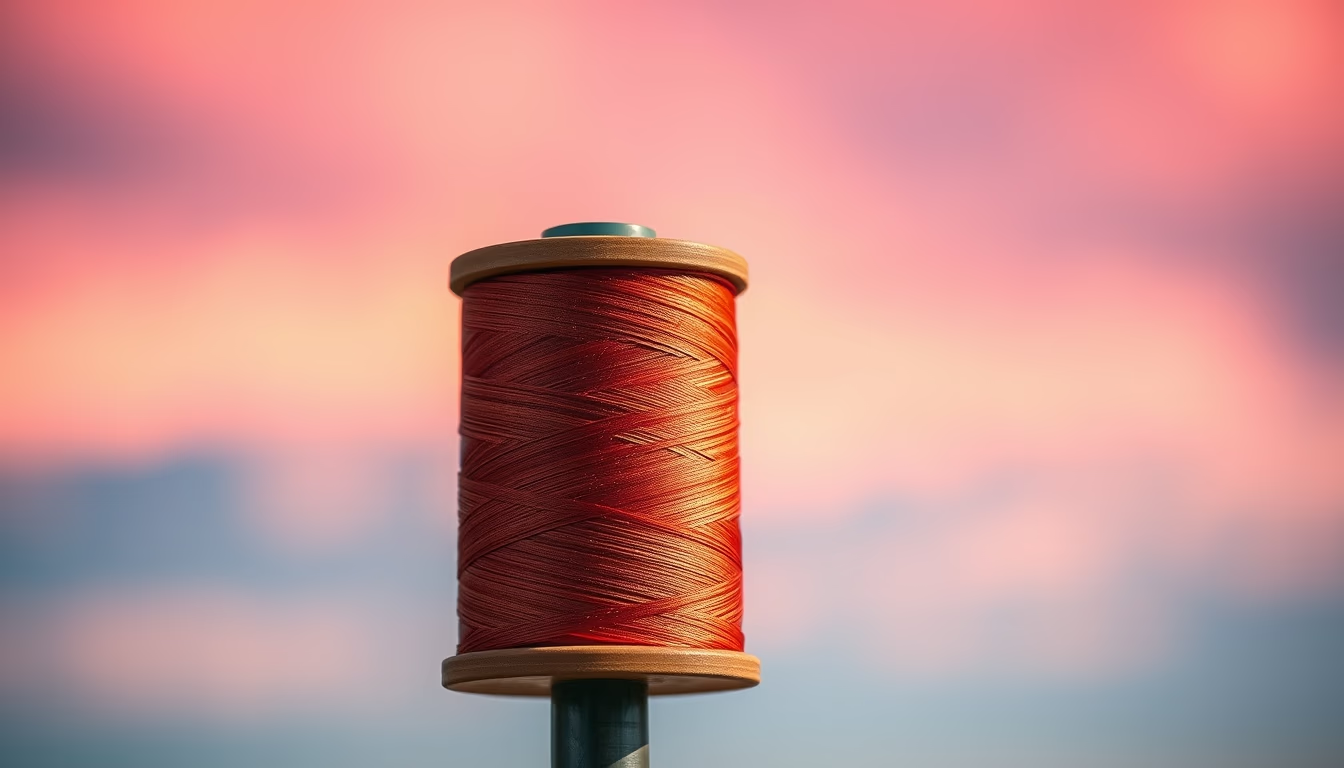
Silk thread spool: from cocoon production to textile craftsmanship, understand the importance of this ancient material.
About this subject
Silk is a natural protein fiber produced by silkworms (Bombyx mori) during cocoon formation. Each cocoon consists of a single continuous filament up to 1,500 meters long. To obtain silk thread, cocoons are boiled in hot water to soften sericin, a gum that holds the fiber together. The filaments are then unwound and twisted together to form stronger threads. The silk thread spool represents the result of this artisanal and industrial process, serving as raw material for luxurious fabrics, embroidery, and even surgical sutures.
Silk production originated in China around 5,000 years ago and was kept secret for millennia. The Silk Road, a network of trade routes linking East and West, was named after this precious textile. Today, the largest global producers are China, India, Uzbekistan, and Brazil (especially Paraná state). In Brazil, sericulture is a family-based sustainable activity, producing high-quality threads used in fashion and home decor.
A fascinating fact: natural silk thread has unique properties. It is hypoallergenic, moth-resistant (unlike wool), and has good moisture absorption. Beyond textiles, silk is used in biodegradable surgical sutures and cosmetics due to its rich amino acid content. The characteristic luster of silk comes from the triangular structure of its fibers, which refract light at different angles.
The spool in the image likely contains raw (unbleached) or dyed silk. In embroidery, silk threads are prized for their softness, strength, and intense shine, ideal for detailed stitches like satin and chain stitch. The long-exposure photograph may emphasize the thread's texture and sheen, but the focus here is on understanding the object itself.
Frequently Asked Questions
How is silk thread made from the cocoon?
Cocoons are boiled in hot water to soften sericin. The filaments are then unwound and twisted together to form continuous threads. Each cocoon yields up to 1,500 meters of fiber.
What are the main uses of silk thread?
Silk thread is used in luxury fabrics (like pure silk), fine embroidery, biodegradable surgical sutures, and even cosmetics due to its hypoallergenic and skin-nourishing properties.
Where is silk produced in Brazil?
Silk production in Brazil is concentrated in Paraná state, especially in the Londrina and Maringá regions. The country is one of the world's top producers, with emphasis on sustainable family-run sericulture.
Direct URL
https://pub-c7d6a6ea828543ac903a74a341ccb2e1.r2.dev/imagens/silk-thread-spool-long-exposure-fresh8.avifHow to credit
Include a visible link back to UtilizAí. Copy one of the snippets below:
<a href="https://xn--utiliza-eza.com/en/midia/imagens/silk-thread-spool-long-exposure-fresh8">Silk thread spool</a> by <a href="https://xn--utiliza-eza.com">UtilizAí</a>, licensed under <a href="https://creativecommons.org/licenses/by/4.0/">CC BY 4.0</a>.
[Silk thread spool](https://xn--utiliza-eza.com/en/midia/imagens/silk-thread-spool-long-exposure-fresh8) by [UtilizAí](https://xn--utiliza-eza.com), CC BY 4.0
License: CC-BY-4.0