Silk thread spool
1344×768 · AVIF · CC BY 4.0
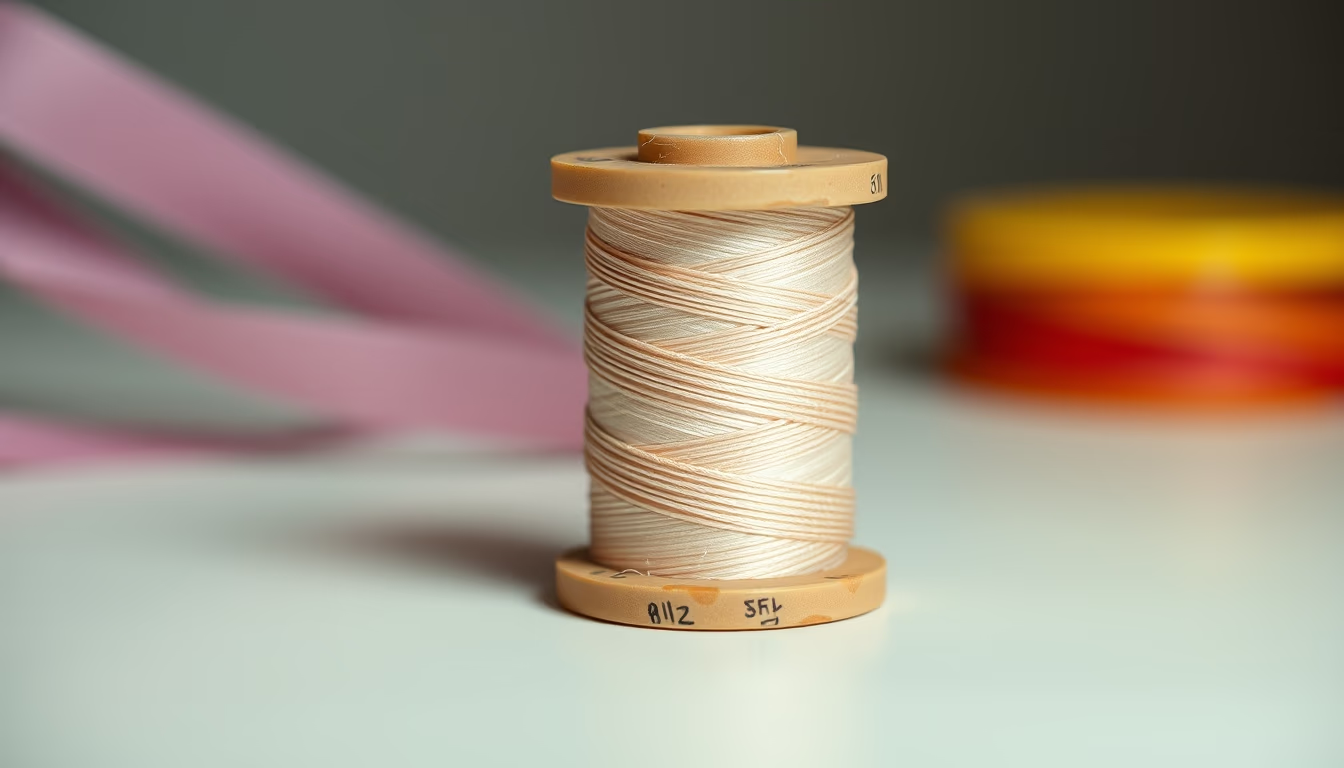
Silk thread spool: learn how it is made, its ancient history, and uses in sewing and embroidery.
About this subject
A silk thread spool is a cylinder (usually plastic or wood) onto which natural silk is wound continuously for use in sewing, embroidery, or textile work. Silk is a protein fiber produced by the silkworm (Bombyx mori) during cocoon formation. Each cocoon can yield a continuous filament up to one kilometer long. Sericulture, the production of silk, originated in China over 5,000 years ago and was long kept a closely guarded secret. The trade route that brought silk from Asia to Europe became known as the Silk Road, one of the most important corridors of cultural and economic exchange in history.
In the textile industry, silk thread is prized for its strength, natural luster, and soft feel. Unlike cotton or polyester, silk has a triangular cross section that gives it a unique ability to reflect light. This makes it especially valued in high-end embroidery, fine garment sewing (such as wedding dresses and ties), and restoration of historical fabrics. Silk thread is also hypoallergenic and thermoregulating, adapting to body temperature.
While modern spools are mass-produced, traditional handcraft continues in regions like India, Thailand, and Brazil (particularly in Paraná state). Silk thread comes in different thicknesses and finishes: twisted (for machine sewing) or untwisted (for hand embroidery). An important care tip: silk is soluble in hot water and sensitive to direct sunlight, so it should be stored in a dry, dark place.
A fun fact: silk is so strong that during World War II it was used to make parachutes and fabric maps that would not disintegrate in water. Today, besides sewing, the fiber is used in surgical sutures and even in the production of biosensors.
Frequently Asked Questions
What is the difference between silk thread and cotton thread?
Silk thread is stronger, has natural luster, and feels softer than cotton. It is also more resistant to tension and hypoallergenic, but it costs more and requires special care (do not wash in hot water).
How can I tell if the thread is real silk?
A simple test is to burn a small piece: real silk burns with a smell of burnt hair, leaving a black, fragile ash. Synthetic silk melts and smells like plastic. Also, natural silk has an irregular sheen and characteristic softness.
Why is silk thread more expensive than other threads?
Silk production is labor-intensive and time-consuming: each cocoon is hand-harvested and the filament must be carefully unwound. Raw material is scarce compared to cotton or polyester, and the dyeing process is also more delicate. This raises the final cost.
Direct URL
https://pub-c7d6a6ea828543ac903a74a341ccb2e1.r2.dev/imagens/silk-thread-spool-lo-fi-disposable-camera-fresh6.avifHow to credit
Include a visible link back to UtilizAí. Copy one of the snippets below:
<a href="https://xn--utiliza-eza.com/en/midia/imagens/silk-thread-spool-lo-fi-disposable-camera-fresh6">Silk thread spool</a> by <a href="https://xn--utiliza-eza.com">UtilizAí</a>, licensed under <a href="https://creativecommons.org/licenses/by/4.0/">CC BY 4.0</a>.
[Silk thread spool](https://xn--utiliza-eza.com/en/midia/imagens/silk-thread-spool-lo-fi-disposable-camera-fresh6) by [UtilizAí](https://xn--utiliza-eza.com), CC BY 4.0
License: CC-BY-4.0