Silk thread spool
1344×768 · AVIF · CC BY 4.0
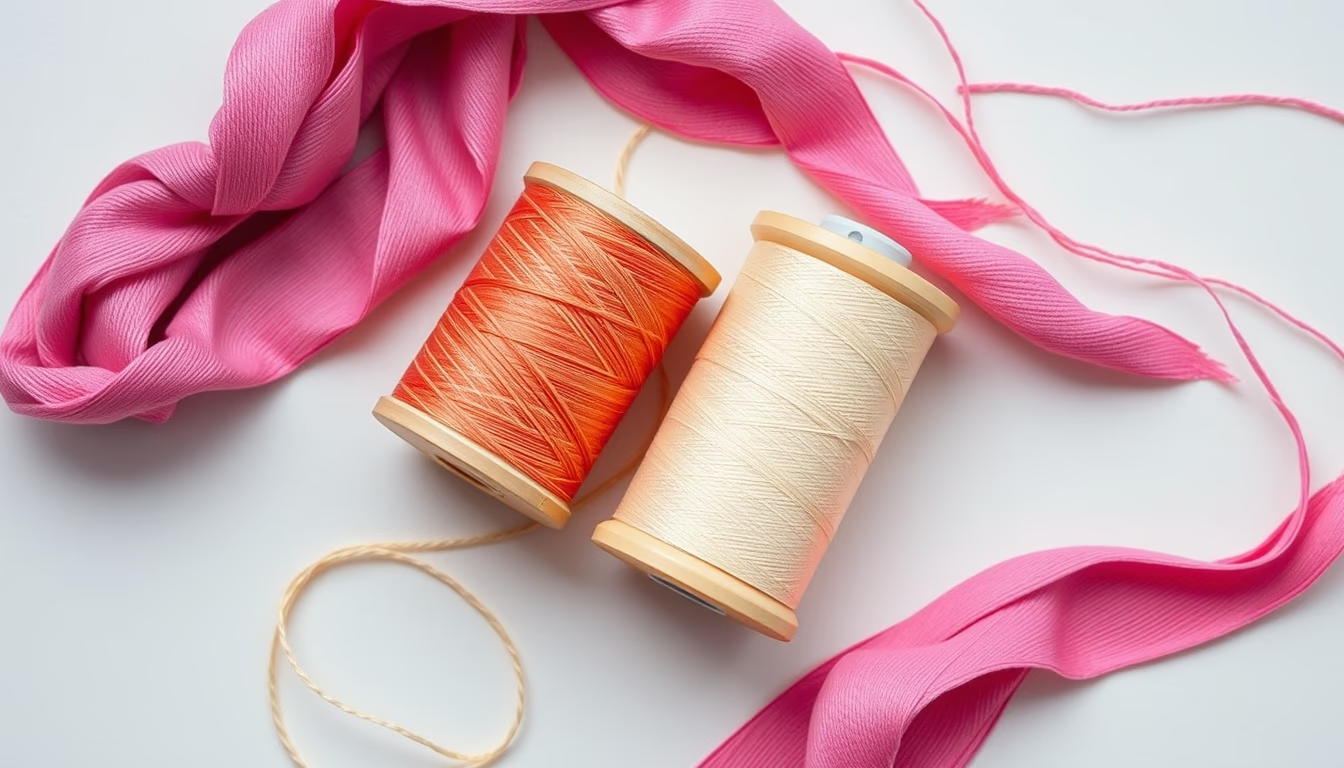
Silk thread spool: an object carrying centuries of textile history, from the secrets of Chinese sericulture to contemporary haute couture.
About this subject
The silk thread spool is more than just a sewing accessory; it represents the link between the noble raw material and the textile art. Silk, produced by the silkworm (Bombyx mori), is a continuous protein fiber known for its luster, softness, and strength. Sericulture, the technique of raising these insects, originated in China about 5000 years ago and was kept secret for millennia. The Silk Road, connecting East and West, consolidated the trade of this luxurious fabric.
In modern industrial contexts, silk spools are used both in hand embroidery and high-precision sewing machines. Silk thread is preferred by tailors and seamstresses for fine work, such as on delicate fabrics (silk, chiffon) and in hand embroidery, as it does not damage the fabric and offers an elegant finish. The twist of the threads varies: more twisted threads are used for structural seams, while less twisted ones are ideal for embroidery.
Interestingly, a single silk fiber can be up to 1.5 km long when the cocoon is unwound. To produce 1 kg of raw silk, about 2500 cocoons are needed. Brazil, especially the states of Paraná and São Paulo, ranks among the world's largest silk producers, with a focus on high-quality threads exported to markets such as Japan and France.
Frequently Asked Questions
What is the difference between silk thread and polyester thread?
Silk thread is natural, stronger, and more elastic than polyester, with superior luster and feel. It shrinks less and does not melt under an iron, but it is more expensive and requires special care.
How should I store silk thread spools to prevent damage?
Store the spools in a dry, cool place away from direct sunlight. Use sealed containers or fabric bags to protect from dust and moths. Avoid humidity, which can cause mold or loss of luster.
Can silk thread be used in any sewing machine?
Yes, as long as the machine is adjusted for fine threads. It is recommended to use fine needles (size 60-70) and reduce thread tension to prevent breakage. Silk is ideal for lightweight fabrics and embroidery.
Direct URL
https://pub-c7d6a6ea828543ac903a74a341ccb2e1.r2.dev/imagens/silk-thread-spool-isometric-flat-lay-fresh9.avifHow to credit
Include a visible link back to UtilizAí. Copy one of the snippets below:
<a href="https://xn--utiliza-eza.com/en/midia/imagens/silk-thread-spool-isometric-flat-lay-fresh9">Silk thread spool</a> by <a href="https://xn--utiliza-eza.com">UtilizAí</a>, licensed under <a href="https://creativecommons.org/licenses/by/4.0/">CC BY 4.0</a>.
[Silk thread spool](https://xn--utiliza-eza.com/en/midia/imagens/silk-thread-spool-isometric-flat-lay-fresh9) by [UtilizAí](https://xn--utiliza-eza.com), CC BY 4.0
License: CC-BY-4.0