Silk thread spool
1344×768 · AVIF · CC BY 4.0
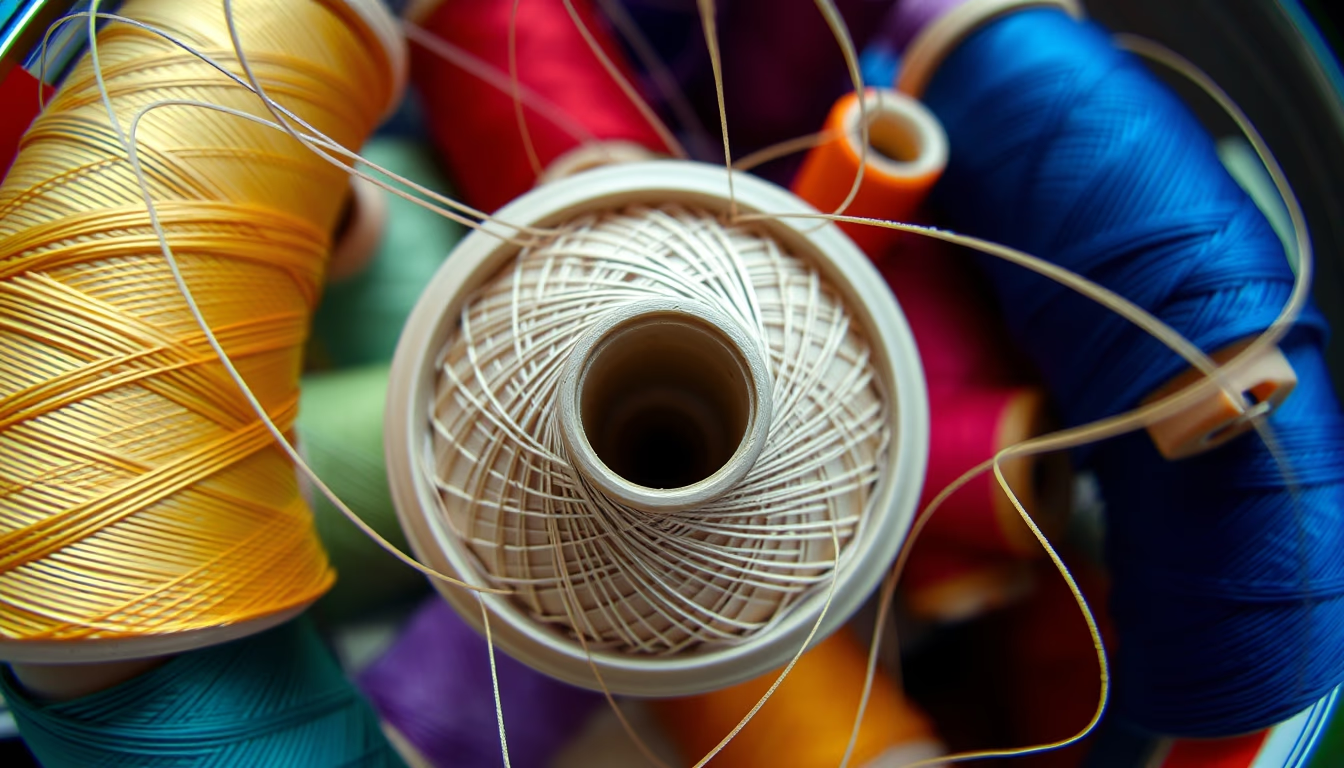
Silk thread spool, essential for sewing and embroidery, made from natural fibers of the silkworm cocoon.
About this subject
Silk thread is obtained from the cocoons of the silkworm (Bombyx mori), which are immersed in hot water to soften sericin, the substance that binds the fibers. Each cocoon can yield between 300 and 900 meters of continuous filament. Sericulture, the technique of raising silkworms, originated in China about 5,000 years ago and spread worldwide via the Silk Road, a network of trade routes connecting East and West. Today, the largest silk producers are China, India, and Brazil.
There are different types of silk thread, such as mulberry silk, from silkworms fed exclusively on mulberry leaves, and tussah silk, a wild variety with a more irregular texture. Silk is valued for its tensile strength, natural luster, and ability to absorb dyes, resulting in vibrant colors. Unlike synthetic fibers, silk is hypoallergenic and temperature-regulating, providing comfort in both warm and cool climates.
In practice, silk thread spools are widely used in hand and machine embroidery, sewing of fine fabrics like silk and satin, and in the creation of haute couture garments. Additionally, silk thread is employed in technical fields, such as surgical sutures (being biodegradable and strong) and high-quality fishing lines. Interestingly, producing one kilogram of silk requires about 5,000 cocoons and involves a labor-intensive process demanding skill and patience.
Despite competition from synthetic fibers (such as polyester and nylon), natural silk maintains its prestige due to its exclusivity and unique properties. Silk thread spools are a classic item in haberdasheries and studios, representing tradition and quality. Care instructions: they should be stored away from direct light and moisture to prevent fiber weakening.
Frequently Asked Questions
What is silk thread made from?
Silk thread is made from natural fibers of the silkworm cocoon (Bombyx mori). Each cocoon yields a continuous filament up to 900 meters long.
How is silk thread produced?
Cocoons are immersed in hot water to soften sericin, allowing the fibers to be unwound. Several filaments are twisted together to form the thread. The process is labor-intensive and requires care to avoid breaking the fibers.
Why is silk thread expensive?
Silk production is laborious and time-consuming. About 5,000 cocoons are needed to produce one kilogram of silk, along with skilled labor. Natural silk also offers unique properties of luster, strength, and comfort.
Direct URL
https://pub-c7d6a6ea828543ac903a74a341ccb2e1.r2.dev/imagens/silk-thread-spool-fish-eye-wide-angle-fresh10.avifHow to credit
Include a visible link back to UtilizAí. Copy one of the snippets below:
<a href="https://xn--utiliza-eza.com/en/midia/imagens/silk-thread-spool-fish-eye-wide-angle-fresh10">Silk thread spool</a> by <a href="https://xn--utiliza-eza.com">UtilizAí</a>, licensed under <a href="https://creativecommons.org/licenses/by/4.0/">CC BY 4.0</a>.
[Silk thread spool](https://xn--utiliza-eza.com/en/midia/imagens/silk-thread-spool-fish-eye-wide-angle-fresh10) by [UtilizAí](https://xn--utiliza-eza.com), CC BY 4.0
License: CC-BY-4.0