Silk thread spool
1344×768 · AVIF · CC BY 4.0
Discover the features and uses of a silk thread spool, an essential item in sewing and embroidery.
About this subject
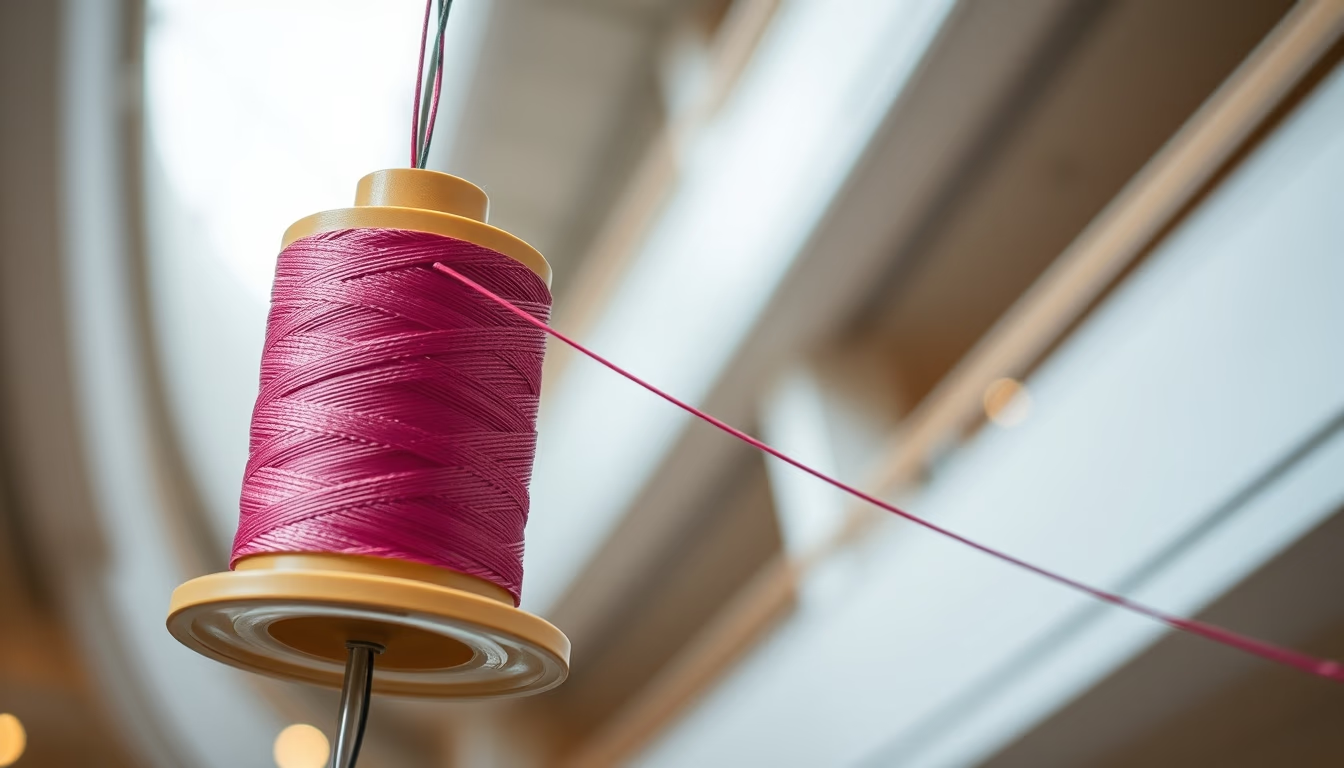
The silk thread spool is one of the most traditional items in the sewing world. Made from natural fibers extracted from the cocoon of the silkworm (Bombyx mori), this type of thread is known for its strength, characteristic luster, and soft texture. Silk has been used for over five thousand years, originating in China, where sericulture developed as a refined art. Today, spools can be made of plastic, wood, or cardboard, and they store threads of different thicknesses, from the finest for delicate embroidery to thicker ones for structural sewing.
Silk thread differs from synthetic or cotton threads due to its controlled elasticity and low tendency to form knots. It is widely used in hand embroidery, especially in techniques such as cross-stitch, freestyle embroidery, and Japanese sashiko. In tailoring, it is the preferred choice for buttonholes and invisible seams, as it does not damage noble fabrics like wool, silk, and linen. Additionally, silk dyes vibrant and deep colors, maintaining its vividness even after washing.
Culturally, the silk thread spool symbolizes patience and manual skill. In India, for example, silk thread is used in religious ceremonies to tie around wrists (rakhi). In Brazil, silk thread is less common than cotton thread, but it is still valued by artisans and embroiderers who cherish tradition. To preserve the thread, it is important to keep it in a dry place away from direct light, as silk can yellow over time. The spool itself should also be stored horizontally to prevent the thread from unraveling.
Although industrial production has popularized plastic spools, many artisans prefer wooden ones, which avoid static electricity and keep the thread in place. The choice of spool material directly influences thread tension during use. For silk work, fine needles with rounded tips are recommended to avoid damaging the fibers. In short, the silk thread spool is more than a simple accessory; it is part of a textile legacy spanning centuries and continents.
Frequently Asked Questions
What is the difference between silk thread and cotton thread?
Silk thread is stronger, has natural luster, and controlled elasticity, while cotton thread is more matte, less elastic, and generally cheaper. Silk is ideal for fine fabrics and delicate embroidery.
How should silk thread spools be stored?
Spools should be kept in a dry place away from direct sunlight and heat sources. Store them horizontally to prevent the thread from unraveling and cover them with a cloth or box to avoid dust accumulation.
Does silk thread fray easily?
No. Silk thread is known for its strength and low tendency to fray or knot, provided it is used with appropriate needles (fine and rounded tip). It is more durable than regular cotton thread.
Direct URL
https://pub-c7d6a6ea828543ac903a74a341ccb2e1.r2.dev/imagens/silk-thread-spool-architectural-photography-fresh4.avifHow to credit
Include a visible link back to UtilizAí. Copy one of the snippets below:
<a href="https://xn--utiliza-eza.com/en/midia/imagens/silk-thread-spool-architectural-photography-fresh4">Silk thread spool</a> by <a href="https://xn--utiliza-eza.com">UtilizAí</a>, licensed under <a href="https://creativecommons.org/licenses/by/4.0/">CC BY 4.0</a>.
[Silk thread spool](https://xn--utiliza-eza.com/en/midia/imagens/silk-thread-spool-architectural-photography-fresh4) by [UtilizAí](https://xn--utiliza-eza.com), CC BY 4.0
License: CC-BY-4.0