Show jumping arena empty
1344×768 · AVIF · CC BY 4.0
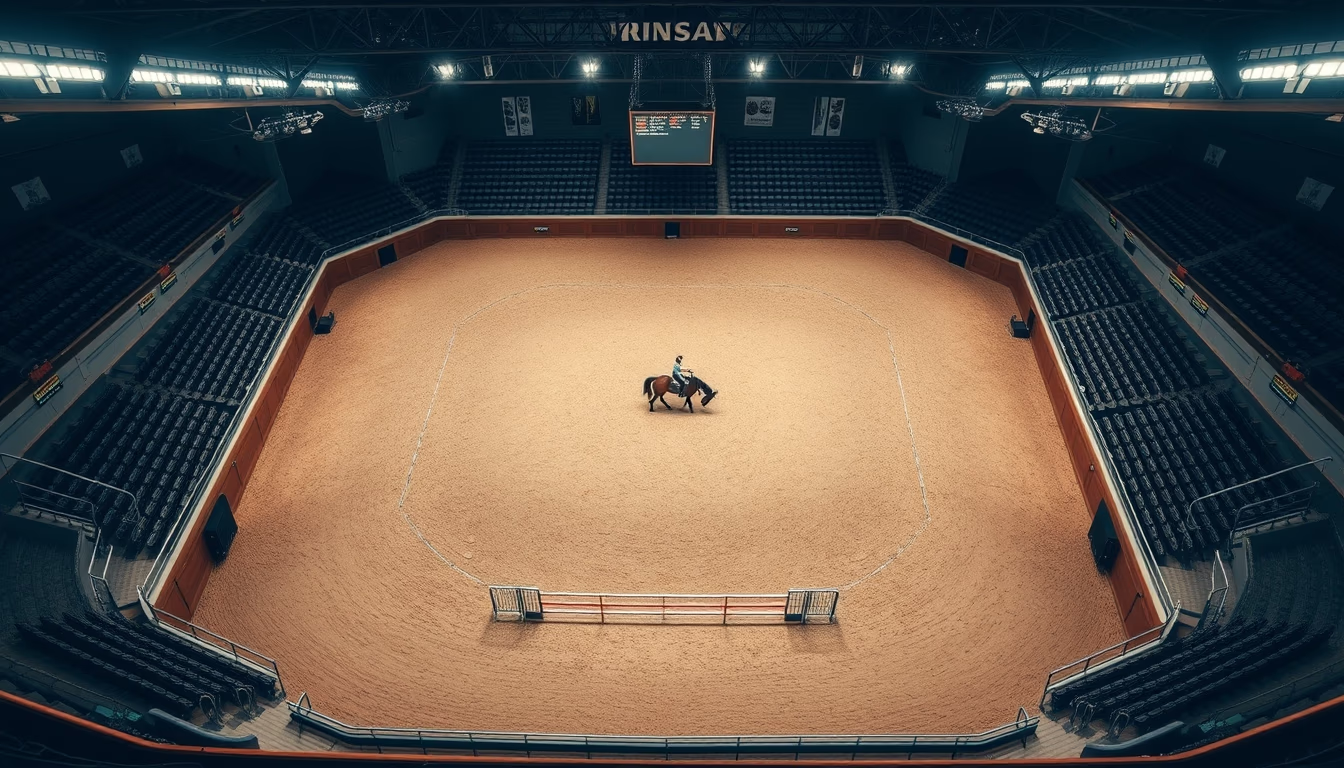
An empty show jumping arena in isometric perspective, with colorful obstacles and sand footing, typical of equestrian competition.
About this subject
Show jumping is an equestrian discipline where horse and rider navigate a series of obstacles within a timed course. Official arenas adhere to strict standards: minimum dimensions of 60 by 40 meters, footing composed of washed sand and synthetic fibers for cushioning and traction. Obstacles are categorized as verticals (only height) and oxers (height and width), along with combinations like triples and the dreaded water jump. The maximum bar height reaches 1.60 meters in Grand Prix competitions.
The sport traces its roots to 18th and 19th century England, where fox hunters had to leap over fences during chases. The first modern competition took place in 1900 at the Paris Olympic Games, featuring high jump and long jump events. Today, show jumping is one of the most popular disciplines at the World Equestrian Games, with million‑dollar purses and global television coverage.
Brazil has produced notable riders such as Rodrigo Pessoa, Olympic gold medalist in 2004 (Athens). The country boasts top‑tier training centers in São Paulo and Rio de Janeiro, and the Brazilian Equestrian Confederation organizes internationally ranked events. A technical curiosity: high‑level arenas use sand mixed with geotextile to prevent compaction, ensuring safety for the horses.
Course design requires careful engineering: obstacles are placed in sequences that test agility, impulsion, and obedience. Contrasting colors and floral decorations enhance the visual appeal, but every detail follows International Equestrian Federation regulations. Even when empty, the arena reveals the precision required for a sport blending athleticism, partnership, and strategy.
Frequently Asked Questions
What are the official dimensions of a show jumping arena?
The minimum dimensions are 60 meters by 40 meters, though international arenas can be larger, up to 80 by 50 meters.
What are the main types of obstacles in show jumping?
The main types are verticals (only height), oxers (height and width), triples, planks, walls, and water jumps. Each tests different abilities of the horse-rider pair.
How is the footing of a jumping arena prepared?
The footing consists of washed sand mixed with synthetic fibers or geotextile for drainage and cushioning. Maintenance includes light compaction, watering, and regular harrowing to ensure safety and consistency.
Direct URL
https://pub-c7d6a6ea828543ac903a74a341ccb2e1.r2.dev/imagens/show-jumping-arena-empty-isometric-flat-lay-fresh4.avifHow to credit
Include a visible link back to UtilizAí. Copy one of the snippets below:
<a href="https://xn--utiliza-eza.com/en/midia/imagens/show-jumping-arena-empty-isometric-flat-lay-fresh4">Show jumping arena empty</a> by <a href="https://xn--utiliza-eza.com">UtilizAí</a>, licensed under <a href="https://creativecommons.org/licenses/by/4.0/">CC BY 4.0</a>.
[Show jumping arena empty](https://xn--utiliza-eza.com/en/midia/imagens/show-jumping-arena-empty-isometric-flat-lay-fresh4) by [UtilizAí](https://xn--utiliza-eza.com), CC BY 4.0
License: CC-BY-4.0