Sewing machine vintage
1344×768 · AVIF · CC BY 4.0
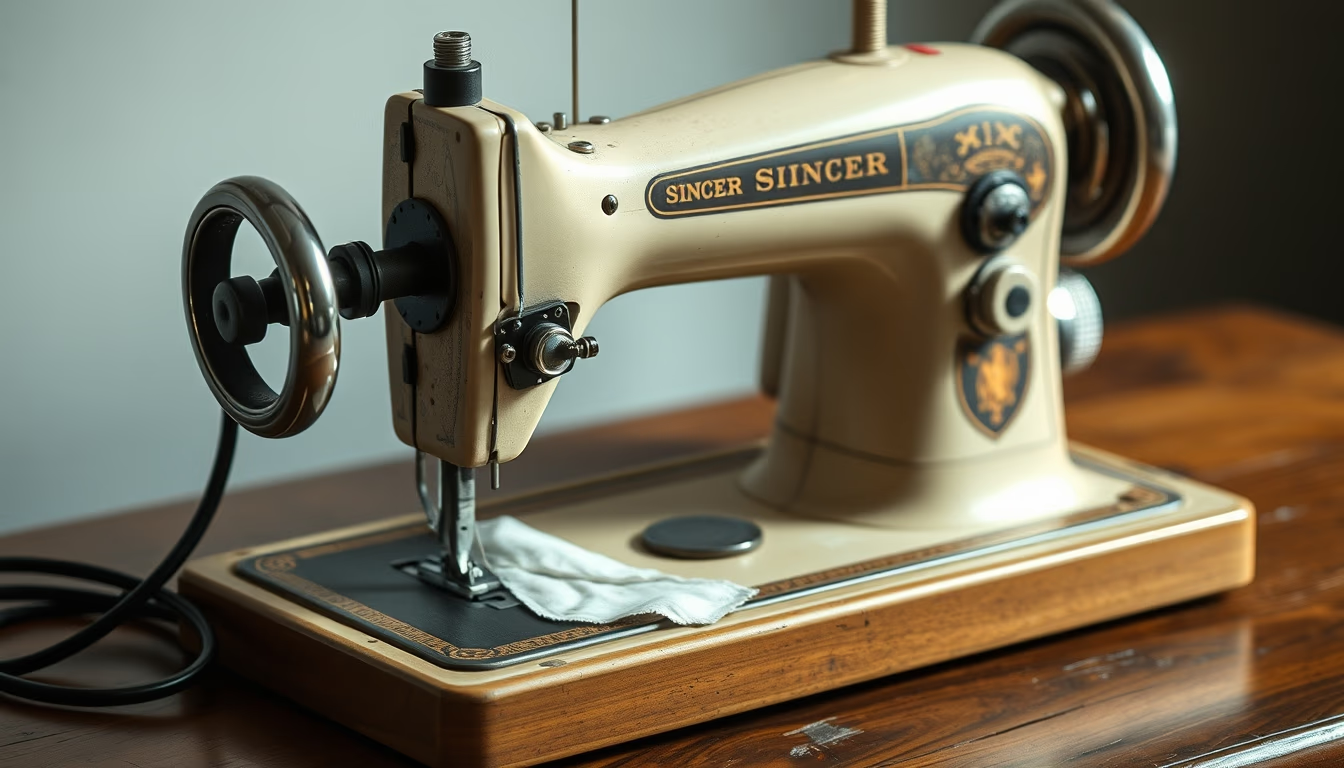
Vintage sewing machine: an icon of the textile revolution that transformed domestic work and the fashion industry since the 19th century.
About this subject
Vintage sewing machines, such as Singer models manufactured from 1851 onward, represent a milestone in the history of textile technology. Before their invention, all sewing was done by hand, a slow process that limited the production of clothing and household items. The introduction of the sewing machine allowed garments to be made in a fraction of the time, boosting the apparel industry and enabling mass production.
In Brazil, these machines arrived during the imperial period and became an essential part of the home, especially in rural and urban areas. Models like the Singer 15K, known as the "vibrating arm machine," and the Singer 66, with its rotary hook mechanism, are examples of robust and lasting design. Many of these pieces are now collectors' items, valued for both their historical significance and the Art Nouveau or Art Deco aesthetics of their casings.
Culturally, the vintage sewing machine symbolizes female autonomy. In the 19th and early 20th centuries, knowing how to sew was a valued skill, and owning a machine meant financial independence for many women, who could work as seamstresses from home. This equipment also played a key role in sustainable fashion and upcycling movements, inspiring a new generation to value handcraft and repair.
Interestingly, the zigzag stitch, now common, was only commercially introduced in 1883 by Allen B. Wilson with the Wheeler & Wilson machine. Singer, founded by Isaac Singer, became synonymous with sewing machines, with worldwide sales exceeding 500 million units. The legacy of these vintage machines lives on in museum exhibits, antique fairs, and the hearts of craft enthusiasts.
Frequently Asked Questions
Which company was the first to mass-produce sewing machines?
The Singer Manufacturing Company, founded by Isaac Singer in 1851, pioneered the mass production of sewing machines, popularizing them for domestic and industrial use.
How can I identify an original vintage sewing machine?
Check the serial number engraved on the base or on the identification plate. Antique Singer models can be dated using serial number tables available online. Also, examine details such as the type of casing (cast iron, wood) and the feed mechanism.
Can vintage sewing machines still be used today?
Yes, many well-preserved vintage machines still work perfectly for basic sewing. However, parts like the belt and needle may need replacement. Specialized shops offer accessories and maintenance services.
Direct URL
https://pub-c7d6a6ea828543ac903a74a341ccb2e1.r2.dev/imagens/sewing-machine-vintage-national-geographic-style-p2.avifHow to credit
Include a visible link back to UtilizAí. Copy one of the snippets below:
<a href="https://xn--utiliza-eza.com/en/midia/imagens/sewing-machine-vintage-national-geographic-style-p2">Sewing machine vintage</a> by <a href="https://xn--utiliza-eza.com">UtilizAí</a>, licensed under <a href="https://creativecommons.org/licenses/by/4.0/">CC BY 4.0</a>.
[Sewing machine vintage](https://xn--utiliza-eza.com/en/midia/imagens/sewing-machine-vintage-national-geographic-style-p2) by [UtilizAí](https://xn--utiliza-eza.com), CC BY 4.0
License: CC-BY-4.0