Sewing machine vintage
1344×768 · AVIF · CC BY 4.0
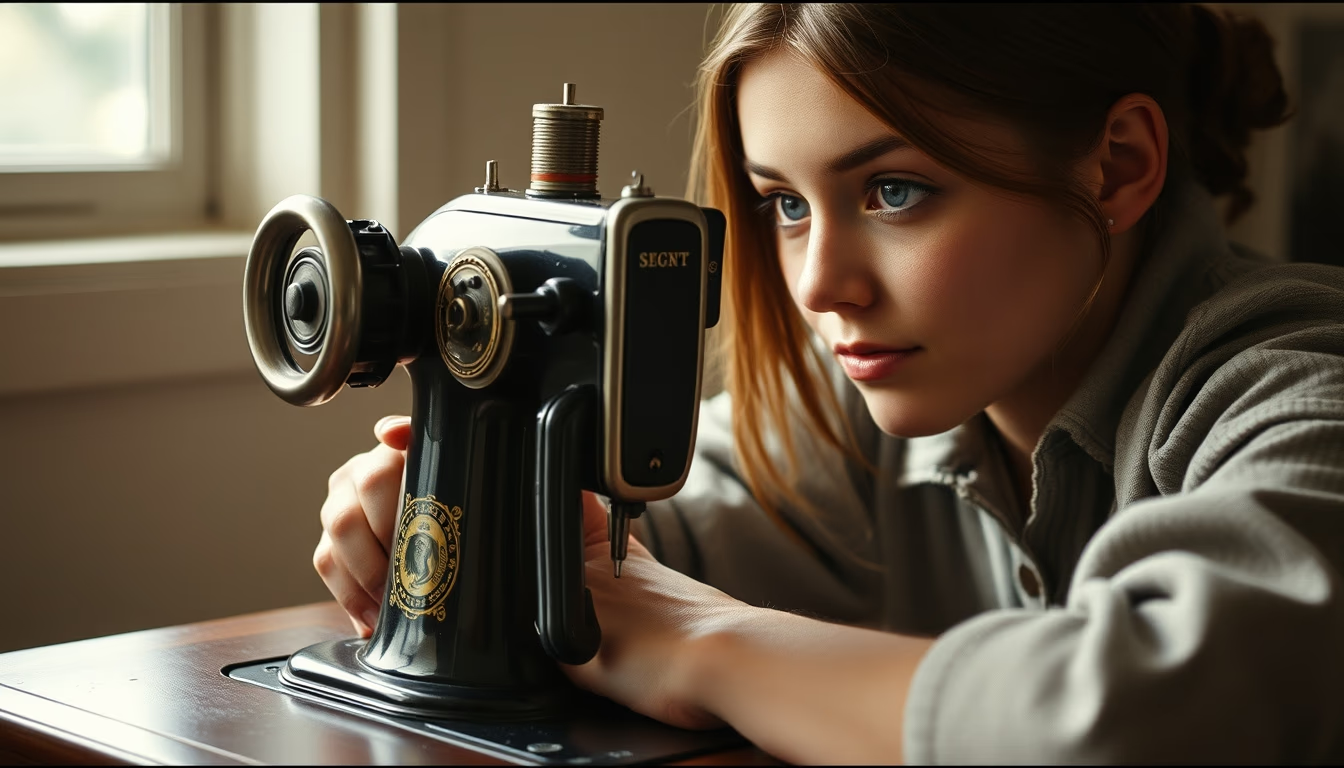
Vintage sewing machines represent a landmark in the textile industry, blending mechanical design and handcrafted functionality.
About this subject
Vintage sewing machines, especially those from the late 19th and early 20th centuries, revolutionized both domestic and industrial textile production. Invented by Elias Howe in 1846 and perfected by Isaac Singer, the sewing machine made garment manufacturing faster and more affordable. Iconic models such as the Singer 15K and Singer 66k are known for their durability and design, featuring cast-iron frames and gold arabesque decorations.
These machines operate entirely through mechanical mechanisms: a foot pedal or hand crank drives gears that move the needle and shuttle, forming a lockstitch. With no electronic components, they are easy to repair and maintain; many still work perfectly after over a century. In countries like Brazil, Singer machines spurred the fabric trade and fashion, often passed down through generations.
The resurgence of interest in vintage pieces stems from retro aesthetics, sustainability (reusing old objects), and a search for superior quality compared to modern disposable models. Collectors value original accessories such as wooden cases, manuals, and decorative parts. Antiques fairs and specialized shops offer everything from restored machines to rare finds featuring floral or Art Deco motifs.
Interestingly, the Singer 15K was so popular that it inspired copies in many countries, including Brazil, where Singer established a factory in São Paulo in the 1920s. The characteristic sound of its operation and the movement of the handwheel are often linked to nostalgic memories for many Brazilians.
Frequently Asked Questions
How does a mechanical vintage sewing machine work?
It operates via a treadle foot pedal or hand crank that drives gears. The motion moves the needle up and down while a shuttle interlaces the bobbin thread with the needle thread, forming a lockstitch.
Which vintage sewing machine models are most iconic?
The Singer 15K and 66k are the most famous. Others include the Pfaff 130, Singer 127, and White Family Rotary. Each has distinct design and mechanical features.
Why are vintage sewing machines valued today?
They are durable, easy to repair, and have a retro aesthetic. They also promote sustainability by avoiding disposal, and their high quality makes them functional for heavy fabrics.
Direct URL
https://pub-c7d6a6ea828543ac903a74a341ccb2e1.r2.dev/imagens/sewing-machine-vintage-film-grain-authentic-p5.avifHow to credit
Include a visible link back to UtilizAí. Copy one of the snippets below:
<a href="https://xn--utiliza-eza.com/en/midia/imagens/sewing-machine-vintage-film-grain-authentic-p5">Sewing machine vintage</a> by <a href="https://xn--utiliza-eza.com">UtilizAí</a>, licensed under <a href="https://creativecommons.org/licenses/by/4.0/">CC BY 4.0</a>.
[Sewing machine vintage](https://xn--utiliza-eza.com/en/midia/imagens/sewing-machine-vintage-film-grain-authentic-p5) by [UtilizAí](https://xn--utiliza-eza.com), CC BY 4.0
License: CC-BY-4.0