Sewing machine vintage
1344×768 · AVIF · CC BY 4.0
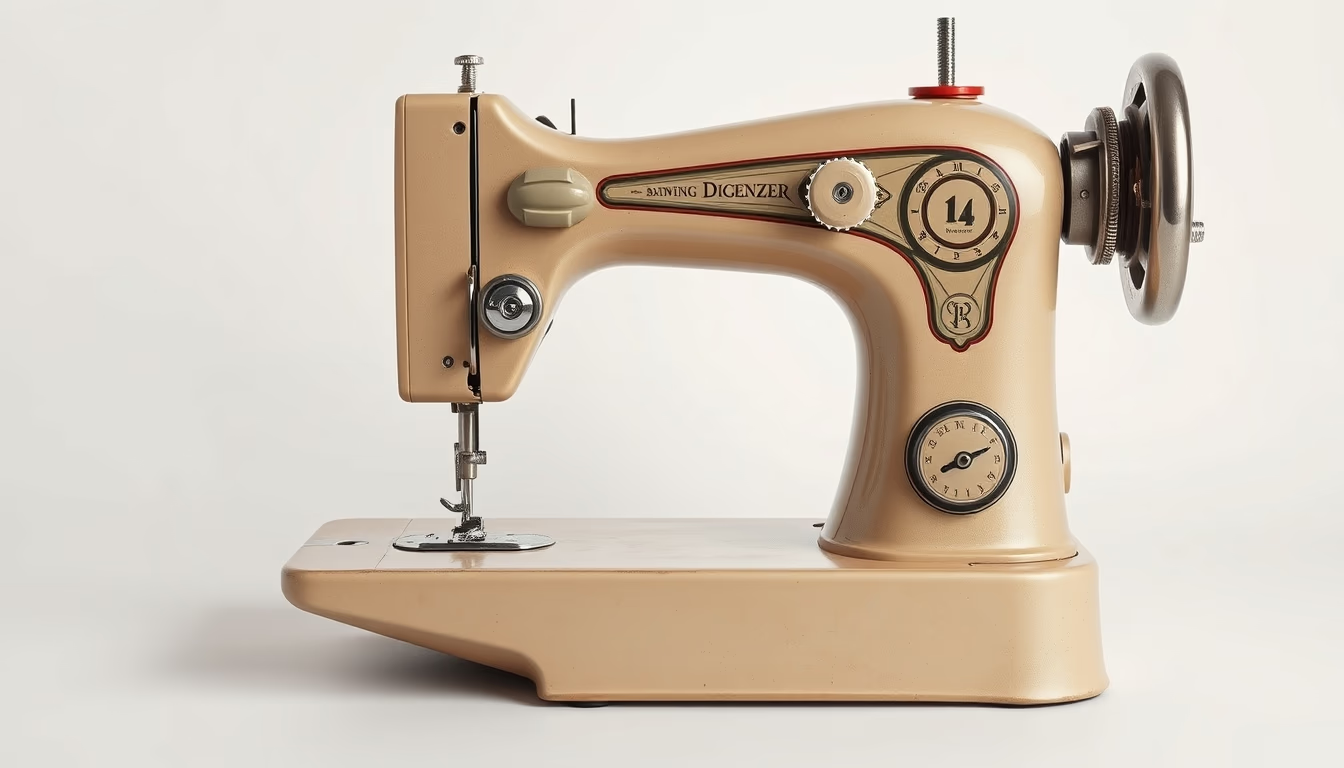
Vintage sewing machine, an icon of the industrial revolution and home fashion, still prized by collectors and artisans.
About this subject
Vintage sewing machines are milestones in textile technology history. Emerging in the 19th century, with Singer (founded in 1851) leading the way, they mechanized what was once purely manual labor, enabling mass production of clothing and accessories. Models like the Singer 15K, known as the "million machine," became coveted for their durability and ornate design, often featuring carved wooden bases and floral paintings.
Beyond aesthetics, these machines have distinct technical differences from modern ones. They operate with exposed gears and shuttle hooks, requiring manual oiling and adjustments. The lack of electronic components makes them simpler to repair, attracting restorers and maker movement enthusiasts. Many still work perfectly after a century, handling thick fabrics like denim and leather with ease.
Culturally, the vintage sewing machine symbolizes women's autonomy at home and the rise of affordable fashion. During World War II, campaigns encouraged women to mend and alter clothes, turning machines into tools of resilience. Today, collectors seek rare models like the Singer Featherweight (portable) or the German Pfaff 130, which can fetch thousands of dollars at specialized auctions.
Restoring a vintage machine involves full disassembly, cleaning rusted parts, and replacing rubber belts. In cities like São Paulo, specialized workshops offer maintenance courses. For those who want to sew with style and history, these machines are more than tools: they are witnesses to the engineering and creativity of past eras.
Frequently Asked Questions
What is the best brand of vintage sewing machine?
Singer is the most well-known and has easily available parts, but brands like Pfaff, Bernina, and Necchi offer high precision and collector value. The choice depends on intended use: Singer 15K is sturdy for heavy fabrics, while Featherweight is lightweight for portability.
How to identify a vintage sewing machine?
Look for the serial number engraved on the machine, usually on the base or arm. Websites like ISMACS (International Sewing Machine Collectors' Society) can help determine the year of manufacture. Features like an external handwheel, shuttle bobbin, and floral decoration indicate older models.
Is it worth restoring a vintage sewing machine?
Yes, if the machine is structurally intact. Restoration can be cheaper than a new quality machine and results in durable equipment. It involves cleaning, lubrication, and possibly replacing the belt. Parts are available in specialized shops or through collector groups.
Direct URL
https://pub-c7d6a6ea828543ac903a74a341ccb2e1.r2.dev/imagens/sewing-machine-vintage-commercial-product-photography-p0.avifHow to credit
Include a visible link back to UtilizAí. Copy one of the snippets below:
<a href="https://xn--utiliza-eza.com/en/midia/imagens/sewing-machine-vintage-commercial-product-photography-p0">Sewing machine vintage</a> by <a href="https://xn--utiliza-eza.com">UtilizAí</a>, licensed under <a href="https://creativecommons.org/licenses/by/4.0/">CC BY 4.0</a>.
[Sewing machine vintage](https://xn--utiliza-eza.com/en/midia/imagens/sewing-machine-vintage-commercial-product-photography-p0) by [UtilizAí](https://xn--utiliza-eza.com), CC BY 4.0
License: CC-BY-4.0