Seedlings tray nursery
1344×768 · AVIF · CC BY 4.0
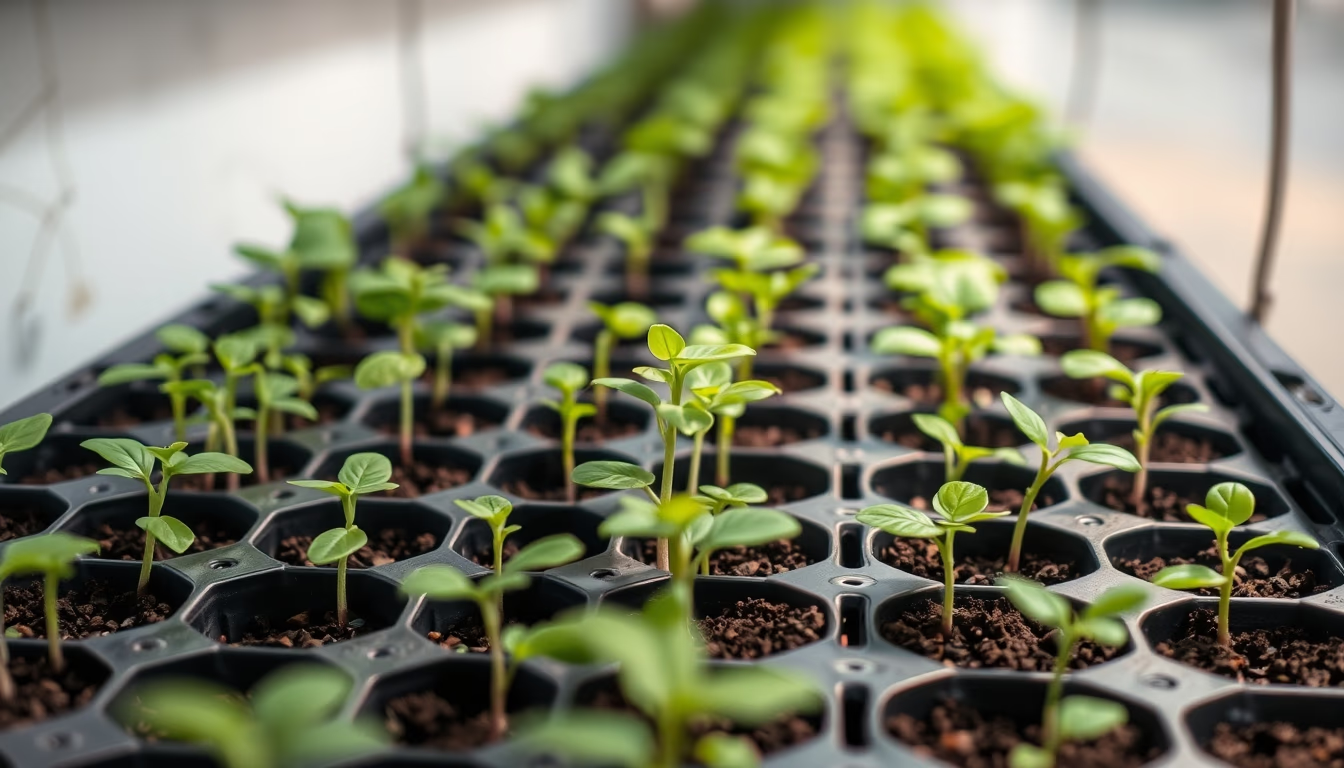
Seedling trays are essential tools in modern agriculture, optimizing germination and early plant development.
About this subject
Seedling trays, also known as germination trays or seed starting trays, are compartmentalized containers used to produce seedlings from seeds. Each individual cell allows roots to develop separately, making transplanting easier and reducing root shock. These trays are widely employed in commercial greenhouses, nurseries, and by home gardeners, especially for vegetables like tomatoes, peppers, lettuce, and broccoli.
Common materials include expanded polystyrene (EPS), rigid polypropylene, and biodegradable alternatives made from coconut coir or peat. The choice of material influences moisture retention, aeration, and durability. Reusable rigid plastic trays dominate the market, but biodegradable ones are gaining ground by reducing plastic waste. Cell sizes range from 32 to 288 cavities, depending on the species and desired cultivation time before transplanting.
The technique of sowing in trays allows precise control over irrigation, fertilization, and light exposure, resulting in more uniform and vigorous seedlings. In Brazil, seedling trays are widespread in vegetable production, especially in the southern region and the green belt of São Paulo. Studies indicate that transplanting seedlings produced in trays can increase productivity by up to 20% compared to direct seeding, while reducing seed consumption by up to 50%.
Interestingly, the first modern seedling trays were developed in Denmark in the 1960s, revolutionizing horticulture. Today, innovation continues with detachable cell trays (plug trays) and capillary irrigation systems. For home gardeners, seedling trays are an affordable tool that allows early harvests and protects seedlings from pests and weather.
Frequently Asked Questions
What are the advantages of using seedling trays over direct seeding?
Seedling trays allow more precise control over germination, greater plant uniformity, reduced seed consumption, and the ability to protect seedlings from pests and adverse weather. They also facilitate transplanting with less root stress.
What is the ideal cell size for tomatoes?
For tomatoes, cells of 50 to 128 cavities are recommended. Smaller cells (128) are used for large-scale production with a short nursery period, while larger cells (50) are better for seedlings that need more time before transplanting.
Do biodegradable seedling trays work as well as plastic ones?
Yes, biodegradable trays made from coconut coir or peat offer good aeration and moisture retention, and can be transplanted directly into the soil to avoid root damage. However, they may decompose faster under wet conditions, requiring careful handling.
Direct URL
https://pub-c7d6a6ea828543ac903a74a341ccb2e1.r2.dev/imagens/seedlings-tray-nursery-studio-editorial-portrait-p6.avifHow to credit
Include a visible link back to UtilizAí. Copy one of the snippets below:
<a href="https://xn--utiliza-eza.com/en/midia/imagens/seedlings-tray-nursery-studio-editorial-portrait-p6">Seedlings tray nursery</a> by <a href="https://xn--utiliza-eza.com">UtilizAí</a>, licensed under <a href="https://creativecommons.org/licenses/by/4.0/">CC BY 4.0</a>.
[Seedlings tray nursery](https://xn--utiliza-eza.com/en/midia/imagens/seedlings-tray-nursery-studio-editorial-portrait-p6) by [UtilizAí](https://xn--utiliza-eza.com), CC BY 4.0
License: CC-BY-4.0