Seedlings tray nursery
1344×768 · AVIF · CC BY 4.0
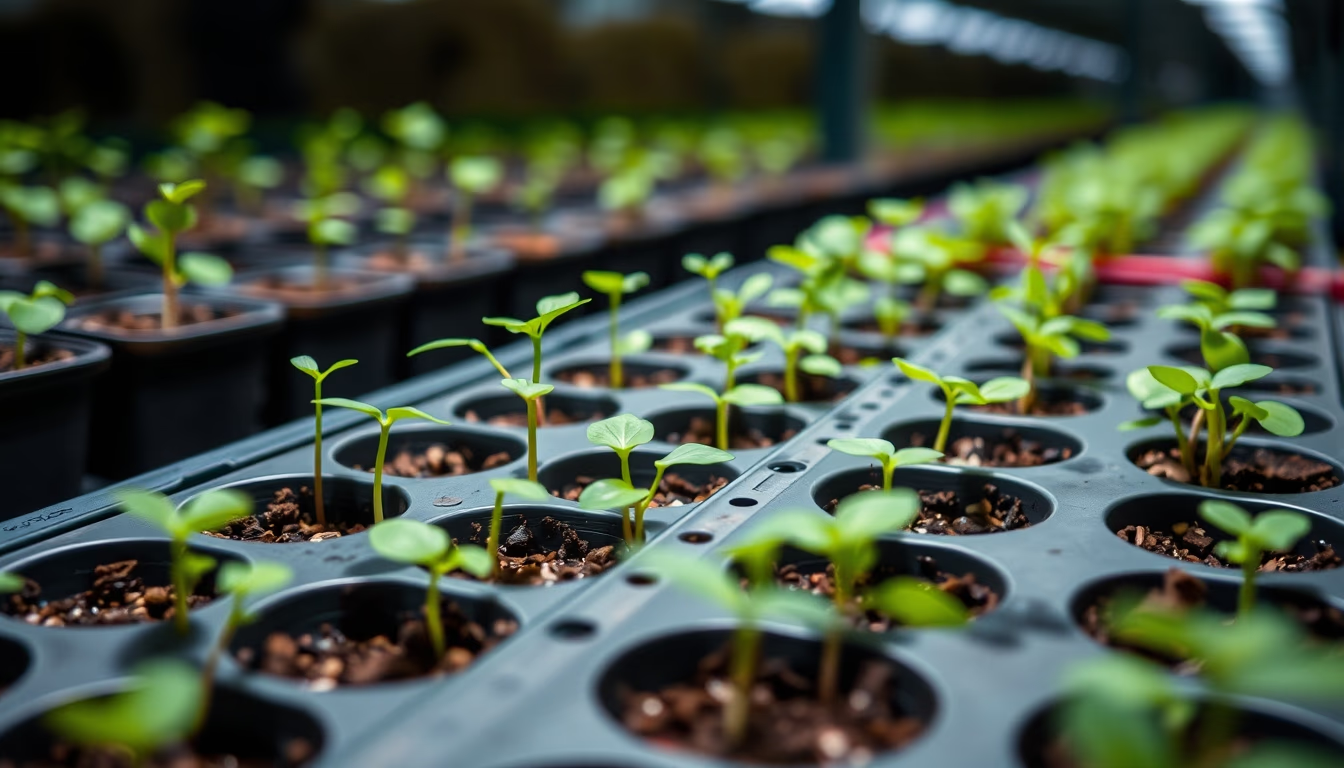
Seedling trays are essential tools in modern agriculture, optimizing germination and transplanting of vegetables and flowers.
About this subject
Seedling trays, also known as germination trays or plug trays, revolutionized seedling production by allowing cultivation in individual cells. Each cell provides adequate drainage and space for root development, reducing transplant shock. This system is widely used in greenhouses and commercial nurseries for vegetables such as tomato, bell pepper, lettuce, and broccoli, as well as ornamental flowers.
The technique gained popularity in the 1960s with the advent of lightweight, inexpensive plastics. Today, trays are made from polypropylene or polystyrene, and can be reusable or disposable. Cell size varies by species: smaller cells (128 to 288 per tray) are common for fast-transplant seedlings, while larger cells (50 to 72) are used for plants requiring more root space before final planting.
Using seedling trays allows precise control of irrigation and fertilization, and facilitates mechanization. Many nurseries employ capillary or mist irrigation systems to maintain optimal moisture. Seeding is done with automated seeders that deposit one seed per cell, ensuring uniformity. After germination, seedlings are grown in a protected environment until they reach the ideal transplant stage, usually when they have 4 to 6 true leaves.
In Brazilian agriculture, seedling trays are essential for large-scale vegetable production, especially in the South, Southeast, and Northeast regions. They are also used in forestry to produce eucalyptus and pine seedlings, and in fruit farming for species like passion fruit and papaya. This system has reduced losses from soil-borne diseases and improved seed use efficiency, contributing to the sustainability of agricultural production.
Frequently Asked Questions
What is the advantage of using seedling trays over traditional seedbeds?
Seedling trays provide greater uniformity, reduced disease, seed savings, and easier mechanized transplanting, leading to higher productivity.
How many cells does a typical seedling tray have?
Common trays have 128, 200, or 288 cells, but size varies by crop. Larger cells (72) are used for plants needing more root space.
How to choose the ideal substrate for seedling trays?
The substrate should be light, porous, and sterile, typically based on peat, vermiculite, and perlite. It prevents compaction and ensures good drainage and aeration for roots.
Direct URL
https://pub-c7d6a6ea828543ac903a74a341ccb2e1.r2.dev/imagens/seedlings-tray-nursery-lo-fi-disposable-camera-p3.avifHow to credit
Include a visible link back to UtilizAí. Copy one of the snippets below:
<a href="https://xn--utiliza-eza.com/en/midia/imagens/seedlings-tray-nursery-lo-fi-disposable-camera-p3">Seedlings tray nursery</a> by <a href="https://xn--utiliza-eza.com">UtilizAí</a>, licensed under <a href="https://creativecommons.org/licenses/by/4.0/">CC BY 4.0</a>.
[Seedlings tray nursery](https://xn--utiliza-eza.com/en/midia/imagens/seedlings-tray-nursery-lo-fi-disposable-camera-p3) by [UtilizAí](https://xn--utiliza-eza.com), CC BY 4.0
License: CC-BY-4.0