Seedlings tray nursery
1344×768 · AVIF · CC BY 4.0
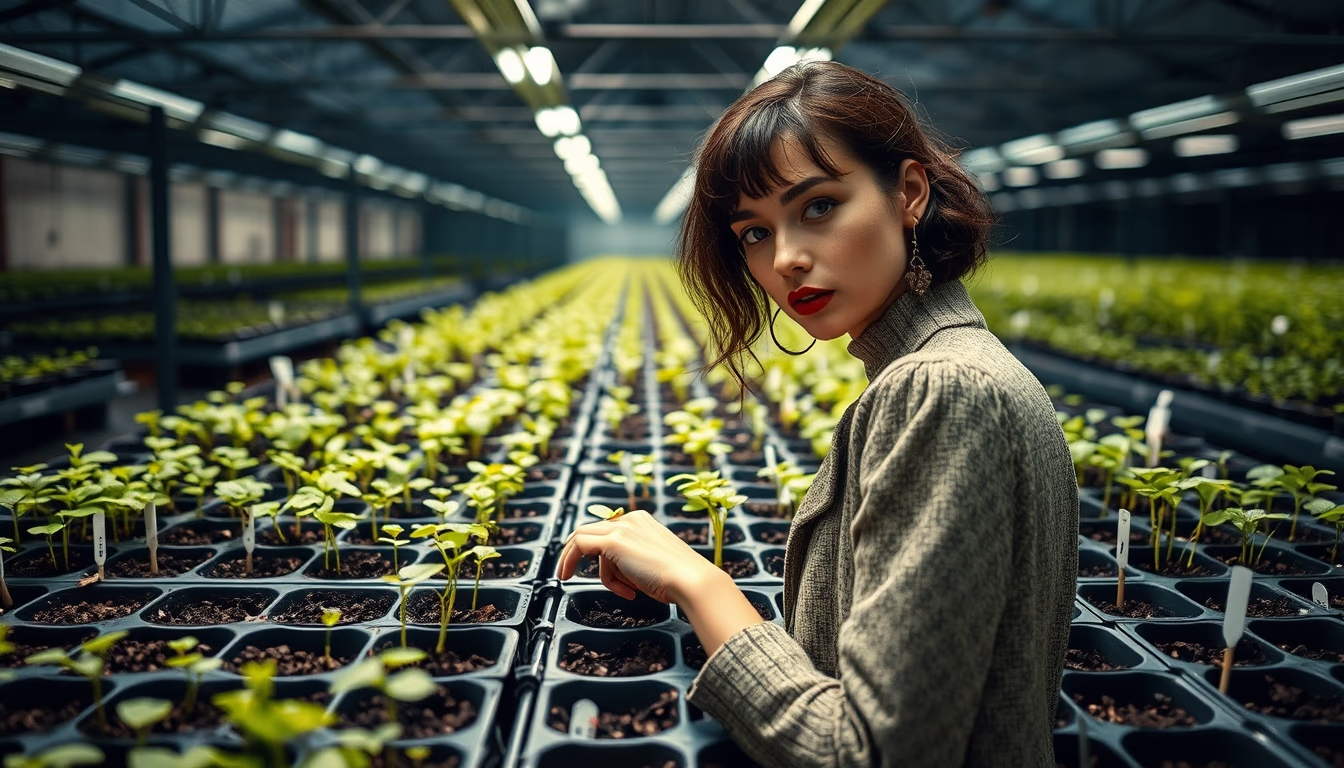
Seedling trays are essential tools in modern agriculture, optimizing germination and transplanting with water efficiency and phytosanitary control.
About this subject
Seedling trays, also known as germination trays or plug trays, have revolutionized agricultural production by allowing seedlings to be grown in individual cells. This system, widely adopted in commercial nurseries and family farming, ensures greater uniformity in plant development and reduces seed waste. Each cell has a drainage hole, preventing waterlogging and promoting adequate root aeration.
The use of seedling trays is associated with techniques such as mechanized sowing and fertigation, which increase productivity in vegetable, flower, and even forest species cultivation. Common materials include expanded polystyrene (EPS), rigid polypropylene, and increasingly biodegradable options made from plant fibers or sugarcane bagasse. The choice of cell size depends on the plant type and the required transplant time.
Globally, seedling trays have expanded with precision agriculture and no-till farming, especially in countries like Brazil, the United States, and the Netherlands. Besides reducing water consumption, the system minimizes root stress during transplanting, increasing field survival rates. In urban contexts, trays are also popular in home gardens and sustainable landscaping projects.
Interestingly, seedling trays have gained prominence in fashion editorials and design, where they are used as aesthetic elements to symbolize sustainability and connection to nature. This intersection between agriculture and high fashion reflects a global trend of valuing local food production and biodiversity.
Frequently Asked Questions
What are seedling trays used for?
Seedling trays are used to germinate seeds and grow seedlings in an organized manner, ensuring uniformity, space savings, and ease of transplanting to the final location.
What are the most common types of seedling trays?
The most common types include expanded polystyrene (EPS), rigid polypropylene, and biodegradable trays. EPS trays are lightweight and insulating, while biodegradable ones are sustainable options made from natural fibers.
How to make a seedling tray at home?
You can reuse styrofoam or plastic trays with bottom holes, or buy proper trays at garden stores. Fill each cell with substrate, plant the seeds, and maintain proper moisture until germination.
Direct URL
https://pub-c7d6a6ea828543ac903a74a341ccb2e1.r2.dev/imagens/seedlings-tray-nursery-high-fashion-editorial-p0.avifHow to credit
Include a visible link back to UtilizAí. Copy one of the snippets below:
<a href="https://xn--utiliza-eza.com/en/midia/imagens/seedlings-tray-nursery-high-fashion-editorial-p0">Seedlings tray nursery</a> by <a href="https://xn--utiliza-eza.com">UtilizAí</a>, licensed under <a href="https://creativecommons.org/licenses/by/4.0/">CC BY 4.0</a>.
[Seedlings tray nursery](https://xn--utiliza-eza.com/en/midia/imagens/seedlings-tray-nursery-high-fashion-editorial-p0) by [UtilizAí](https://xn--utiliza-eza.com), CC BY 4.0
License: CC-BY-4.0