Seedlings tray nursery
1344×768 · AVIF · CC BY 4.0
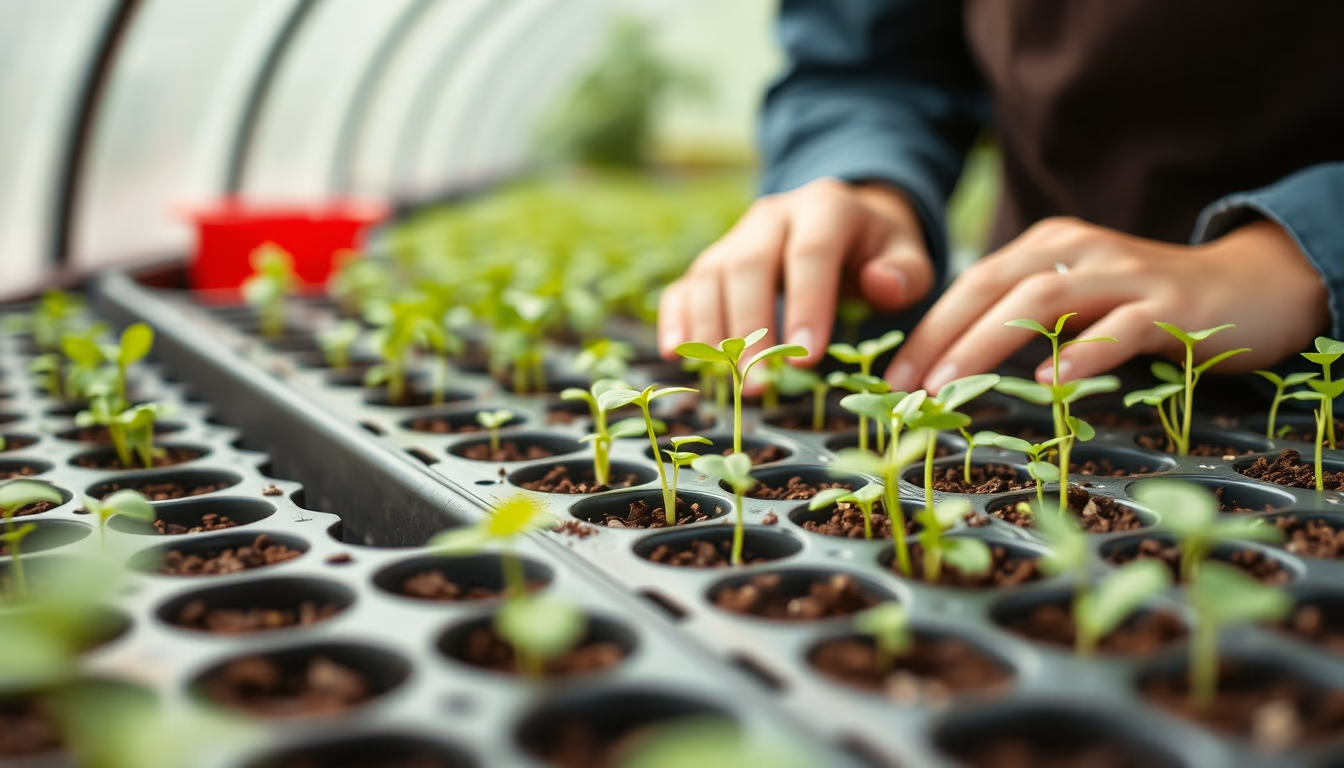
Seedlings grown in germination trays ensure higher survival rates and uniformity in planting, an essential technique in modern agriculture.
About this subject
Seedling trays, also known as germination trays, are multi-cell containers used for nursery production in greenhouses and shade houses. Made from polystyrene, polypropylene, or biodegradable materials, they come in cell sizes ranging from 32 to 288 cavities, depending on the crop. This technique is widely adopted for vegetables, flowers, fruit trees, and even grains like soybeans and corn, allowing precise control of irrigation, substrate, and nutrition.
Using trays reduces transplant shock because roots remain protected and develop compactly, avoiding root binding. Studies show productivity gains of 15% to 30% compared to direct seeding, along with seed savings and lower early pest incidence. In countries like Brazil and the Netherlands, automated nurseries use trays to produce millions of seedlings per cycle, with pneumatic seeders and conveyor irrigation systems.
Historically, seedling trays became popular in the 1960s with the rise of plasticulture and the need for agricultural standardization. Today, the global trend favors reusable trays and recycled materials, aligning with sustainability. The choice of cell size depends on the seedling's nursery duration: larger cells for longer-cycle crops like tomatoes and peppers, and smaller ones for fast-growing species like lettuce.
Proper disinfection between cycles is critical to prevent fungal and bacterial diseases. Methods include washing with hot water or sodium hypochlorite solutions. By 2026, greater integration with moisture sensors and automation is expected, optimizing management in smart greenhouses.
Frequently Asked Questions
How to choose the ideal cell size for a seedling tray?
Cell size depends on the nursery duration and species size. Larger cells (50 to 72 cavities) suit long-cycle crops like tomatoes and peppers; smaller cells (128 to 288 cavities) work for fast-growing crops like lettuce and broccoli.
Reusable or disposable trays: which is the better option?
Reusable trays made of polypropylene are more cost-effective long-term but require strict disinfection. Disposable polystyrene trays prevent cross-contamination but generate more waste. The choice depends on operational costs and sustainability goals.
Which crops benefit most from using seedling trays?
Leafy vegetables, fruiting vegetables, and root crops (lettuce, tomato, pepper, onion) have high success rates. Fruit tree seedlings, ornamental flowers, and recently grains like soybeans and corn in no-till systems also benefit greatly.
Direct URL
https://pub-c7d6a6ea828543ac903a74a341ccb2e1.r2.dev/imagens/seedlings-tray-nursery-film-grain-authentic-p2.avifHow to credit
Include a visible link back to UtilizAí. Copy one of the snippets below:
<a href="https://xn--utiliza-eza.com/en/midia/imagens/seedlings-tray-nursery-film-grain-authentic-p2">Seedlings tray nursery</a> by <a href="https://xn--utiliza-eza.com">UtilizAí</a>, licensed under <a href="https://creativecommons.org/licenses/by/4.0/">CC BY 4.0</a>.
[Seedlings tray nursery](https://xn--utiliza-eza.com/en/midia/imagens/seedlings-tray-nursery-film-grain-authentic-p2) by [UtilizAí](https://xn--utiliza-eza.com), CC BY 4.0
License: CC-BY-4.0