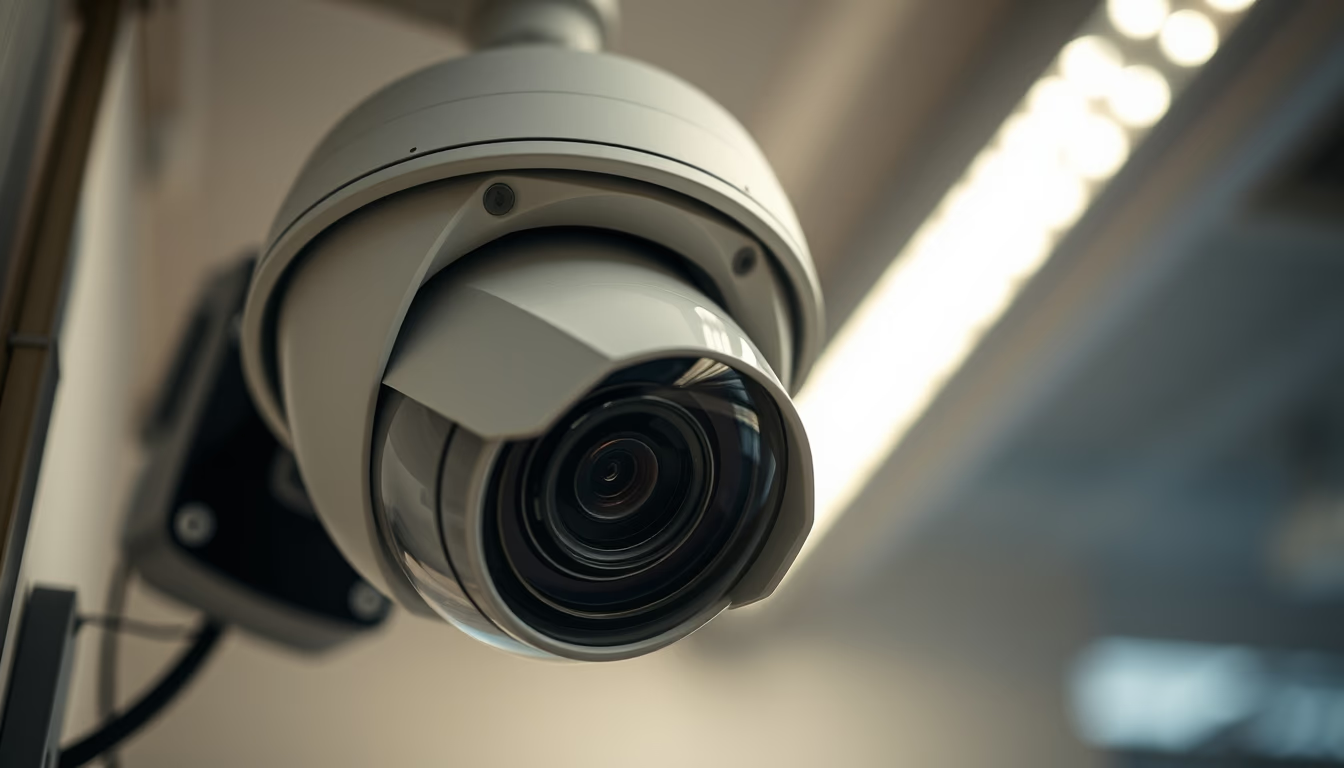
Security camera surveillance
1344×768 · AVIF · CC BY 4.0
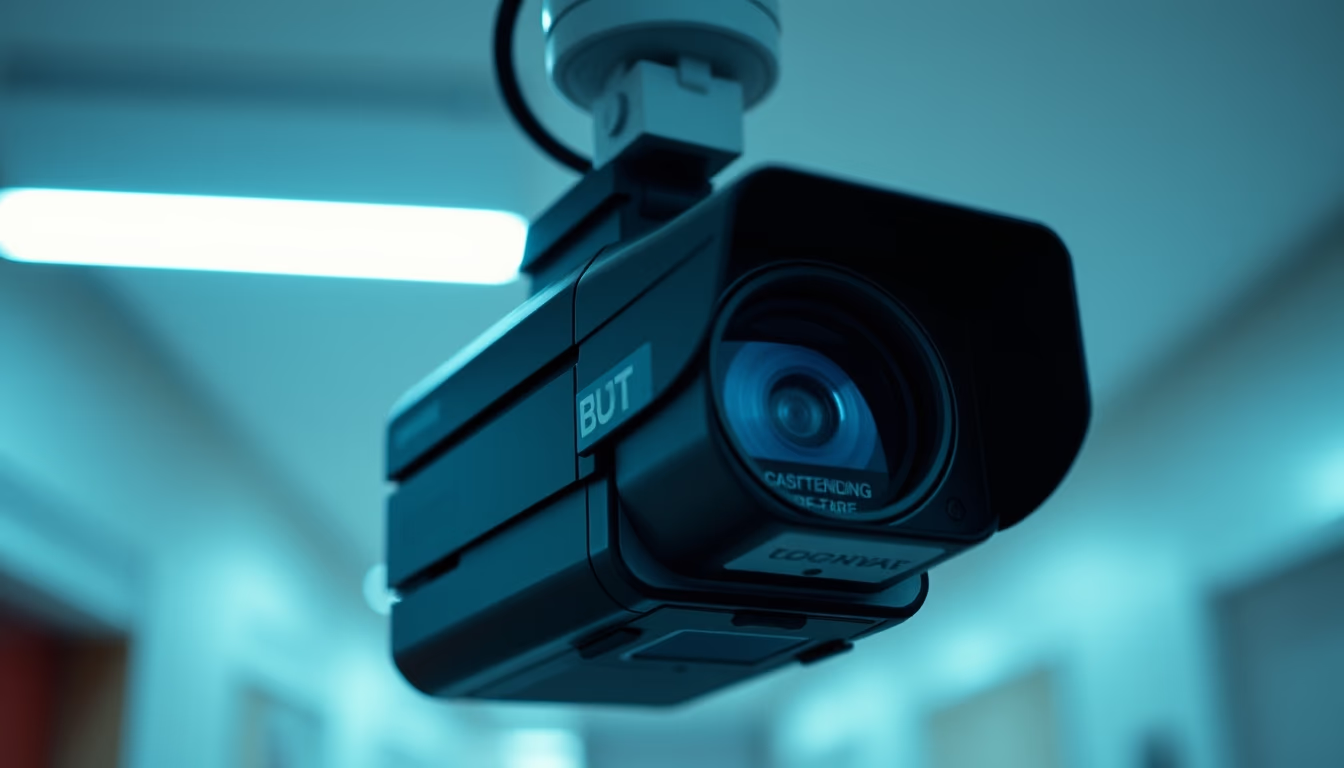
Security cameras have evolved from analog systems to intelligent networks with facial recognition and behavior analysis.
About this subject
Security cameras, first developed in the 1940s for military surveillance, have become ubiquitous globally. In the United Kingdom, there is an estimated one camera for every 11 people, one of the highest densities worldwide, largely deployed for crime prevention and traffic monitoring. The technology has transitioned from analog closed-circuit television (CCTV) to digital IP cameras with edge computing and cloud storage. Modern systems leverage artificial intelligence for real-time video analytics, including facial recognition, license plate reading, and anomaly detection. Privacy concerns have sparked regulatory responses, such as the European Union's General Data Protection Regulation (GDPR), which imposes strict rules on video data processing. In retail, security cameras serve dual purposes: loss prevention and customer behavior analysis, often using heatmaps to optimize store layouts. The market is dominated by companies like Hikvision, Dahua, and Axis Communications, which together control over 60% of global market share. A notable trend is the integration of security cameras with smart home ecosystems, allowing users to monitor their homes via smartphones and voice assistants like Amazon Alexa and Google Assistant. In 2025, the global video surveillance market is projected to reach $75 billion, driven by urbanization, terrorism threats, and the rise of smart cities. However, controversies persist, including the use of facial recognition by police departments and the risk of data breaches, as seen in the 2020 hack of Verkada cameras exposing feeds from hospitals and prisons.
Frequently Asked Questions
What is the global density of security cameras?
China leads with over 200 million cameras, followed by the United States and the United Kingdom. The UK has one camera per 11 people, one of the highest densities in the world.
How do facial recognition cameras work?
Facial recognition uses AI to analyze facial features such as the distance between eyes and nose shape, comparing them against databases. Algorithms can identify individuals in real time, but accuracy varies based on lighting and angle.
Are security cameras effective in reducing crime?
Studies show that visible cameras can deter property crime by 10, 20%. However, their effectiveness is debated; they are most useful when combined with active monitoring and law enforcement response.
Direct URL
https://pub-c7d6a6ea828543ac903a74a341ccb2e1.r2.dev/imagens/security-camera-surveillance-lo-fi-disposable-camera-p1.avifHow to credit
Include a visible link back to UtilizAí. Copy one of the snippets below:
<a href="https://xn--utiliza-eza.com/en/midia/imagens/security-camera-surveillance-lo-fi-disposable-camera-p1">Security camera surveillance</a> by <a href="https://xn--utiliza-eza.com">UtilizAí</a>, licensed under <a href="https://creativecommons.org/licenses/by/4.0/">CC BY 4.0</a>.
[Security camera surveillance](https://xn--utiliza-eza.com/en/midia/imagens/security-camera-surveillance-lo-fi-disposable-camera-p1) by [UtilizAí](https://xn--utiliza-eza.com), CC BY 4.0
License: CC-BY-4.0