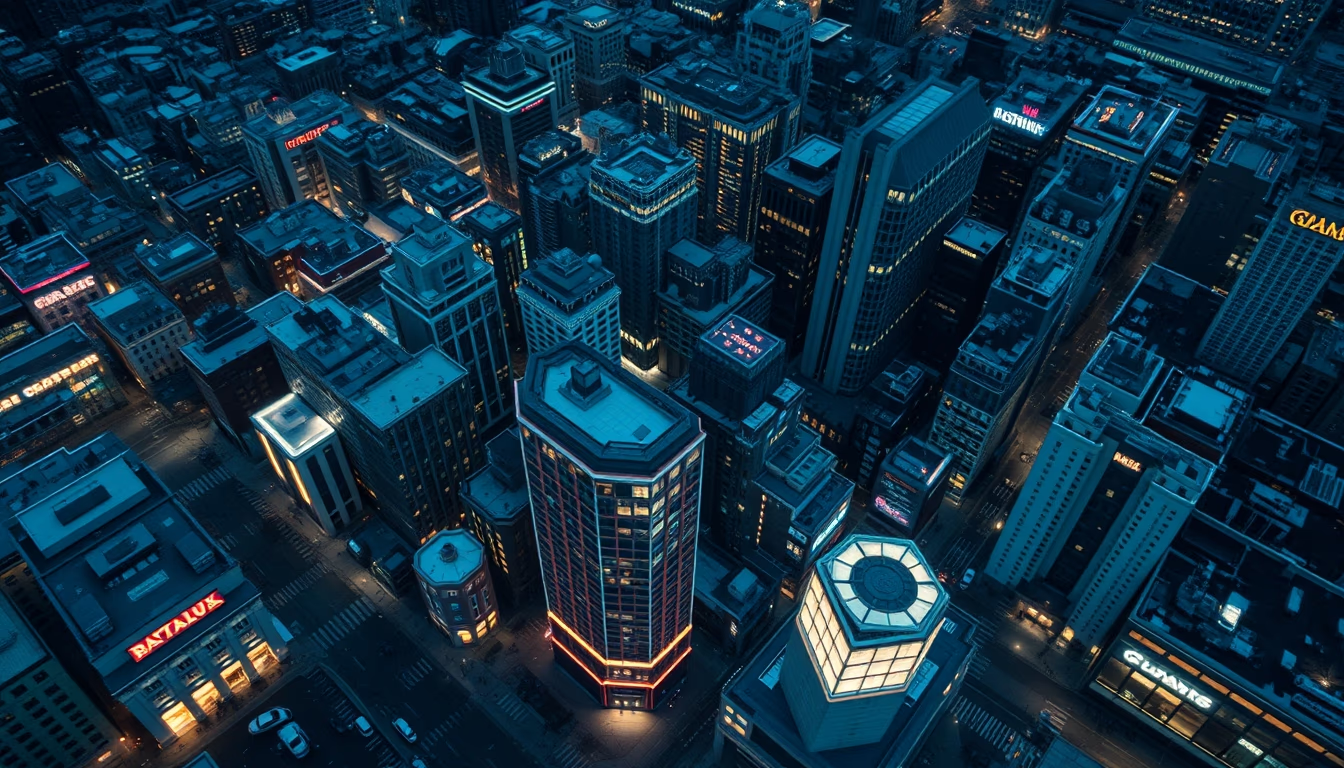
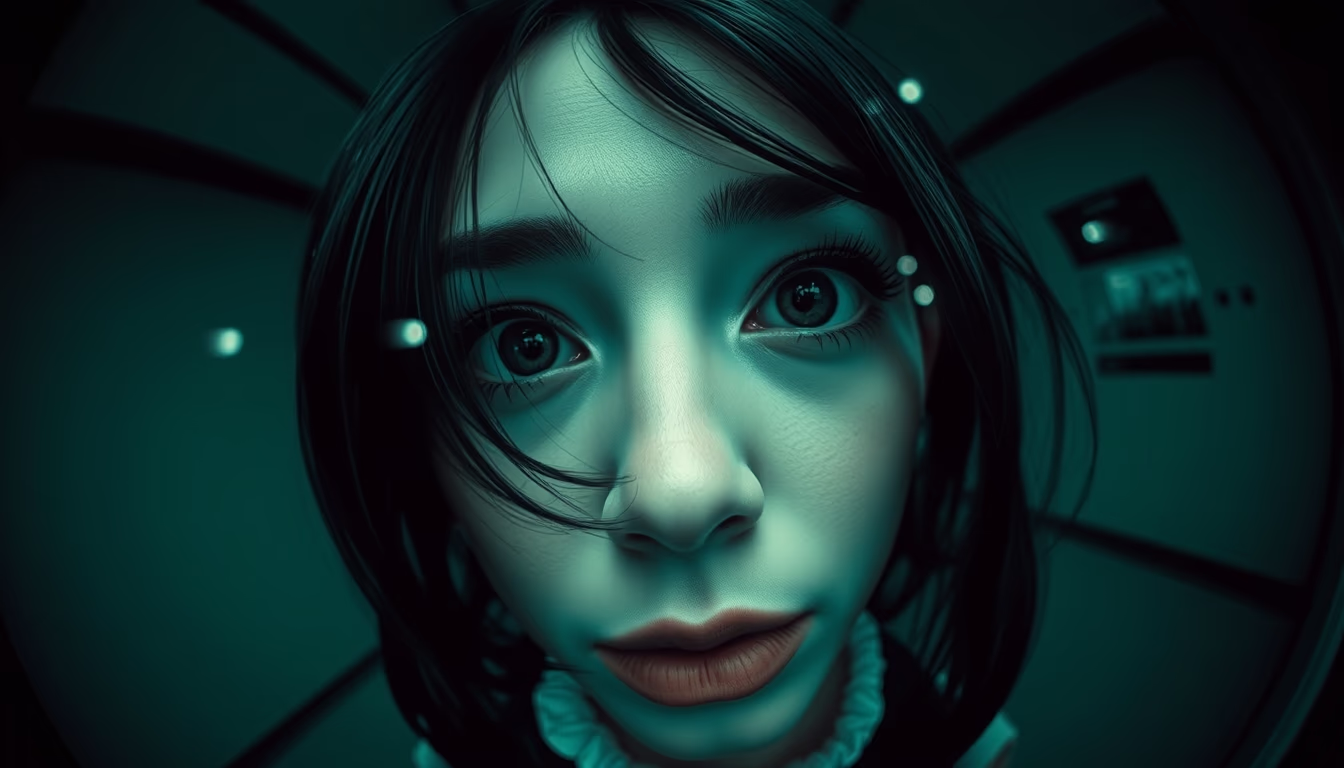
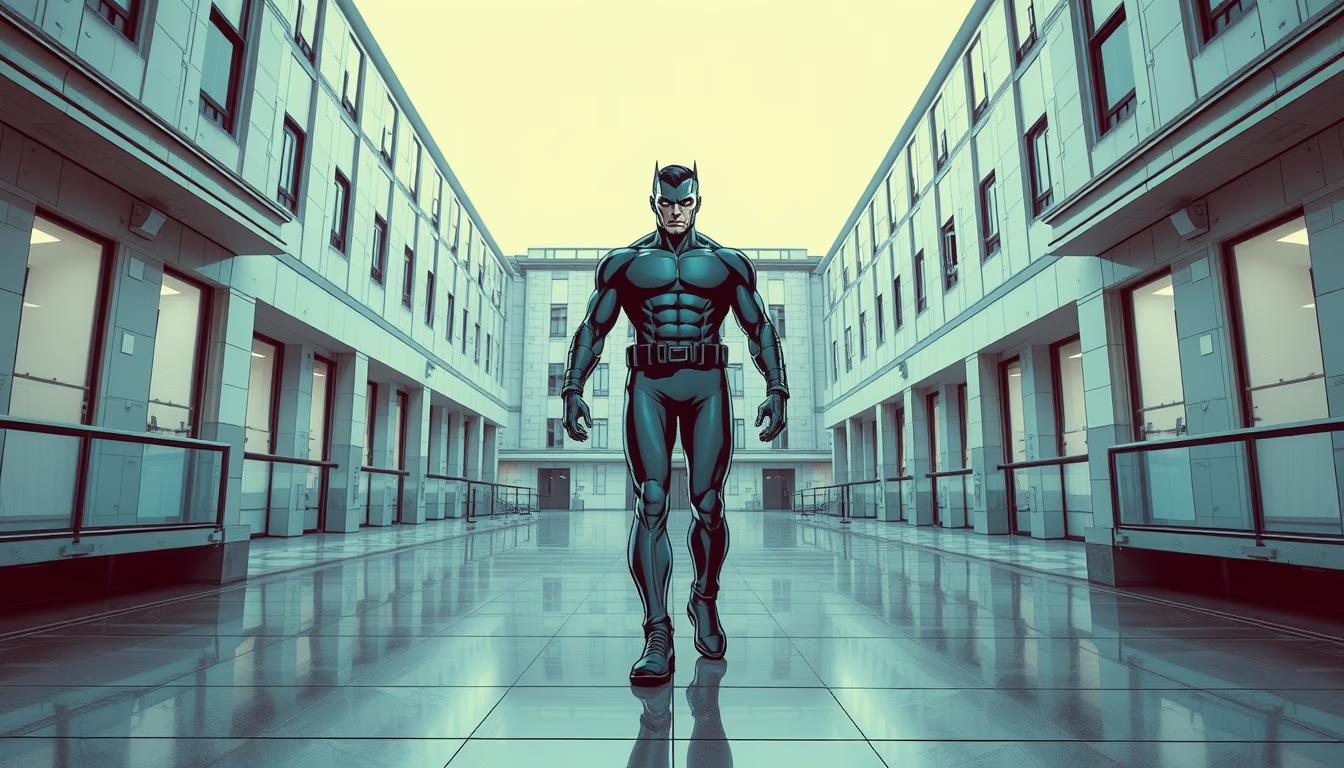
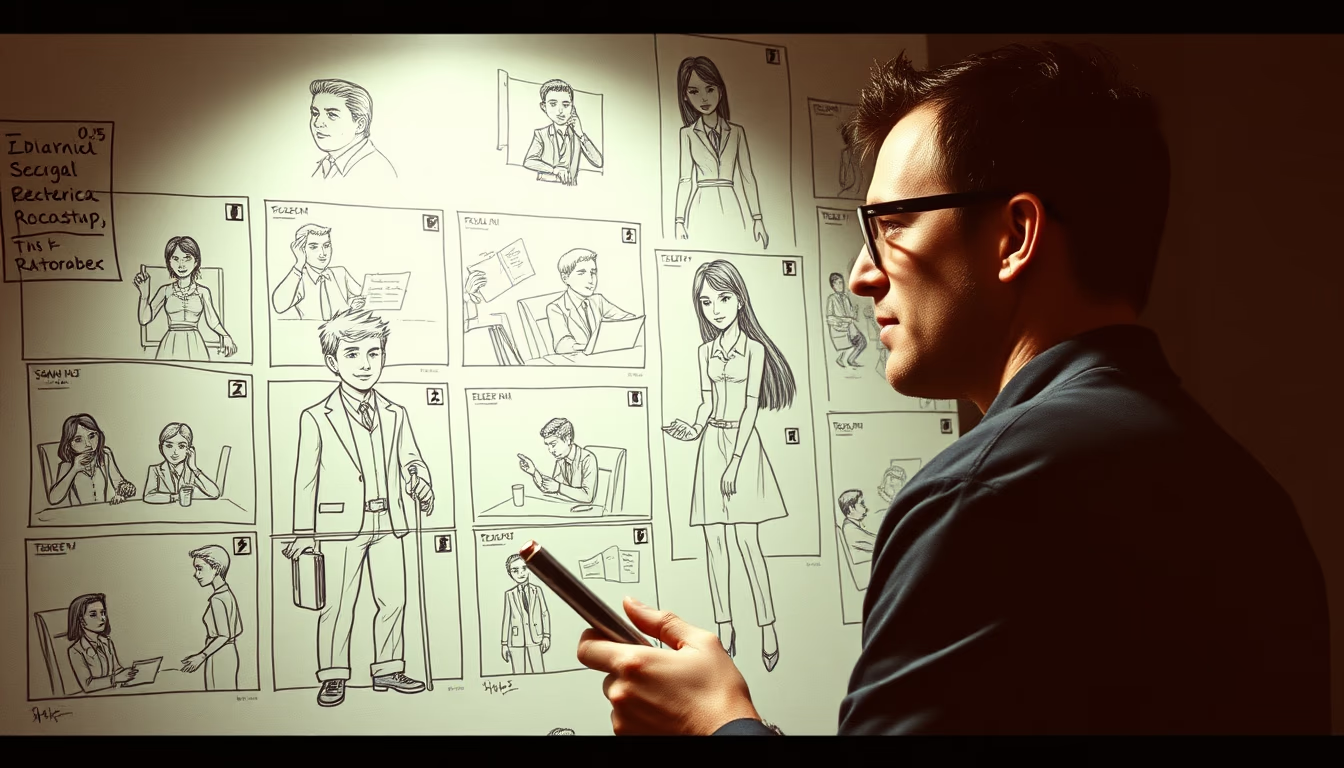
Screentone manga texture
1344×768 · AVIF · CC BY 4.0

Screentone is a texture technique used in manga to create shading and visual details, originally with adhesive transfer sheets.
About this subject
Screentone, derived from "screen tone," refers to adhesive sheets with patterns of dots, lines, or textures applied over black-and-white drawings to add shading, gray tones, and textures. The technique originated in Japan in the 1950s, widely popularized by masters like Osamu Tezuka, who sought ways to speed up manga production and give more visual depth to pages.
There are various types of screentone: from simple dot patterns (halftones) to more complex textures such as parallel lines (hatching), wood, fabric, or light effects. Each pattern is chosen according to the scene's needs: shading a face, texturing a piece of clothing, or creating an atmospheric background. Before the digital age, artists manually cut the sheets with a craft knife over the finished artwork, gluing them onto the desired area. This process required precision and patience, but the results were highly valued.
With the rise of digital illustration software such as Clip Studio Paint and Adobe Photoshop, screentone is now applied digitally, allowing infinite adjustments without material waste. Many manga artists today still use digital versions of classic patterns but also create custom textures. The technique is not limited to Japan; it is used in independent comics and webcomics worldwide, being a distinctive aesthetic element of manga style.
An interesting fact is that screentone was inspired by offset printing and art transfer techniques from the mid-20th century. Although the manual version has fallen out of use, the visual effect remains so iconic that many artists imitate its look even when drawing entirely by hand.
Frequently Asked Questions
How do you apply screentone manually to a drawing?
First, finish the ink drawing. Then, choose a screentone sheet with the desired pattern. Roughly cut the area, position it on the drawing, and press to adhere. Using a craft knife, precisely cut the outline and remove the excess.
What is the difference between screentone and traditional hatching?
Hatching is done manually with parallel or cross-hatched lines, while screentone uses pre-made sheets with repeating patterns. Screentone allows uniform tones and complex textures more quickly.
Is screentone still used in modern manga?
Yes, but predominantly in digital form. Many mangaka use texture libraries in programs like Clip Studio Paint, which simulate classic patterns. Independent artists also use digital versions or print traditional sheets.
Direct URL
https://pub-c7d6a6ea828543ac903a74a341ccb2e1.r2.dev/imagens/screentone-manga-texture-studio-still-life-fresh15.avifHow to credit
Include a visible link back to UtilizAí. Copy one of the snippets below:
<a href="https://xn--utiliza-eza.com/en/midia/imagens/screentone-manga-texture-studio-still-life-fresh15">Screentone manga texture</a> by <a href="https://xn--utiliza-eza.com">UtilizAí</a>, licensed under <a href="https://creativecommons.org/licenses/by/4.0/">CC BY 4.0</a>.
[Screentone manga texture](https://xn--utiliza-eza.com/en/midia/imagens/screentone-manga-texture-studio-still-life-fresh15) by [UtilizAí](https://xn--utiliza-eza.com), CC BY 4.0
License: CC-BY-4.0