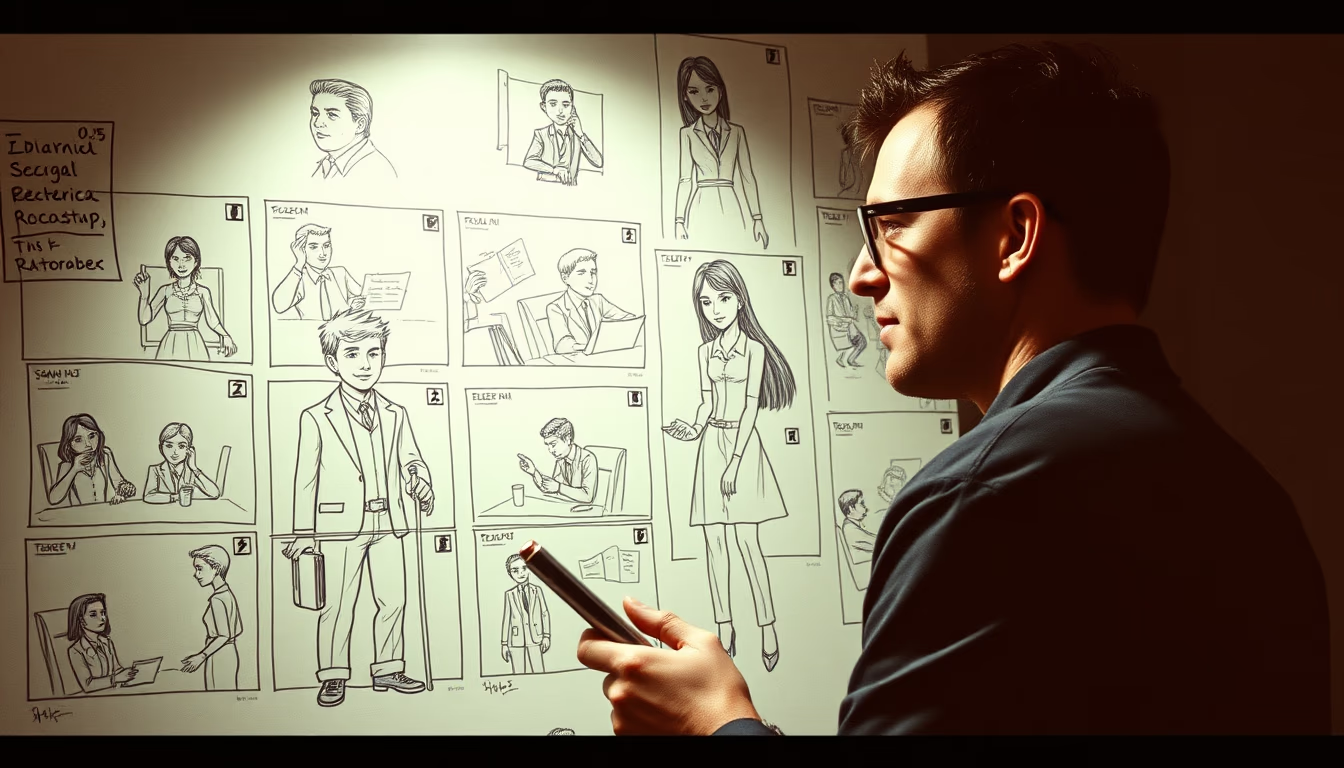
Screentone manga texture
1344×768 · AVIF · CC BY 4.0
Screentone is a shading technique used in manga, consisting of dot patterns that create textures and gradients in illustrations.
About this subject
Screentone, also known as tone or Letratone, is a graphic resource essential in the production of manga and Japanese comics. It consists of adhesive or digital sheets with repetitive patterns of dots, lines, or other geometric shapes, applied over the drawing to simulate shadows, halftones, and textures without the need for manual hatching. The technique emerged in Japan in the 1960s with the rise of modern manga and was widely adopted by artists like Osamu Tezuka and later the entire industry. Originally, screentone sheets were produced by specialized companies such as Deleter and Maxon, offering hundreds of different patterns.
Patterns range from fine dots (like 10L to 85L) to more elaborate textures such as waves, snowflakes, and speed lines. The choice of pattern depends on the desired effect: dense dots for dark shadows, spaced dots for light areas, and special textures for backgrounds or clothing. Manual application involves cutting the sheet to the desired shape and pressing it onto the paper using a knife and spatula, carefully removing excess material. This process, though labor-intensive, allows for artisanal control that many artists still prefer.
With the advancement of digital technology, screentone has been largely replaced by brushes and textures in programs like Clip Studio Paint and Photoshop. Digital artists can apply patterns with a click, adjust opacity and scale, and experiment with infinite combinations without wasting materials. However, analog screentone is still valued for its tactile quality and the retro style reminiscent of classic manga. The technique has also influenced other media aesthetics, such as animation and graphic design, and remains an icon of Japanese comic culture.
Frequently Asked Questions
What is screentone and what is it used for?
Screentone is an adhesive or digital sheet with repeating patterns (dots, lines) used in manga to add shadows, textures, and halftones without manual drawing. It speeds up the process and gives a professional finish.
How is screentone applied manually?
Cut the desired shape from the sheet, place it over the drawing, and press with a spatula. Use a knife to trim excess. Work on a smooth surface and avoid air bubbles.
What is the difference between analog and digital screentone?
Analog screentone is physical, requiring manual skill and consumable material. Digital screentone is applied via software, allowing infinite adjustments and no waste. Many artists combine both for hybrid effects.
Direct URL
https://pub-c7d6a6ea828543ac903a74a341ccb2e1.r2.dev/imagens/screentone-manga-texture-minimalist-composition-fresh6.avifHow to credit
Include a visible link back to UtilizAí. Copy one of the snippets below:
<a href="https://xn--utiliza-eza.com/en/midia/imagens/screentone-manga-texture-minimalist-composition-fresh6">Screentone manga texture</a> by <a href="https://xn--utiliza-eza.com">UtilizAí</a>, licensed under <a href="https://creativecommons.org/licenses/by/4.0/">CC BY 4.0</a>.
[Screentone manga texture](https://xn--utiliza-eza.com/en/midia/imagens/screentone-manga-texture-minimalist-composition-fresh6) by [UtilizAí](https://xn--utiliza-eza.com), CC BY 4.0
License: CC-BY-4.0