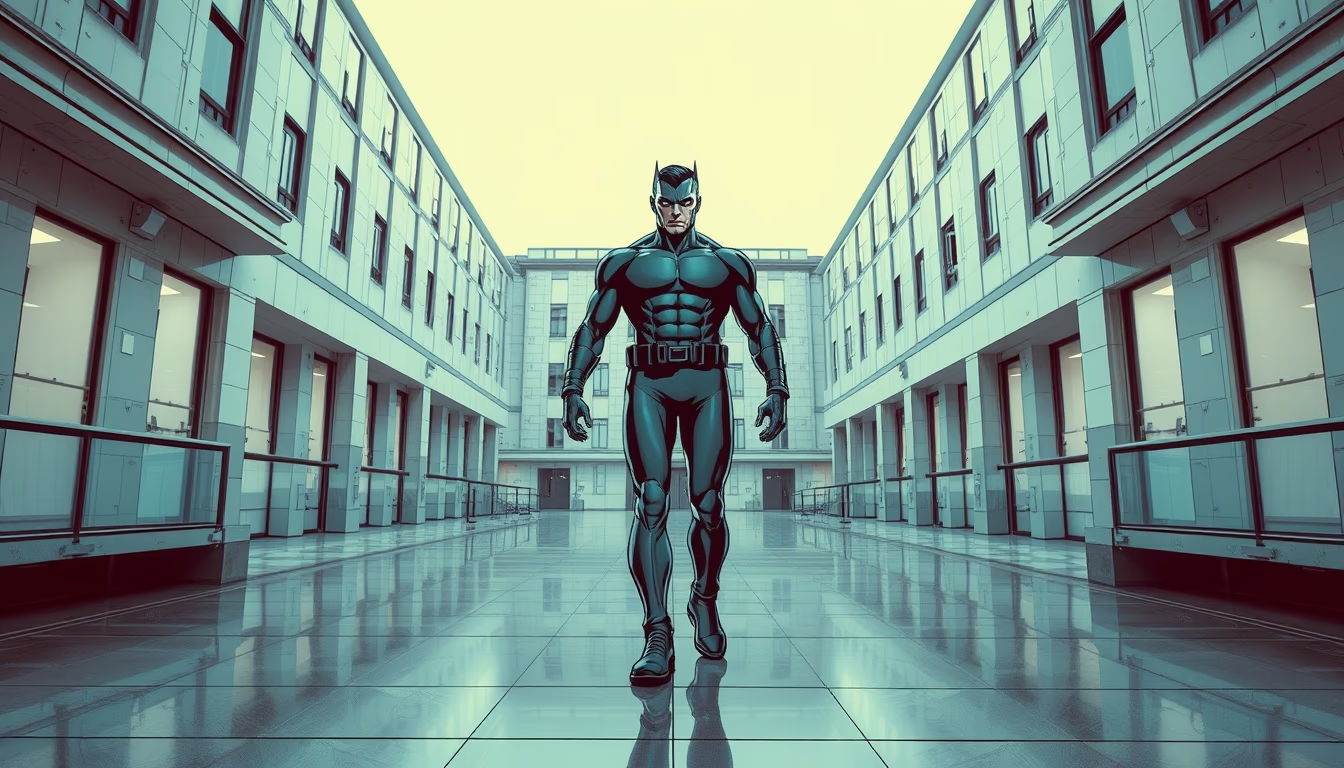
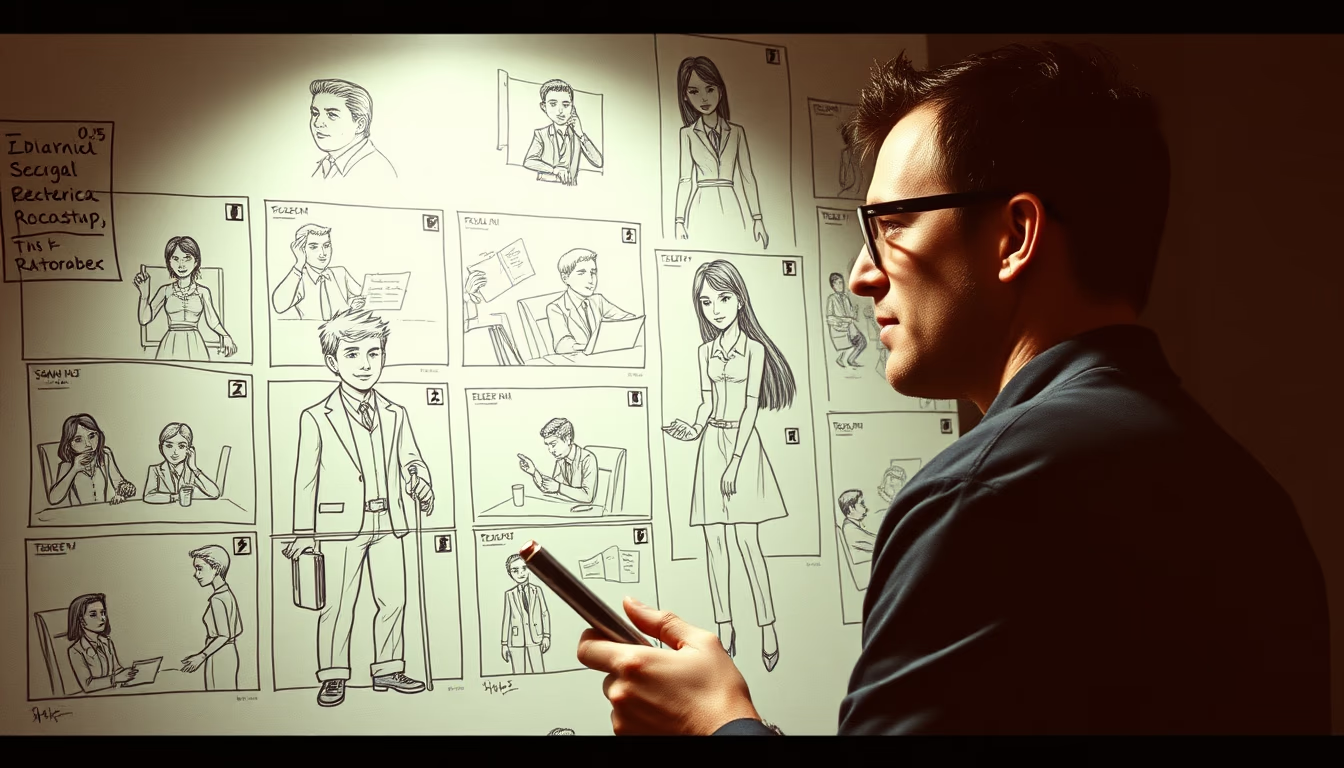
Screentone manga texture
1344×768 · AVIF · CC BY 4.0

Screentone, or mechanical halftone, is an essential technique in manga production to create shadows, textures, and visual effects without using color.
About this subject
Screentone, or mechanical halftone, is a technique widely used in manga and comics production. It consists of adhesive sheets with dot, line, or other pattern overlays applied to black-and-white drawings to simulate gradients, textures (like fabric, metal, or skin), and atmospheric effects such as mist or soft shadows.
The origin of screentone dates back to the early 20th century in the United States, but it flourished in Japan. From the 1960s onward, manga artists began to adopt it extensively, popularized by works like Osamu Tezuka's "Astro Boy". Today, the industry offers hundreds of different patterns, from common dot grids to textures of onomatopoeia and special effects.
Applying screentone requires precision: the artist cuts the desired shape, peels off the protective backing, and adheres it onto the original. With digitalization, many mangakas have switched to digital halftones (e.g., in Clip Studio Paint), which simulate the same effects with more flexibility. Yet physical screentone is still appreciated for its tactile finish and organic results.
Fun fact: the "ring" pattern (concentric circles) is often used to depict shock or explosion in shonen manga, while zigzag textures suggest vibration or tension. Choosing the right screentone can define the emotional tone of a scene.
Frequently Asked Questions
What is screentone and what is it used for?
Screentone is an adhesive sheet with dot or pattern overlays used in manga to add shadows, textures, and visual effects without color, saving time and ensuring print consistency.
How is screentone applied to a drawing?
The artist cuts the desired shape from the screentone sheet, removes the protective backing, and attaches it onto the original drawing, pressing to adhere. Then they trim the excess with a knife to fit the contours.
Is physical screentone still used or is everything digital?
Many artists still use physical screentone for its organic result, but most professional mangakas today use digital halftones in software like Clip Studio Paint, which offers more control and reusability.
Direct URL
https://pub-c7d6a6ea828543ac903a74a341ccb2e1.r2.dev/imagens/screentone-manga-texture-long-exposure-fresh16.avifHow to credit
Include a visible link back to UtilizAí. Copy one of the snippets below:
<a href="https://xn--utiliza-eza.com/en/midia/imagens/screentone-manga-texture-long-exposure-fresh16">Screentone manga texture</a> by <a href="https://xn--utiliza-eza.com">UtilizAí</a>, licensed under <a href="https://creativecommons.org/licenses/by/4.0/">CC BY 4.0</a>.
[Screentone manga texture](https://xn--utiliza-eza.com/en/midia/imagens/screentone-manga-texture-long-exposure-fresh16) by [UtilizAí](https://xn--utiliza-eza.com), CC BY 4.0
License: CC-BY-4.0