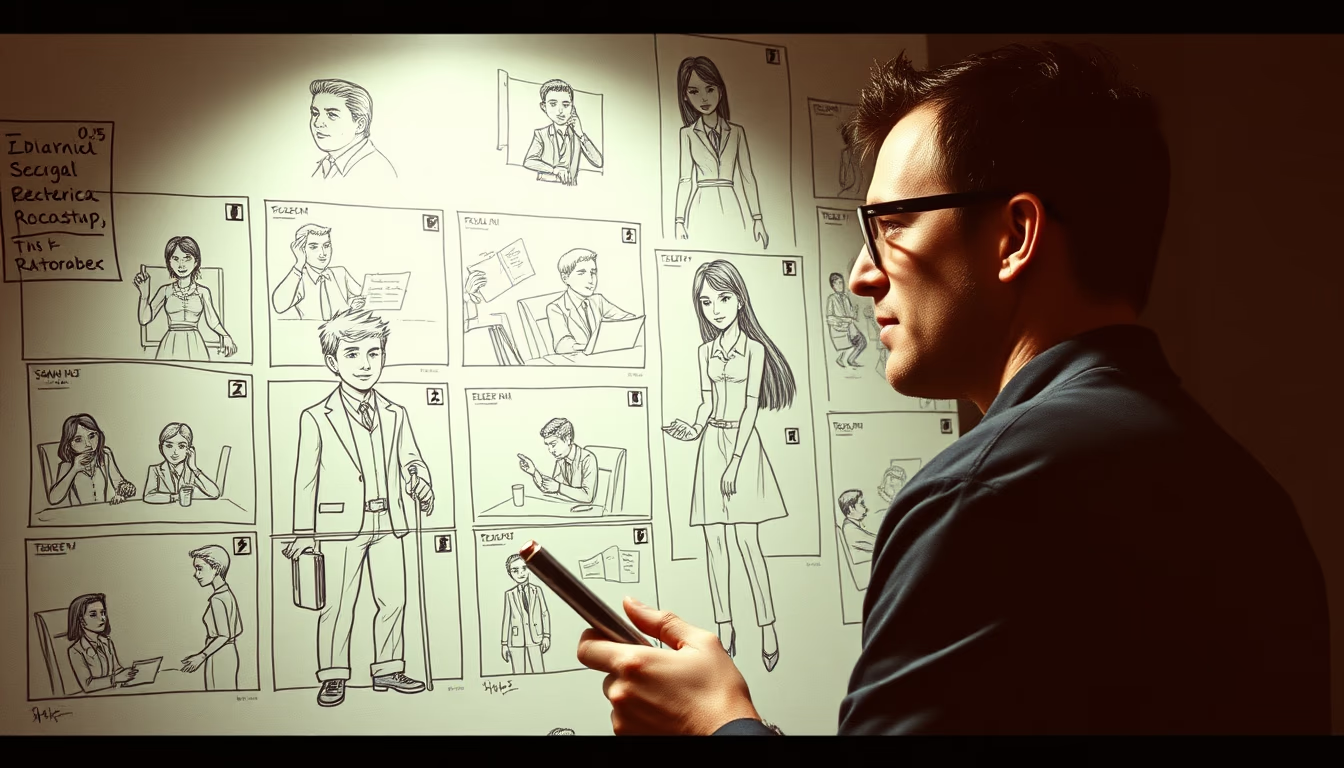
Screentone manga texture
1344×768 · AVIF · CC BY 4.0
Screentone is a texturing technique used in manga to create shadows, tones, and visual effects, applied either manually or digitally.
About this subject
Screentone, also known as screen tone or transfer pattern, is an essential technique in Japanese sequential art, especially manga. It consists of adhesive or digital sheets with patterns of dots, lines, or textures transferred onto the original drawing to represent shades of gray, shading, and textures without using colors. This technique emerged in Japan in the 1960s, driven by the need for mass production of manga with consistent visual quality. Pioneers like Osamu Tezuka popularized its use, and it has since become an iconic element of manga aesthetics.
Specialized companies such as Deleter and Maxon produce screentones, offering hundreds of variations: from regular halftone dots to geometric and organic patterns like clouds, waves, and fabric textures. Manual application requires precision, using craft knives to cut and overlay adhesive sheets on paper. With digital tools, software like Clip Studio Paint and Photoshop now simulate screentones, allowing infinite adjustments and eliminating the cost of physical materials.
The cultural significance of screentone goes beyond functionality: it defines the visual style of many works, from shonen to seinen, and is part of manga's identity as a medium. Interestingly, the choice of pattern can indicate the mood of a scene or a character's personality. For example, fine dot patterns suggest calmness, while dense or diagonal patterns convey tension. In Brazil, screentone is also used in independent comics and fan art, with local artists adapting the technique to Brazilian narratives.
Despite digitization, many traditional mangaka still prefer physical screentone for its tactile feel and unpredictable results. The technique has also influenced other media like animation and graphic design. In 2020, an exhibition at the Tokyo Art Museum celebrated 50 years of screentone, highlighting its evolution and global impact.
Frequently Asked Questions
What is screentone and how is it applied?
Screentone is an adhesive or digital sheet with dot patterns or textures used to create shadows in manga. It is applied manually by cutting and overlaying the sheet on the drawing, or digitally using software like Clip Studio Paint.
What are the main types of screentone?
Types include halftone (regular dots), linear, geometric, and organic patterns like clouds, waves, and fabric textures. Each serves different visual effects and moods.
Is screentone still used today with digitization?
Yes, many mangaka still use physical screentone for tradition and texture, but most also use digital versions. The technique remains essential in manga production.
Direct URL
https://pub-c7d6a6ea828543ac903a74a341ccb2e1.r2.dev/imagens/screentone-manga-texture-documentary-photography-fresh1.avifHow to credit
Include a visible link back to UtilizAí. Copy one of the snippets below:
<a href="https://xn--utiliza-eza.com/en/midia/imagens/screentone-manga-texture-documentary-photography-fresh1">Screentone manga texture</a> by <a href="https://xn--utiliza-eza.com">UtilizAí</a>, licensed under <a href="https://creativecommons.org/licenses/by/4.0/">CC BY 4.0</a>.
[Screentone manga texture](https://xn--utiliza-eza.com/en/midia/imagens/screentone-manga-texture-documentary-photography-fresh1) by [UtilizAí](https://xn--utiliza-eza.com), CC BY 4.0
License: CC-BY-4.0