Sapphire blue gemstone
1344×768 · AVIF · CC BY 4.0
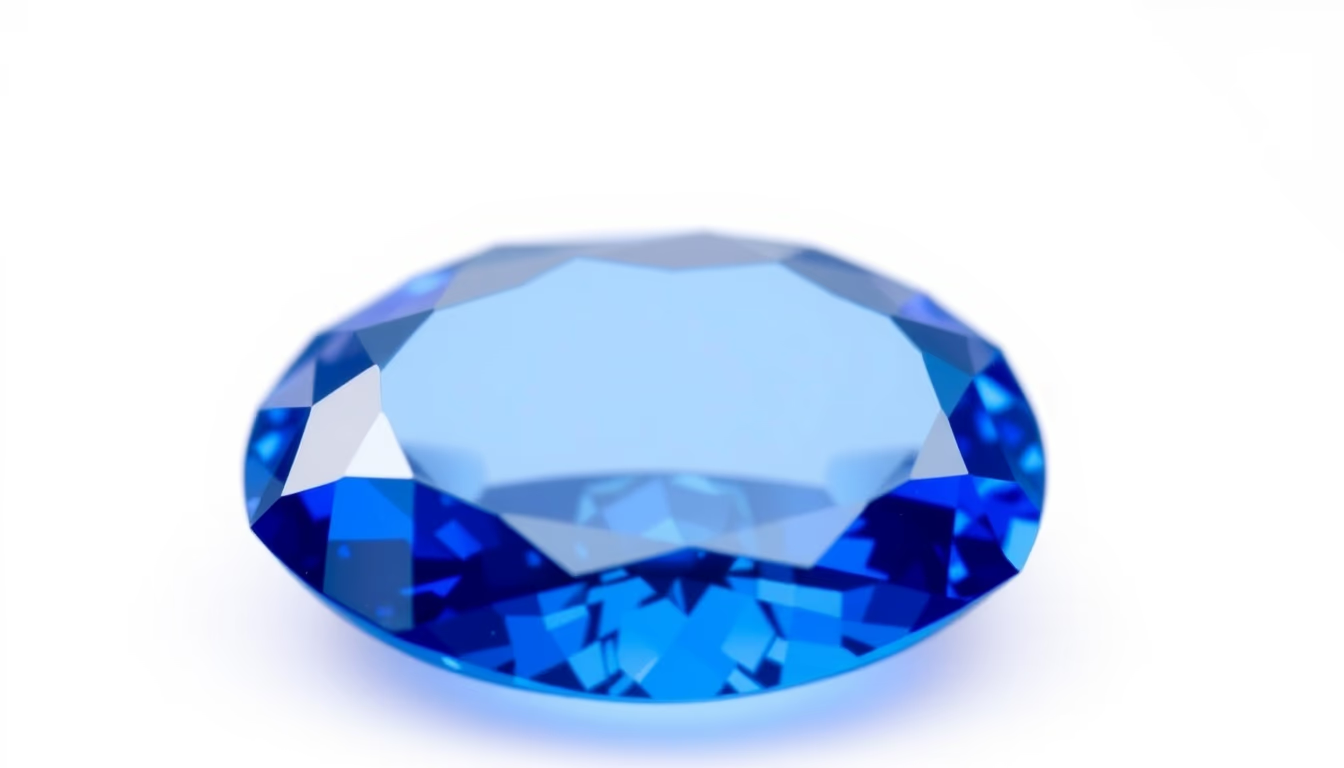
Cubic zirconia in sapphire blue is a synthetic gemstone that mimics natural sapphire, combining vivid beauty with affordability.
About this subject
Cubic zirconia (CZ) in sapphire blue is one of the most popular imitations of natural sapphires. Created in a laboratory, it has the same cubic crystal structure as diamond but is composed of zirconium dioxide stabilized with yttrium and calcium. The sapphire blue color is achieved by adding cobalt, chromium, or titanium during crystal growth. This synthetic gemstone has a hardness of 8-8.5 on the Mohs scale, lower only than diamond (10), ruby, and sapphire (9). Its high dispersion (0.058-0.066) provides intense brilliance and fire, even exceeding diamond in light refraction.
The main production centers for cubic zirconia are in China, Russia (where it was developed in the 1970s), and the United States. The most common technique is the laser float zone method or arc fusion. Since patents expired in the 1980s, CZ has become extremely affordable, allowing jewelry with the appearance of sapphire to be sold for a fraction of the cost of a natural gem. However, it is important to note that cubic zirconia does not have the same investment value or rarity as a true sapphire.
Culturally, blue sapphire has been associated with royalty and wisdom since antiquity. Princess Diana's engagement ring, now worn by the Duchess of Cambridge, popularized sapphire blue as a jewelry color. Although blue cubic zirconia does not carry the same geological prestige, it has democratized the aesthetic of sapphire, being widely used in costume jewelry, fashion accessories, and even technical applications like lenses due to its transparency.
In cutting, sapphire blue cubic zirconia is often faceted into brilliant shapes (round, princess, emerald) to maximize its sparkle. Unlike natural gems, it is virtually inclusion-free, making it a popular choice for those seeking visual perfection without paying for rarity. Its intense blue color is stable and does not fade under UV light exposure, unlike some treated sapphires.
Frequently Asked Questions
What is sapphire blue cubic zirconia?
It is a synthetic gemstone created in a lab that mimics the color and brilliance of natural sapphire. Made of zirconium dioxide, it is harder than glass and affordable.
How to tell cubic zirconia from real sapphire?
CZ is heavier, has more intense brilliance (higher dispersion), and is usually inclusion-free. A jeweler can use a refractometer or thermal conductivity tester to distinguish them.
Does sapphire blue cubic zirconia fade over time?
No. The coloring agent is stable and UV-resistant. Unlike some heat-treated sapphires, CZ maintains its blue color for many years without fading.
Direct URL
https://pub-c7d6a6ea828543ac903a74a341ccb2e1.r2.dev/imagens/sapphire-blue-gemstone-commercial-product-photography-p11.avifHow to credit
Include a visible link back to UtilizAí. Copy one of the snippets below:
<a href="https://xn--utiliza-eza.com/en/midia/imagens/sapphire-blue-gemstone-commercial-product-photography-p11">Sapphire blue gemstone</a> by <a href="https://xn--utiliza-eza.com">UtilizAí</a>, licensed under <a href="https://creativecommons.org/licenses/by/4.0/">CC BY 4.0</a>.
[Sapphire blue gemstone](https://xn--utiliza-eza.com/en/midia/imagens/sapphire-blue-gemstone-commercial-product-photography-p11) by [UtilizAí](https://xn--utiliza-eza.com), CC BY 4.0
License: CC-BY-4.0