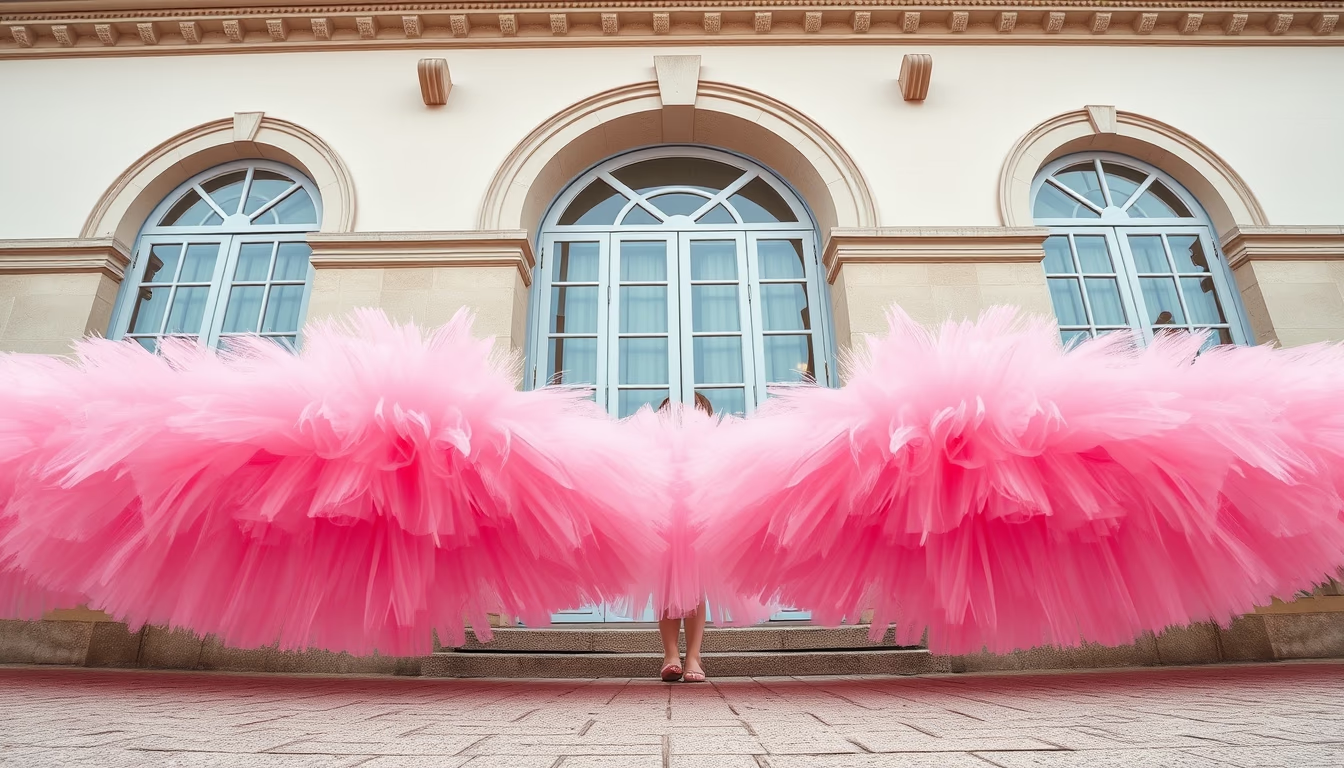
Salsa skirt red flowing
1344×768 · AVIF · CC BY 4.0

The red flowing skirt moving to salsa music captures the vibrant essence of Latin dance, a symbol of passion and motion on dance floors worldwide.
About this subject
Salsa is a social dance that originated in the Caribbean, with deep roots in Cuba and Puerto Rico, blending African rhythms and Spanish influences. Spreading globally throughout the 20th century, it developed styles such as linear salsa (LA/NY style) and Cuban casino. On dance floors, rapid turns and steps are often accentuated by flowing skirts, especially in Cuban style, where the fabric follows the hip movement.
The use of wide skirts in salsa has historical origins: in Afro-Caribbean dances, women wore dresses with multiple layers to create volume and motion. As salsa became popular in the 1940s and 1950s, skirts became part of the performance look, allowing spins to create impressive visual waves. The red skirt, in particular, is a common choice; its vibrant color amplifies the dance's energy and evokes the passion associated with the rhythm.
In practice, the skirt is not just an accessory: the fabric's flow follows the dancer's leg and torso movements, revealing technique. In salsa competitions, skirt handling is judged as part of artistic expression. Red frequently appears in performances by groups like the Ballet Folklórico de Cuba and in films such as Dirty Dancing: Havana Nights, where it symbolizes freedom and sensuality.
An interesting detail: in some salsa academies, skirt training includes specific moves to control the fabric, like the "floreo," where the dancer makes the skirt spin in wide circles, emphasizing the musical beat. The red flowing skirt has thus become a visual icon of salsa, representing the joy and vitality of this cultural expression.
Frequently Asked Questions
Why do salsa dancers often wear flared skirts?
Flared skirts accentuate spins and hip movements, creating a dramatic visual effect that complements the music. They originate from Afro-Caribbean dance costumes and were adopted in salsa for added expressiveness.
What is the origin of salsa?
Salsa emerged in Cuba and Puerto Rico in the early 20th century, blending African rhythms like son, mambo, and rumba with Spanish influences. It gained popularity in the United States in the 1960s and spread worldwide.
What does the color red represent in salsa?
Red symbolizes passion, energy, and sensuality, qualities strongly associated with salsa dancing. It is a common color in performance costumes because it catches the audience's attention and conveys the vibrant spirit of the rhythm.
Direct URL
https://pub-c7d6a6ea828543ac903a74a341ccb2e1.r2.dev/imagens/salsa-skirt-red-flowing-documentary-photography-fresh9.avifHow to credit
Include a visible link back to UtilizAí. Copy one of the snippets below:
<a href="https://xn--utiliza-eza.com/en/midia/imagens/salsa-skirt-red-flowing-documentary-photography-fresh9">Salsa skirt red flowing</a> by <a href="https://xn--utiliza-eza.com">UtilizAí</a>, licensed under <a href="https://creativecommons.org/licenses/by/4.0/">CC BY 4.0</a>.
[Salsa skirt red flowing](https://xn--utiliza-eza.com/en/midia/imagens/salsa-skirt-red-flowing-documentary-photography-fresh9) by [UtilizAí](https://xn--utiliza-eza.com), CC BY 4.0
License: CC-BY-4.0