Sacsayhuamán cusco
1344×768 · AVIF · CC BY 4.0
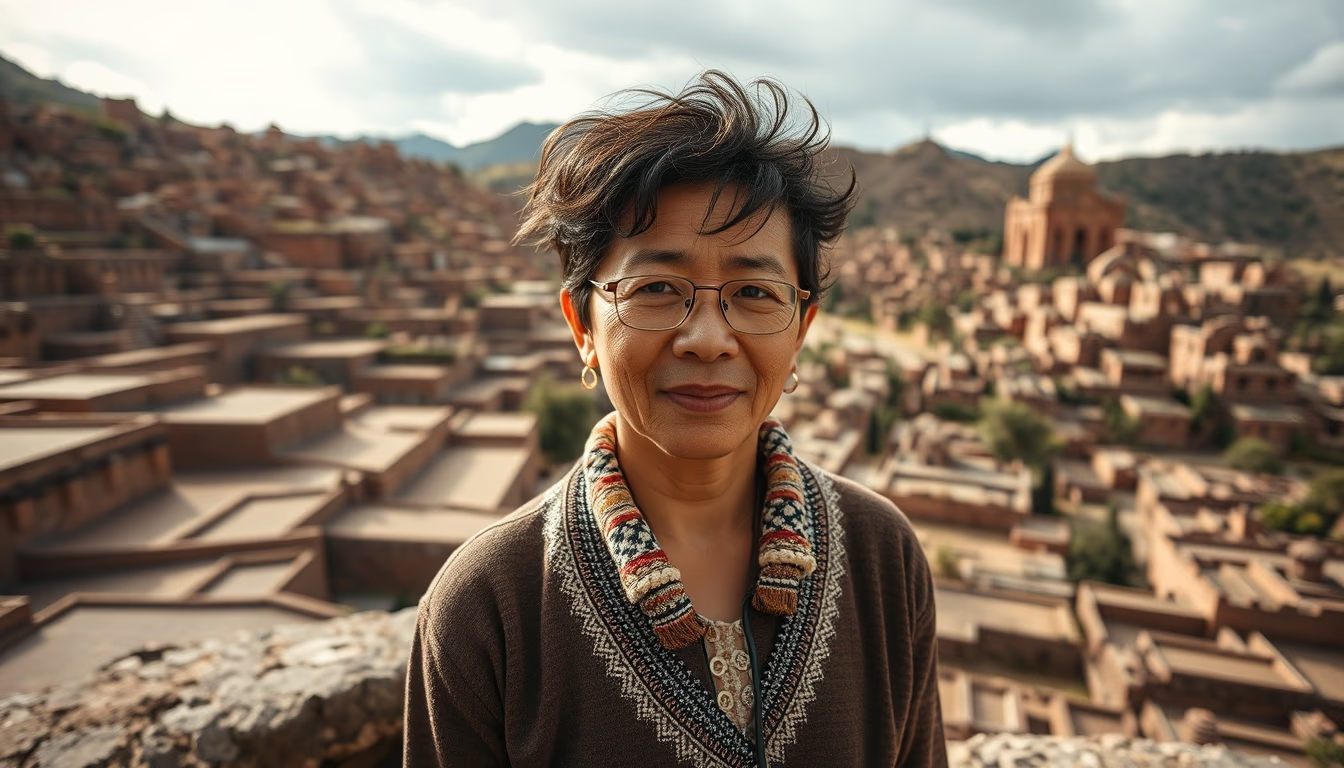
Sacsayhuamán, the colossal Inca fortress on the outskirts of Cusco, impresses with its perfectly fitted stone blocks, without the use of mortar.
About this subject
Sacsayhuamán is an archaeological citadel located about 2 kilometers from the historic center of Cusco, Peru. Built under the rule of Emperor Pachacuti in the 15th century, it served as a ceremonial military center and fortress. Its construction required decades of labor by thousands of men, who extracted, transported, and carved stone blocks weighing up to 120 tons from quarries more than 20 kilometers away.
The most striking feature is the stone walls formed by huge polygonal monoliths, fitted with millimeter precision without the use of mortar. This technique, common in Inca architecture, ensured earthquake resistance as the stones adjust during seismic movement. The main walls are zigzagged in shape, with three overlapping terraces that formed a defensive system against invaders. The view from the top overlooks the entire city of Cusco and the Urubamba River valley.
The site was the scene of battles during the Spanish conquest, notably the Battle of Sacsayhuamán in 1536, when Inca forces led by Manco Inca attempted to retake Cusco. After the defeat, the Spanish dismantled parts of the structures to build colonial buildings in Cusco, using stones from the fortress. Today, Sacsayhuamán is a UNESCO World Heritage Site and attracts thousands of visitors annually, especially during the Inti Raymi festival held in June.
Interestingly, the name Sacsayhuamán means "satiated falcon" or "place where the falcon is satisfied" in Quechua. The natural rock formations around it, such as the so-called "Inca's chair," show respect for the existing topography, integrating it into the architecture. The ability to work such hard stones (granite and andesite) without metal tools continues to intrigue archaeologists and engineers to this day.
Frequently Asked Questions
What is the main architectural feature of Sacsayhuamán?
The huge polygonal stone blocks fitted perfectly without mortar, forming zigzag walls that withstand earthquakes.
When and by whom was Sacsayhuamán built?
It was built under the rule of Inca Emperor Pachacuti in the 15th century as a ceremonial center and fortress.
What is the importance of Sacsayhuamán for tourism in Cusco?
It is one of the most visited archaeological sites in Peru, especially during Inti Raymi, and is a UNESCO World Heritage Site.
Direct URL
https://pub-c7d6a6ea828543ac903a74a341ccb2e1.r2.dev/imagens/sacsayhuaman-cusco-documentary-photography-p9.avifHow to credit
Include a visible link back to UtilizAí. Copy one of the snippets below:
<a href="https://xn--utiliza-eza.com/en/midia/imagens/sacsayhuaman-cusco-documentary-photography-p9">Sacsayhuamán cusco</a> by <a href="https://xn--utiliza-eza.com">UtilizAí</a>, licensed under <a href="https://creativecommons.org/licenses/by/4.0/">CC BY 4.0</a>.
[Sacsayhuamán cusco](https://xn--utiliza-eza.com/en/midia/imagens/sacsayhuaman-cusco-documentary-photography-p9) by [UtilizAí](https://xn--utiliza-eza.com), CC BY 4.0
License: CC-BY-4.0