Rural worker in a sunny field with traditional hat
1344×768 · AVIF · CC BY 4.0
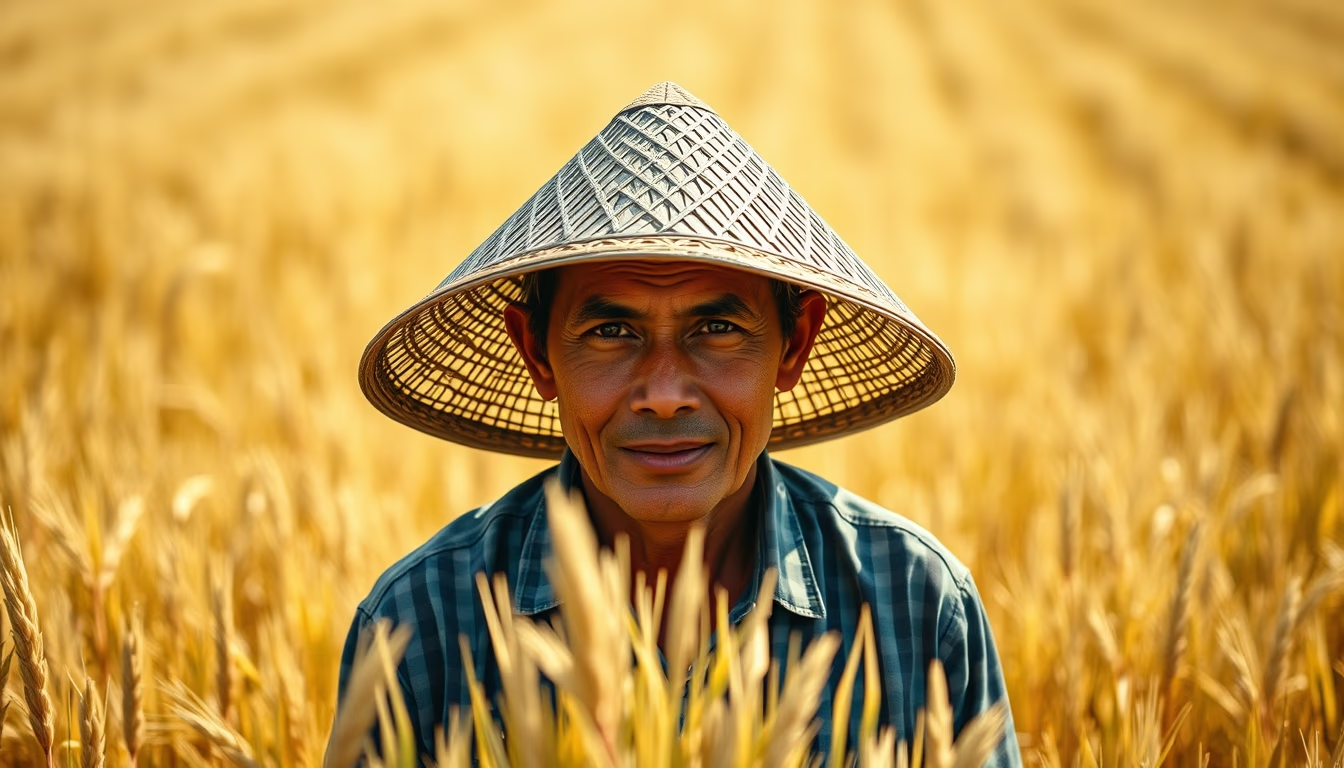
Brazilian rural worker in a sunny field wearing a traditional hat, symbol of the strength of agriculture in the country.
About this subject
The Brazilian rural worker is a central figure in the country's economy, responsible for a large share of food production such as soybeans, corn, coffee, and sugarcane. Brazil is one of the world's largest agricultural exporters, with agribusiness representing about 25% of the national GDP and employing millions of people across the territory. The traditional straw hat is an essential item in daily farm life, protecting against the intense sun and being part of the rural worker's cultural identity.
Working conditions in the rural sector vary widely, from large mechanized farms to small family properties. Mechanization has increased productivity, but challenges remain, such as lack of access to labor and social security rights for many seasonal workers. The Brazilian government offers benefits like the Defeso Insurance for fishermen and the Agricultural Activity Guarantee Program (Proagro) for farmers, aiming to mitigate climate and economic risks.
Historically, the rural worker figure is linked to colonization and the expansion of agricultural frontiers. In the Southeast, immigrant coffee growers; in the Northeast, sugarcane cutters; in the South, family farmers of European origin. Each region has its traditions and techniques, but the straw hat is a cross-cutting symbol, present in festivities like the Barretos Rodeo and in literature by authors such as João Guimarães Rosa.
Despite advances, many rural workers still face exhausting workdays and exposure to pesticides. Organizations like the Landless Workers' Movement (MST) fight for land reform and better conditions. Professional registration in the field is essential for access to rural retirement, which guarantees a minimum wage to workers who prove activity in the field for at least 15 years.
Frequently Asked Questions
What are the main social security rights of rural workers in Brazil?
Rural workers are entitled to old-age retirement (age 60 for men, 55 for women), disability retirement, death pension, sickness benefit, and maternity salary. They must prove rural activity for at least 15 years.
How did the straw hat become a symbol of the rural worker?
The straw hat is practical for sun protection and ventilation, as well as being cheap and durable. It became a cultural symbol due to its association with farm work, being used in festivals and artistic representations.
What is the importance of agribusiness to the Brazilian economy?
Agribusiness accounts for about 25% of Brazil's GDP and is responsible for a large share of exports, generating millions of direct and indirect jobs. Brazil is a leader in the production of soybeans, coffee, sugar, and beef.
Direct URL
https://pub-c7d6a6ea828543ac903a74a341ccb2e1.r2.dev/imagens/rural-worker-in-a-sunny-field-with-traditional-hat-symmetric-bright-midday-6.avifHow to credit
Include a visible link back to UtilizAí. Copy one of the snippets below:
<a href="https://xn--utiliza-eza.com/en/midia/imagens/rural-worker-in-a-sunny-field-with-traditional-hat-symmetric-bright-midday-6">Rural worker in a sunny field with traditional hat</a> by <a href="https://xn--utiliza-eza.com">UtilizAí</a>, licensed under <a href="https://creativecommons.org/licenses/by/4.0/">CC BY 4.0</a>.
[Rural worker in a sunny field with traditional hat](https://xn--utiliza-eza.com/en/midia/imagens/rural-worker-in-a-sunny-field-with-traditional-hat-symmetric-bright-midday-6) by [UtilizAí](https://xn--utiliza-eza.com), CC BY 4.0
License: CC-BY-4.0