Ruby red gemstone
1344×768 · AVIF · CC BY 4.0
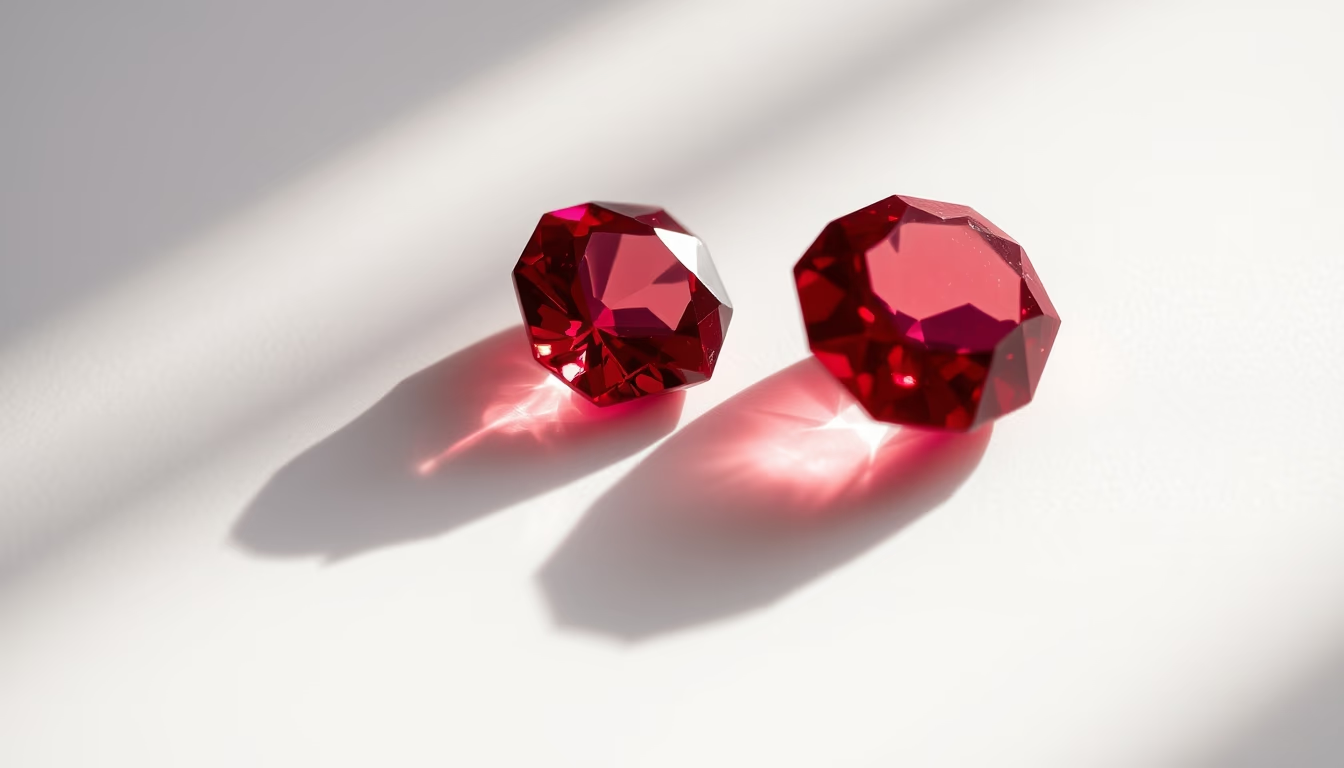
Ruby is a red variety of corundum, one of the hardest minerals on Earth, with a hardness of 9 on the Mohs scale.
About this subject
Ruby is one of the most valuable gemstones globally, belonging to the corundum family (Al₂O₃), alongside sapphire. Its intense red color, often described as "pigeon blood," is caused by chromium impurities in the crystal lattice. The higher the chromium concentration, the more vivid the hue. Natural gem-quality rubies are extremely rare: it is estimated that only one in every thousand corundum crystals shows the red color suitable for faceting.
Historically, ruby has been associated with power and protection across various cultures. In ancient India, it was called "ratnaraj" or "king of gems," and believed to guarantee safety to its owner. The Burmese (now Myanmar) thought that inserting it into the flesh made warriors invincible. In medieval Europe, it symbolized wealth and divine love. Today, the primary ruby deposits are in Myanmar (formerly Burma), Mozambique, Thailand, and Sri Lanka. Mozambican ruby, discovered on a large scale in the 2000s, has become a major source for the global market, though Burmese rubies still fetch the highest prices at auctions.
Technically, ruby has a hardness of 9 on the Mohs scale, second only to diamond. This makes it suitable for everyday jewelry, provided it is protected from strong impacts. Heat treatment is common to improve color and clarity: it is estimated that over 90% of commercial rubies undergo some form of heating. Untreated rubies with exceptional color are extremely rare and can exceed US$ 1 million per carat at auctions. In 2015, the 25.59-carat "Rajah Star" ruby sold for over US$ 30 million.
Interestingly, the largest rough ruby ever found weighed 1,400 carats, but most gem-quality rubies weigh less than 5 carats. Moreover, rubies with asterism (star effect) display a six-pointed star when cut as cabochons, resulting from rutile inclusions. This variety is highly prized by collectors.
Frequently Asked Questions
What is the hardness of ruby on the Mohs scale?
Ruby has a hardness of 9 on the Mohs scale, second only to diamond (10). This makes it one of the most durable gemstones for jewelry.
What causes the red color of ruby?
The red color is caused by the presence of chromium (Cr³⁺ ions) substituting for aluminum in the corundum crystal lattice. The higher the chromium content, the deeper the red.
Which country produces the most valuable rubies?
Myanmar (formerly Burma) is considered the source of the most famous and valuable rubies, especially from the Mogok region, known as "pigeon blood" rubies.
Direct URL
https://pub-c7d6a6ea828543ac903a74a341ccb2e1.r2.dev/imagens/ruby-red-gemstone-magazine-editorial-p11.avifHow to credit
Include a visible link back to UtilizAí. Copy one of the snippets below:
<a href="https://xn--utiliza-eza.com/en/midia/imagens/ruby-red-gemstone-magazine-editorial-p11">Ruby red gemstone</a> by <a href="https://xn--utiliza-eza.com">UtilizAí</a>, licensed under <a href="https://creativecommons.org/licenses/by/4.0/">CC BY 4.0</a>.
[Ruby red gemstone](https://xn--utiliza-eza.com/en/midia/imagens/ruby-red-gemstone-magazine-editorial-p11) by [UtilizAí](https://xn--utiliza-eza.com), CC BY 4.0
License: CC-BY-4.0