Ruby red gemstone
1344×768 · AVIF · CC BY 4.0
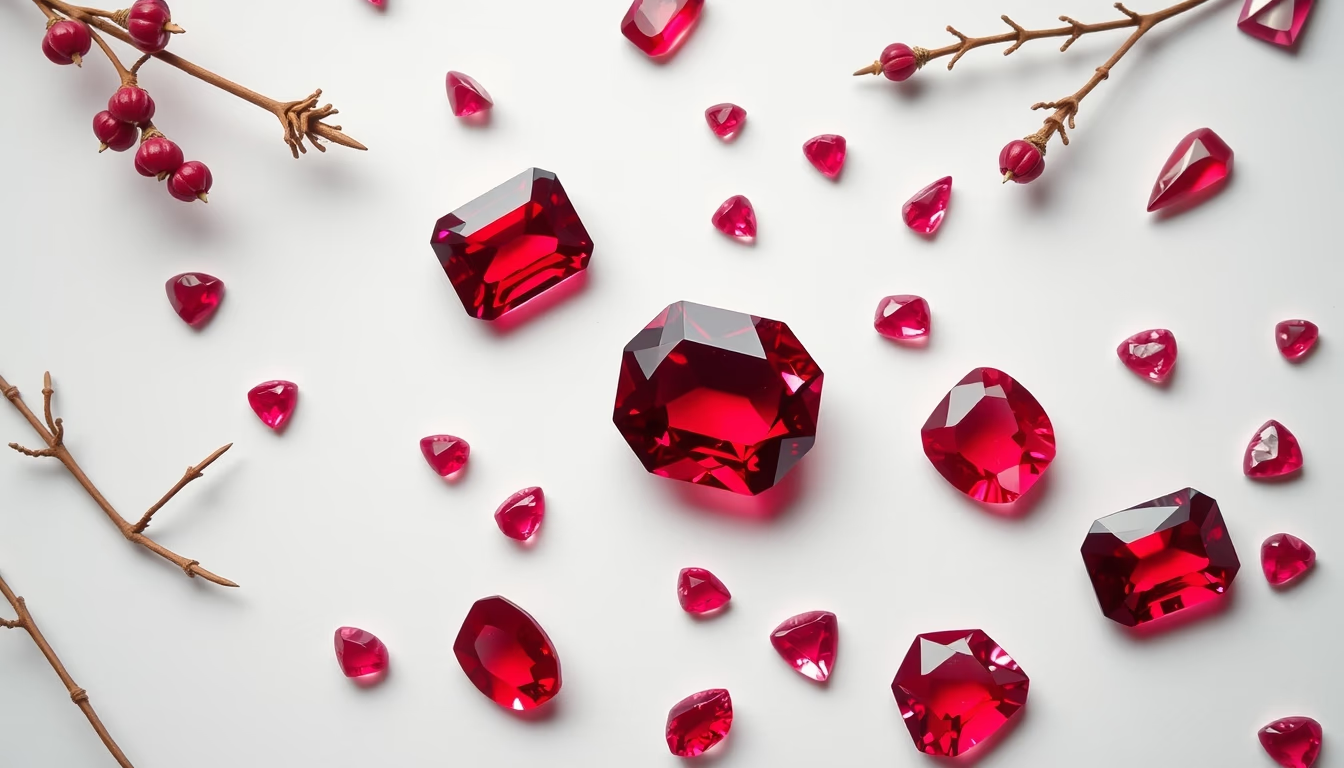
Rubies are intense red gemstones, a variety of corundum, known for their hardness and rarity.
About this subject
Rubies are among the four most valuable precious stones in the world, alongside diamonds, emeralds, and sapphires. They belong to the corundum mineral species (aluminum oxide), and their characteristic red color is due to the presence of chromium in the crystal structure. The more intense and pure the red, the higher the gem's value, with the shade known as "pigeon's blood" being the most sought after.
The main ruby deposits are in Myanmar (formerly Burma), especially the Mogok region, which has produced high-quality gems for centuries. Other important sources include Thailand, Sri Lanka, Mozambique, Tanzania, and Vietnam. Natural rubies over one carat are extremely rare, and the largest specimens can be worth millions of dollars.
Culturally, rubies symbolize passion, protection, and prosperity. In ancient India, they were believed to grant invincibility to their wearers. In various traditions, they are associated with the heart chakra and the zodiac sign Aries. In the jewelry industry, they are cut into shapes such as brilliant, oval, or cushion, and are often heated to improve their color and clarity.
With a hardness of 9 on the Mohs scale, rubies are second only to diamonds, making them suitable for daily wear in rings and other jewelry. However, they can be susceptible to fractures due to internal inclusions. Laboratory synthesis of rubies has been common since the late 19th century, producing gems with the same physical and chemical properties as natural ones, but at much more affordable prices. Distinguishing natural from synthetic rubies requires professional gemological analysis.
Frequently Asked Questions
What determines the value of a ruby?
The value of a ruby is determined mainly by color (hue, saturation, and tone), clarity (inclusions), cut, and carat weight. The intense 'pigeon's blood' red is the most valuable.
Are synthetic rubies considered real?
Yes, synthetic rubies have the same chemical composition and crystal structure as natural ones, but they are created in a lab. They are considered genuine in properties, but not natural.
How to differentiate a natural ruby from a synthetic one?
Differentiation requires gemological equipment like a microscope and spectroscope. Natural inclusions (e.g., rutile needles) indicate natural origin, while bubbles or curved growth lines suggest synthesis.
Direct URL
https://pub-c7d6a6ea828543ac903a74a341ccb2e1.r2.dev/imagens/ruby-red-gemstone-isometric-flat-lay-p1.avifHow to credit
Include a visible link back to UtilizAí. Copy one of the snippets below:
<a href="https://xn--utiliza-eza.com/en/midia/imagens/ruby-red-gemstone-isometric-flat-lay-p1">Ruby red gemstone</a> by <a href="https://xn--utiliza-eza.com">UtilizAí</a>, licensed under <a href="https://creativecommons.org/licenses/by/4.0/">CC BY 4.0</a>.
[Ruby red gemstone](https://xn--utiliza-eza.com/en/midia/imagens/ruby-red-gemstone-isometric-flat-lay-p1) by [UtilizAí](https://xn--utiliza-eza.com), CC BY 4.0
License: CC-BY-4.0