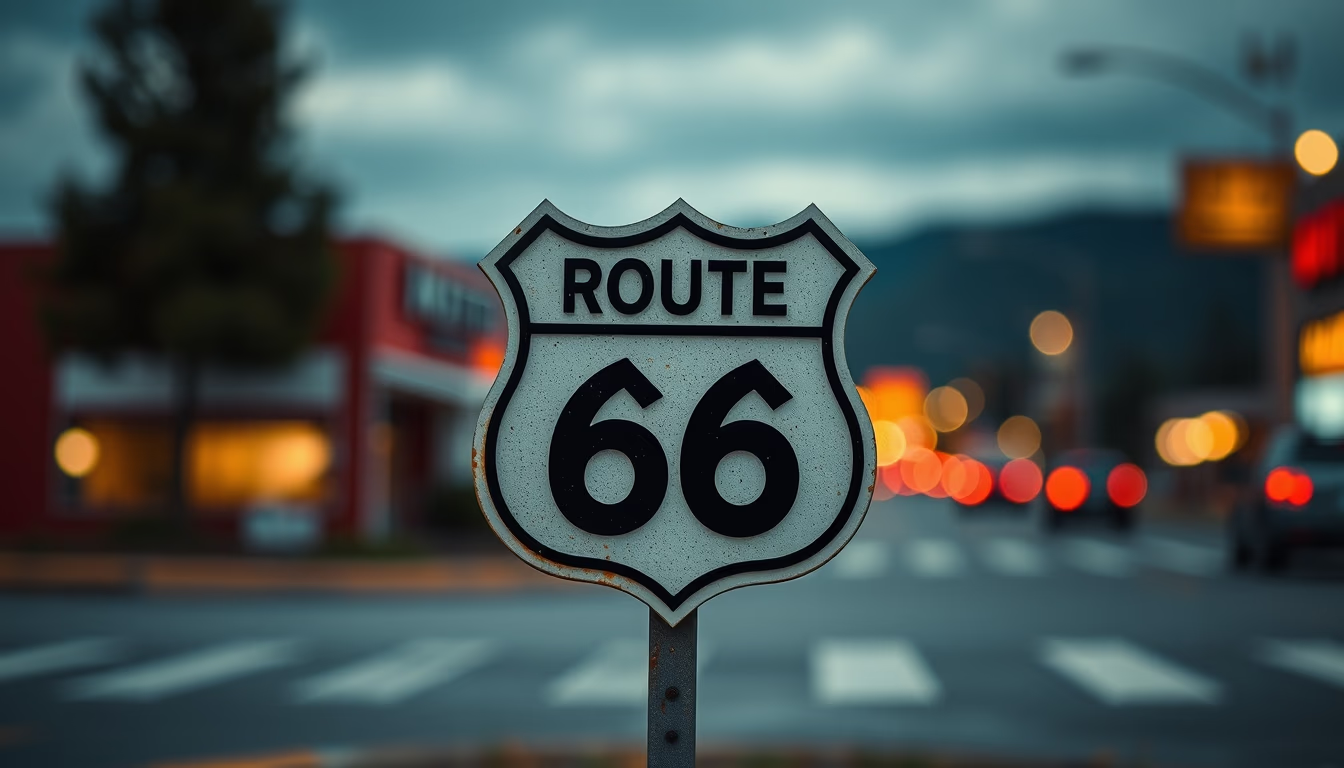
Route 66 motel neon
1344×768 · AVIF · CC BY 4.0
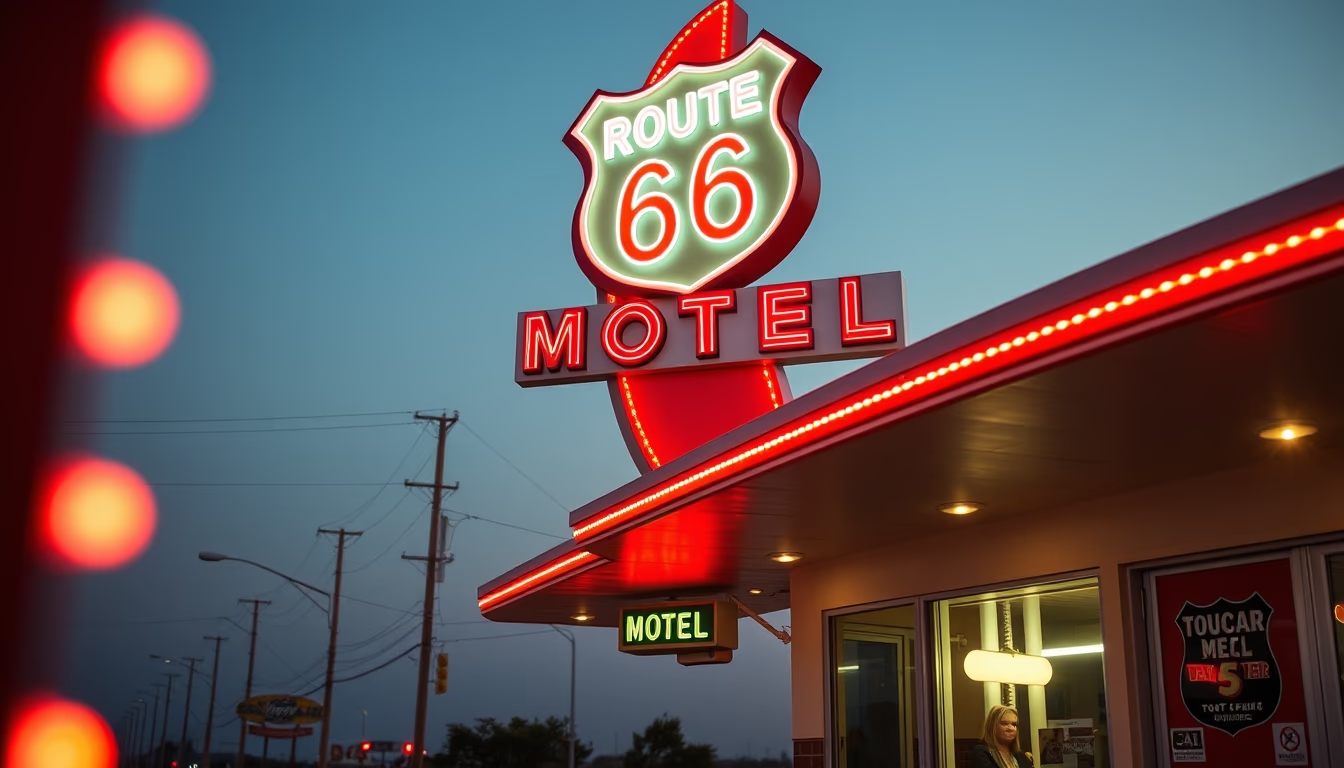
The neon signs of motels along historic Route 66 are cultural icons that mark America's most famous highway, symbolizing the golden age of American road trips.
About this subject
Route 66, established in 1926 and decommissioned in 1985, was the first paved highway linking Chicago to Santa Monica, crossing eight states and over 2,400 miles. During its heyday in the 1950s and 1960s, the road thrived with motels, gas stations, and restaurants catering to travelers chasing the American dream. The neon signs, with their vibrant colors and extravagant shapes, became the visual signature of these establishments, competing for drivers' attention with designs ranging from shimmering arrows to cowboy and Indian figures.
Iconic motels like the Wigwam Motel in Holbrook, Arizona, with its teepee-shaped cabins, or the Blue Swallow Motel in Tucumcari, New Mexico, still display restored original signs. These signs are more than advertising; they are folk art reflecting postwar optimism and car culture. The neon style, with hand-bent glass tubes, required skilled craftsmen, and each sign was unique, tailored to the establishment's character.
After the decline of Route 66 following the construction of the interstate system, many motels closed and their signs disappeared. However, preservation efforts by groups like the Route 66 Association and the National Park Service have worked to restore and protect these icons. The motel sign in the image, with its classic typography and neon lights, represents a fragment of history that still shines, attracting tourists and photographers seeking to capture the nostalgia of a bygone era.
Frequently Asked Questions
Why are neon signs so closely associated with Route 66?
Neon signs became symbols of Route 66 because they represented the dynamism and commercial competition along the road. In the pre-interstate era, motels used flashy signs to attract weary travelers, and neon, with its bright light and vivid colors, was the ideal technology to stand out at night.
What happened to the motels after Route 66 ended?
After Route 66 was decommissioned in 1985 and interstate highways opened, many motels lost customers and closed. Some were demolished or abandoned, while others were preserved as historic attractions or converted into museums and gift shops.
How are Route 66 neon signs being preserved?
Organizations like the National Park Service and the Route 66 Association promote restoration of historic signs with public funds and donations. Many signs have been designated historic landmarks, and local communities encourage tourism to keep the road's memory alive.
Direct URL
https://pub-c7d6a6ea828543ac903a74a341ccb2e1.r2.dev/imagens/route-66-motel-neon-architectural-photography-fresh5.avifHow to credit
Include a visible link back to UtilizAí. Copy one of the snippets below:
<a href="https://xn--utiliza-eza.com/en/midia/imagens/route-66-motel-neon-architectural-photography-fresh5">Route 66 motel neon</a> by <a href="https://xn--utiliza-eza.com">UtilizAí</a>, licensed under <a href="https://creativecommons.org/licenses/by/4.0/">CC BY 4.0</a>.
[Route 66 motel neon](https://xn--utiliza-eza.com/en/midia/imagens/route-66-motel-neon-architectural-photography-fresh5) by [UtilizAí](https://xn--utiliza-eza.com), CC BY 4.0
License: CC-BY-4.0