Route 66 motel neon
1344×768 · AVIF · CC BY 4.0
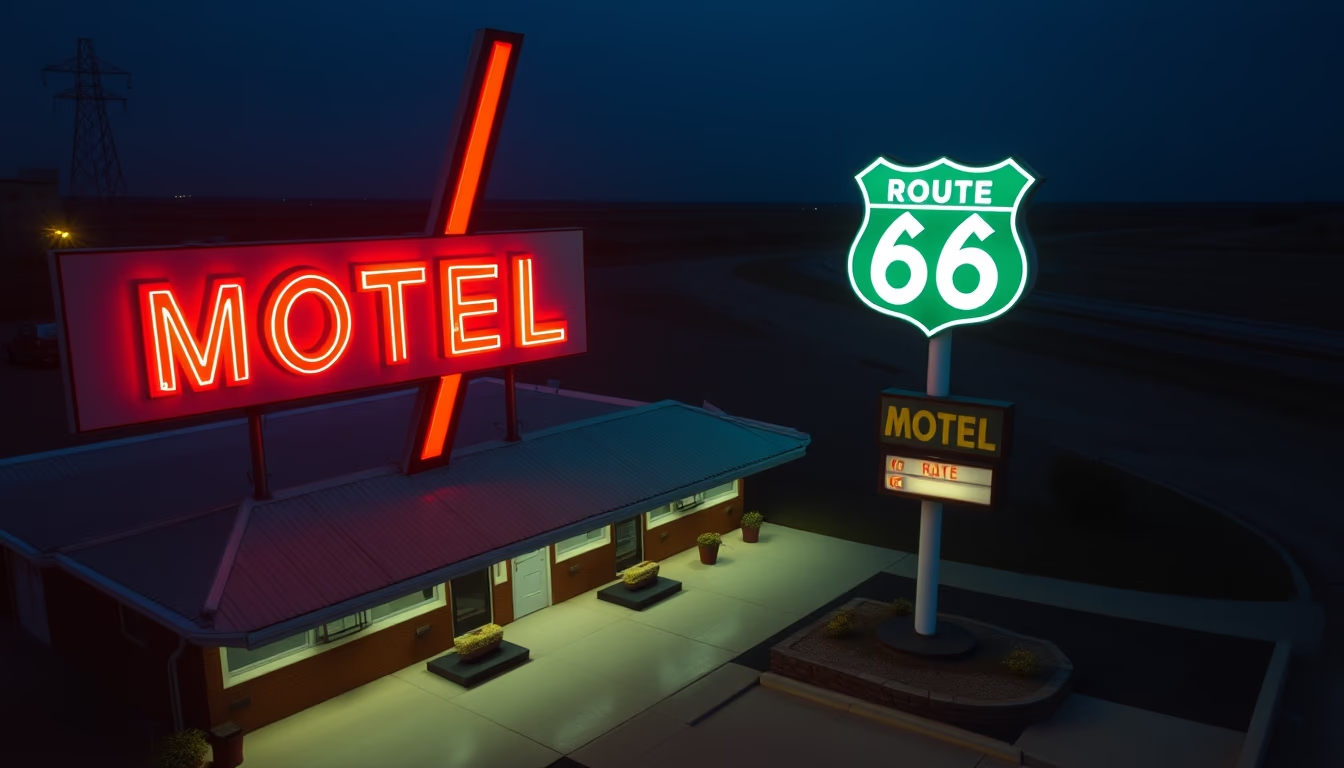
Motel with neon sign on historic Route 66, symbol of American road culture and vintage kitsch.
About this subject
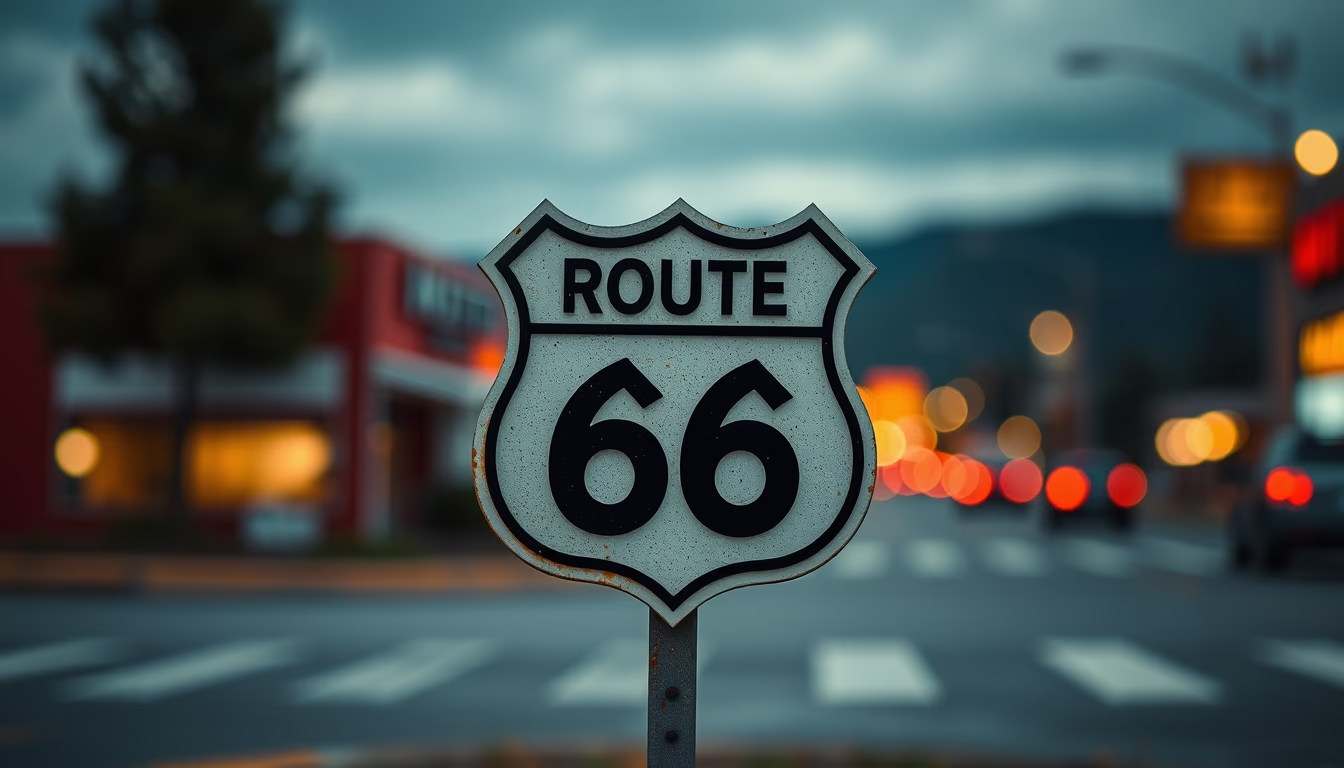
Route 66, officially opened in 1926, is one of the most famous highways in the United States, stretching from Chicago to Santa Monica, California. Along its 2,448 miles, countless motels, gas stations, and diners sprang up to serve travelers. Neon signs became a hallmark of these establishments, especially during the road's heyday from the 1940s to the 1960s. The vibrant colors and imaginative designs of neon acted as beacons for weary drivers, advertising vacancies, meals, or entertainment.
These signs are not merely advertising; they are genuine folk art. Many were handcrafted by skilled artisans, featuring shapes from arrows to thematic objects like coffee cups or cows. The "Googie" architectural style, with sharp angles and bold curves, heavily influenced their aesthetics. Unfortunately, as Route 66 declined after the 1970s, many motels closed and their signs were dismantled. Today, preservation groups work to restore and maintain these icons.
Pop culture has immortalized Route 66 and its neon signs in films, music, and television. Enthusiasts driving preserved stretches can visit historic motels like the Blue Swallow Motel in New Mexico, which retains its original sign. The allure of neon extends to photographers and artists, who find a nostalgic, unique beauty in its flickering light. An aerial view of a motel with neon highlights the contrast between artificial glow and the desert or nighttime landscape.
Although Route 66 no longer exists as a continuous highway, its legacy endures. Neon still shines in towns like Williams, Arizona, and Springfield, Missouri. These signs are testaments to an era of optimism and mobility, reminding us of the importance of preserving American road history.
Frequently Asked Questions
Why are neon signs so associated with Route 66?
Neon signs became a symbol of Route 66 due to the large number of motels, gas stations, and diners that used them to attract travelers during the highway's peak. The vibrant, colorful style became part of the road's visual identity.
What is the history of motels on Route 66?
Motels sprang up along Route 66 to serve long-distance drivers. They were typically small, family-run, and featured southwestern architecture. With the highway's decline, many closed, but some have been restored as historic attractions.
Can you still visit motels with original neon signs today?
Yes, several historic motels preserve their original neon signs, such as the Blue Swallow Motel in New Mexico and the Wigwam Motel in Arizona. They are tourist attractions and some still operate as lodging.
Direct URL
https://pub-c7d6a6ea828543ac903a74a341ccb2e1.r2.dev/imagens/route-66-motel-neon-aerial-drone-shot-fresh17.avifHow to credit
Include a visible link back to UtilizAí. Copy one of the snippets below:
<a href="https://xn--utiliza-eza.com/en/midia/imagens/route-66-motel-neon-aerial-drone-shot-fresh17">Route 66 motel neon</a> by <a href="https://xn--utiliza-eza.com">UtilizAí</a>, licensed under <a href="https://creativecommons.org/licenses/by/4.0/">CC BY 4.0</a>.
[Route 66 motel neon](https://xn--utiliza-eza.com/en/midia/imagens/route-66-motel-neon-aerial-drone-shot-fresh17) by [UtilizAí](https://xn--utiliza-eza.com), CC BY 4.0
License: CC-BY-4.0