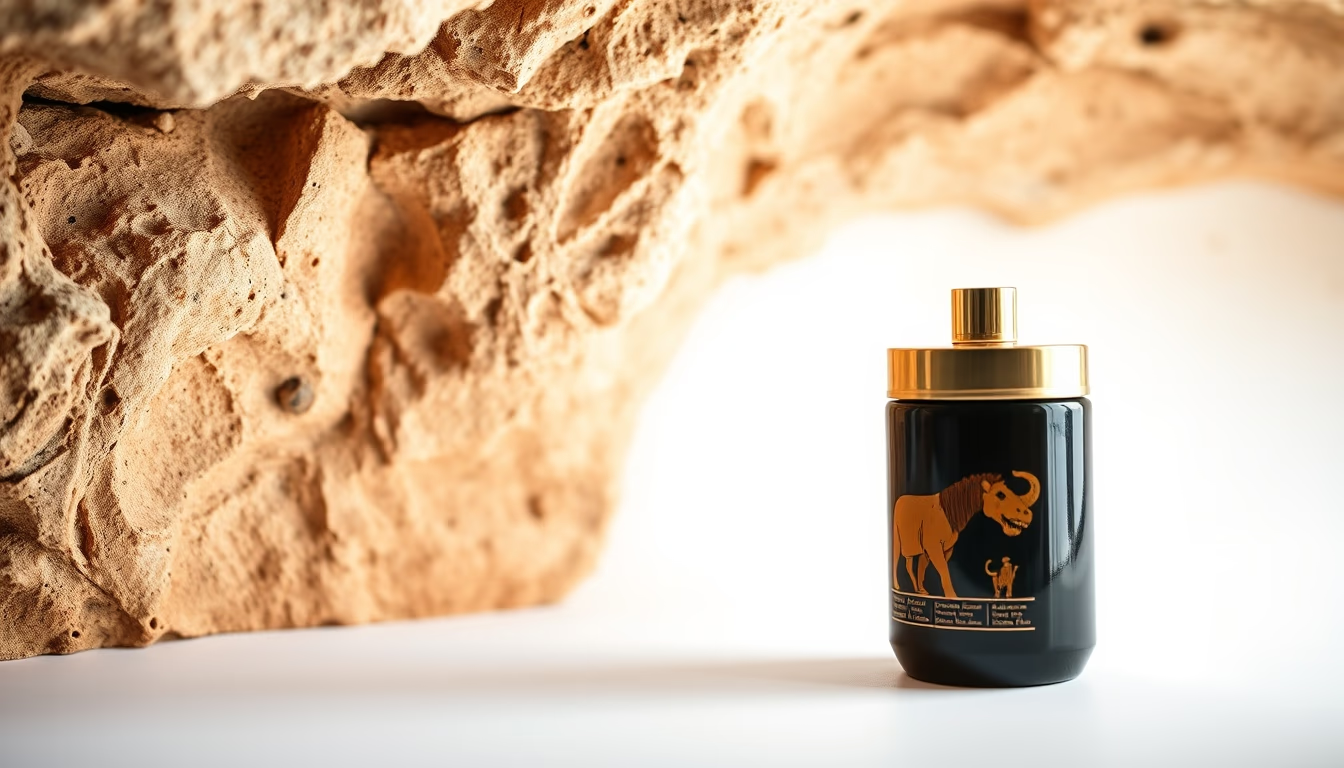
Rosetta stone
1344×768 · AVIF · CC BY 4.0

The Rosetta Stone, discovered in 1799, was the key to deciphering Egyptian hieroglyphs, bridging the ancient world with modernity.
About this subject
The Rosetta Stone is a fragment of an ancient Egyptian stele carved from granodiorite, dating to 196 BC. During the Ptolemaic period, it was inscribed with a decree in three distinct scripts: hieroglyphic, demotic, and ancient Greek. This trilingual inscription enabled scholars, particularly the Frenchman Jean-François Champollion in the early 19th century, to decipher Egyptian hieroglyphs, which had been incomprehensible for centuries.
Discovered by French soldiers during Napoleon's campaign in Egypt near the town of Rashid (Rosetta), the stone was later seized by the British after the French defeat and has been displayed at the British Museum since 1802. It weighs approximately 760 kg and measures 112.3 cm in height, 75.7 cm in width, and 28.4 cm in thickness. Since its discovery, it has become one of the museum's most visited artifacts.
The significance of the Rosetta Stone extends beyond linguistics. It is a landmark in Egyptology and the understanding of ancient Egyptian civilization. The decree text honors Pharaoh Ptolemy V, but its content is not extraordinary; the value lies in the key it provided to unlock a lost language. The term "Rosetta stone" has become synonymous with anything that solves a mystery.
Today, the stone is at the center of debates about repatriation of cultural artifacts. Egypt requests its return, while the British Museum argues it is part of world heritage. Regardless, the Rosetta Stone remains a symbol of the interconnectedness of civilizations and the power of knowledge.
Frequently Asked Questions
What is written on the Rosetta Stone?
The Rosetta Stone contains a decree issued by Pharaoh Ptolemy V in 196 BC. It is an act of homage to the pharaoh establishing his divine cult, inscribed in three scripts: hieroglyphic, demotic, and ancient Greek.
Who deciphered the Rosetta Stone and how?
The French scholar Jean-François Champollion deciphered the hieroglyphs in 1822. He compared proper names in Greek and demotic with the hieroglyphs and realized that hieroglyphs could represent sounds, not just ideas.
Where is the Rosetta Stone now and why is there controversy?
The Rosetta Stone is in the British Museum in London. Egypt requests its repatriation, arguing it was taken illegally, while the museum claims it is part of world heritage and well-preserved there.
Direct URL
https://pub-c7d6a6ea828543ac903a74a341ccb2e1.r2.dev/imagens/rosetta-stone-aerial-drone-shot-p4.avifHow to credit
Include a visible link back to UtilizAí. Copy one of the snippets below:
<a href="https://xn--utiliza-eza.com/en/midia/imagens/rosetta-stone-aerial-drone-shot-p4">Rosetta stone</a> by <a href="https://xn--utiliza-eza.com">UtilizAí</a>, licensed under <a href="https://creativecommons.org/licenses/by/4.0/">CC BY 4.0</a>.
[Rosetta stone](https://xn--utiliza-eza.com/en/midia/imagens/rosetta-stone-aerial-drone-shot-p4) by [UtilizAí](https://xn--utiliza-eza.com), CC BY 4.0
License: CC-BY-4.0