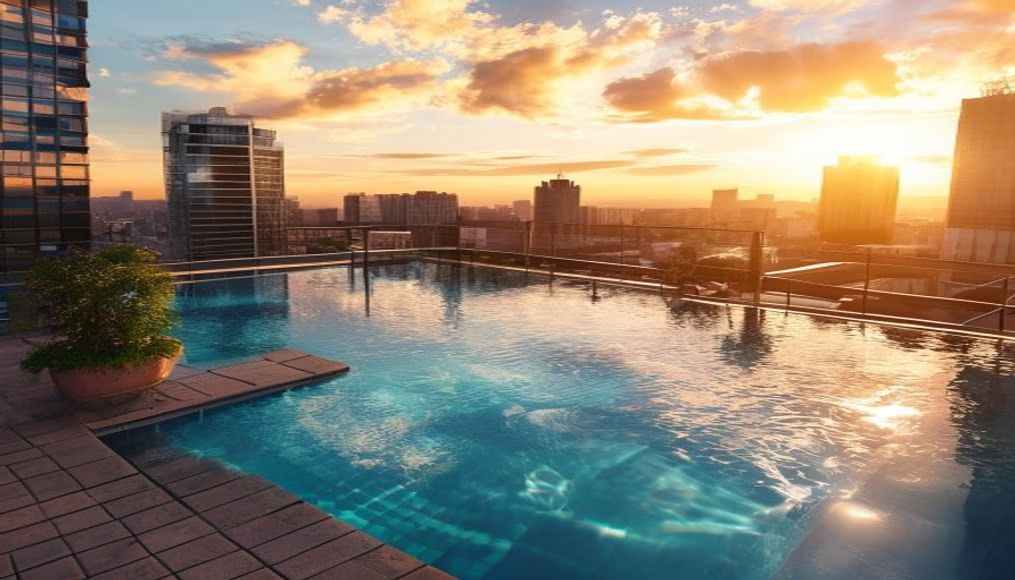
Rooftop pool city view
1344×768 · AVIF · CC BY 4.0
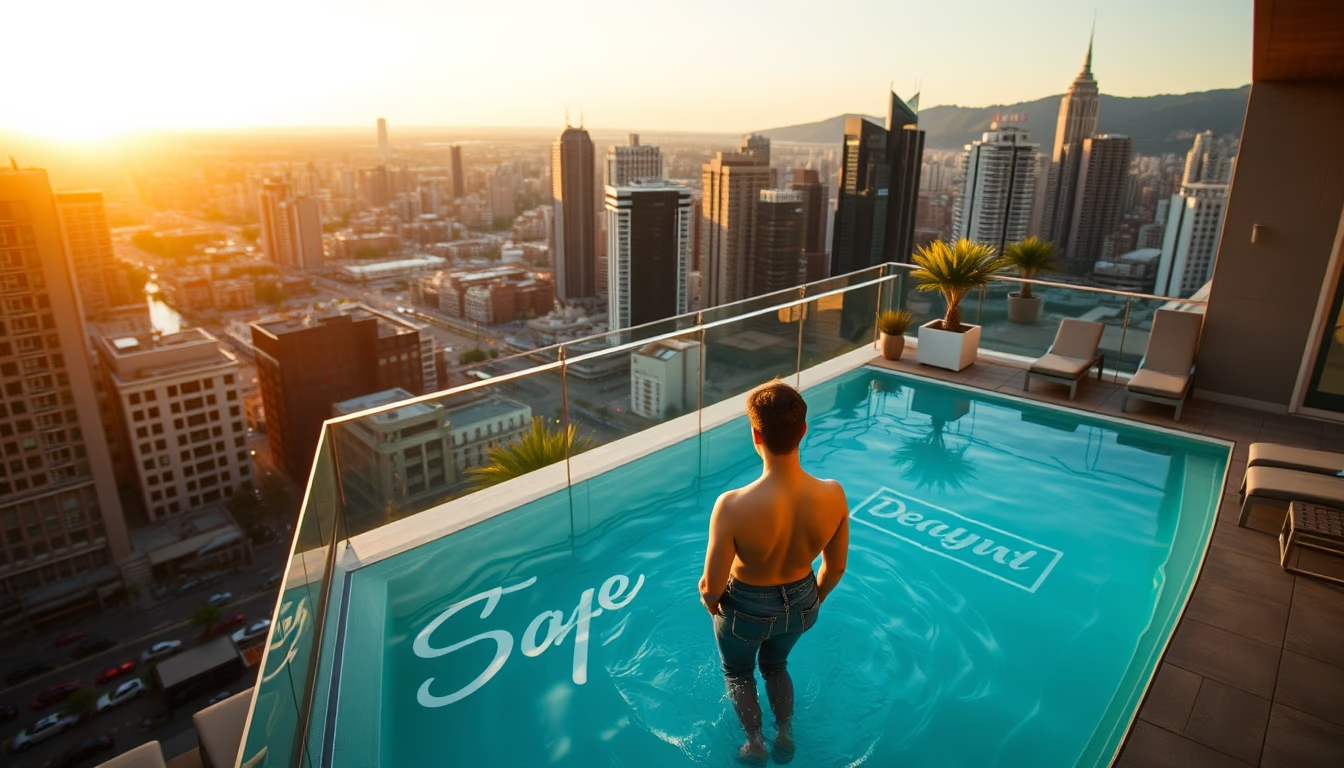
Rooftop pool with panoramic city view: an icon of modern urban architecture and contemporary luxury.
About this subject
Rooftop pools have become symbols of high-end urban lifestyles in global metropolises like New York, Dubai, São Paulo, and Sydney. These structures offer not only leisure and relaxation but also serve as privileged viewpoints, providing 360-degree city skyline vistas. Building a rooftop pool involves complex engineering, including structural reinforcement, waterproofing, drainage systems, and heating/filtration equipment adapted to elevated spaces.
Historically, the first rooftop pools appeared in the 1920s in luxury hotels in the United States, such as the Biltmore Hotel in Los Angeles. As cities grew vertically and land prices soared, the trend expanded to residential and commercial buildings. In São Paulo, for example, the Copan Building by Oscar Niemeyer already included rooftop leisure areas, though without a pool. Today, developments like the Infinity Pool at Marina Bay Sands in Singapore elevate the concept further, with vanishing edges that merge with the horizon.
Beyond aesthetic appeal, rooftop pools offer practical benefits: they optimize space in densely populated areas, increase property value, and create exclusive social environments. However, they require constant maintenance due to exposure to wind, sun, and urban pollution. Water temperature is controlled by solar or gas heating systems, and chemical treatment must be rigorous to prevent algae and bacteria. In tropical climates like Brazil, the pool can be used year-round, while in harsh winters (e.g., Canada), many are heated and covered by retractable structures.
Interestingly, rooftop pools also play a role in urban sustainability: some collect rainwater for reuse, and heat dissipated by equipment can be repurposed for space heating. In cities like Tokyo, where space is extremely limited, rooftop pools are common in capsule hotels and gyms. The panoramic view is not just a visual delight but also a real estate marketing tool: studies show that properties with rooftop pool access can appreciate by up to 30%. Safety is another critical aspect, with tempered glass guardrails and alarm systems to prevent accidents.
Frequently Asked Questions
What are the main engineering challenges for building a rooftop pool?
Key challenges include structural reinforcement to support water weight, efficient waterproofing systems, proper drainage, and installation of heating and filtration equipment suited for elevated environments, along with ensuring wind safety and restricted access.
How do rooftop pools contribute to urban sustainability?
They can collect rainwater for reuse, use solar heating, and repurpose heat dissipated by equipment for space heating, reducing energy and water consumption. They also optimize space use in dense areas.
What is the impact of a rooftop pool on property value?
Properties with rooftop pool access can appreciate by up to 30%, according to market studies, especially in high-end urban areas where leisure space is limited and panoramic views are a competitive differentiator.
Direct URL
https://pub-c7d6a6ea828543ac903a74a341ccb2e1.r2.dev/imagens/rooftop-pool-city-view-cinematic-wide-shot-v2.avifHow to credit
Include a visible link back to UtilizAí. Copy one of the snippets below:
<a href="https://xn--utiliza-eza.com/en/midia/imagens/rooftop-pool-city-view-cinematic-wide-shot-v2">Rooftop pool city view</a> by <a href="https://xn--utiliza-eza.com">UtilizAí</a>, licensed under <a href="https://creativecommons.org/licenses/by/4.0/">CC BY 4.0</a>.
[Rooftop pool city view](https://xn--utiliza-eza.com/en/midia/imagens/rooftop-pool-city-view-cinematic-wide-shot-v2) by [UtilizAí](https://xn--utiliza-eza.com), CC BY 4.0
License: CC-BY-4.0