Roman mosaic floor
1344×768 · AVIF · CC BY 4.0
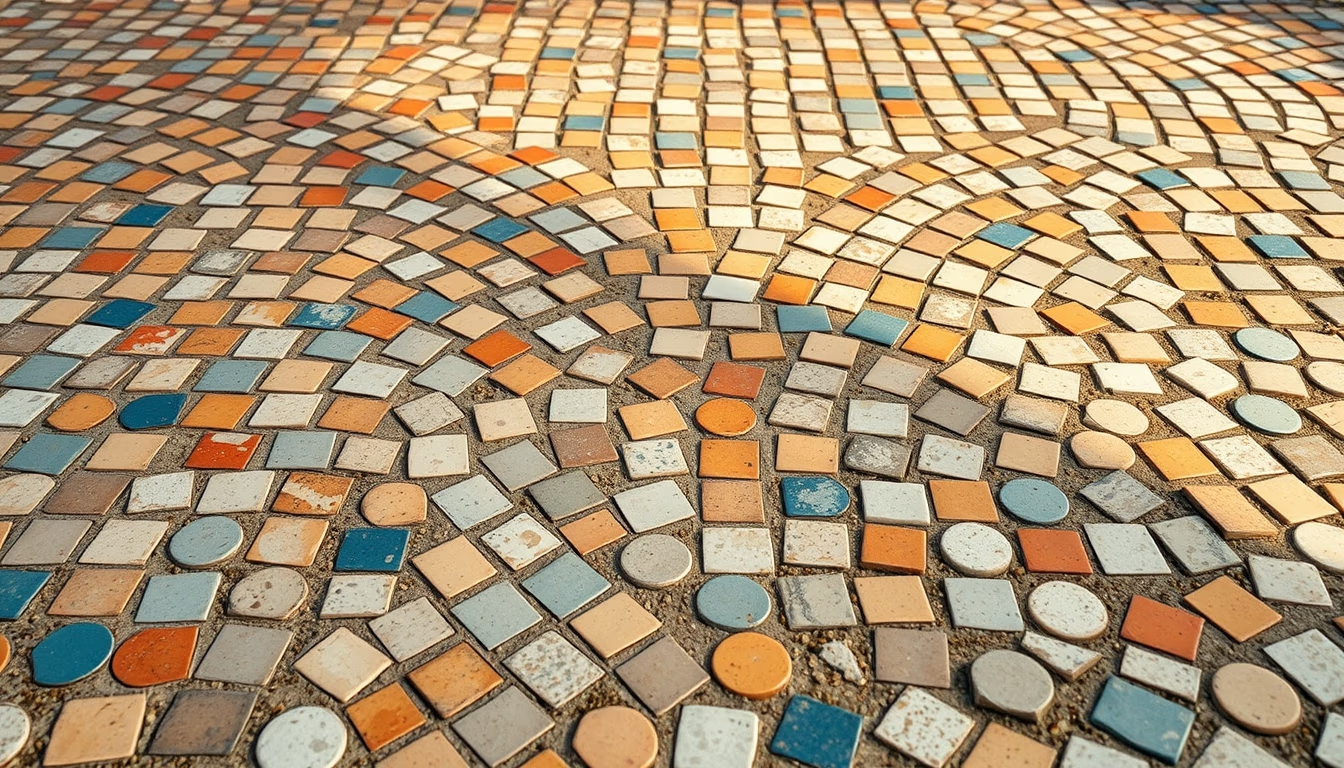
Roman mosaics were crafted from small colored pieces called tesserae, creating detailed scenes that adorned floors and walls of villas and public buildings.
About this subject
Roman mosaics flourished between the 2nd century BCE and the 4th century CE, particularly during the Roman Empire. They were composed of tesserae, small cubes of stone, marble, glass, or ceramic, forming geometric patterns, mythological figures, hunting scenes, or daily life. Two main techniques were used: opus tessellatum (larger tesserae for broad areas) and opus vermiculatum (tiny pieces for fine details, such as portraits).
Many mosaics survived due to the eruption of Mount Vesuvius in 79 CE, which buried Pompeii and Herculaneum under ash, preserving intact floors. The famous Alexander Mosaic, found in the House of the Faun in Pompeii, depicts the Battle of Issus between Alexander the Great and Darius III. It uses about 1.5 million tesserae and measures 5.82 by 3.13 meters, making it one of the largest ancient mosaics.
Beyond decoration, mosaics served a social function: they signaled the owner's wealth and culture. Mythological themes demonstrated erudition, while scenes of games or exotic animals showed connections with distant regions of the empire. The technique influenced Byzantine art and later medieval and Renaissance mosaics. Today, archaeological excavations continue to uncover new examples, such as in Turkey (Zeugma) and Syria (Apameia). The study of mosaics helps understand Roman economy, religion, and aesthetics.
Frequently Asked Questions
How were Roman mosaics made?
They were made with tesserae (small cubes of stone, marble, glass, or ceramic) set into mortar. Artisans first sketched the design, then applied the tesserae, starting from the edges. The surface was polished to level it.
What is the most famous Roman mosaic?
The Alexander Mosaic from Pompeii is the most renowned. It depicts the Battle of Issus and contains about 1.5 million tesserae. It is displayed at the National Archaeological Museum of Naples.
Where can I see preserved Roman mosaics?
Besides Pompeii and Herculaneum, important collections exist in Rome (Baths of Caracalla), Turkey (Zeugma mosaics), Tunisia (Bardo Museum), and France (Vaison-la-Romaine site).
Direct URL
https://pub-c7d6a6ea828543ac903a74a341ccb2e1.r2.dev/imagens/roman-mosaic-floor-national-geographic-style-p0.avifHow to credit
Include a visible link back to UtilizAí. Copy one of the snippets below:
<a href="https://xn--utiliza-eza.com/en/midia/imagens/roman-mosaic-floor-national-geographic-style-p0">Roman mosaic floor</a> by <a href="https://xn--utiliza-eza.com">UtilizAí</a>, licensed under <a href="https://creativecommons.org/licenses/by/4.0/">CC BY 4.0</a>.
[Roman mosaic floor](https://xn--utiliza-eza.com/en/midia/imagens/roman-mosaic-floor-national-geographic-style-p0) by [UtilizAí](https://xn--utiliza-eza.com), CC BY 4.0
License: CC-BY-4.0