Roman mosaic floor
1344×768 · AVIF · CC BY 4.0
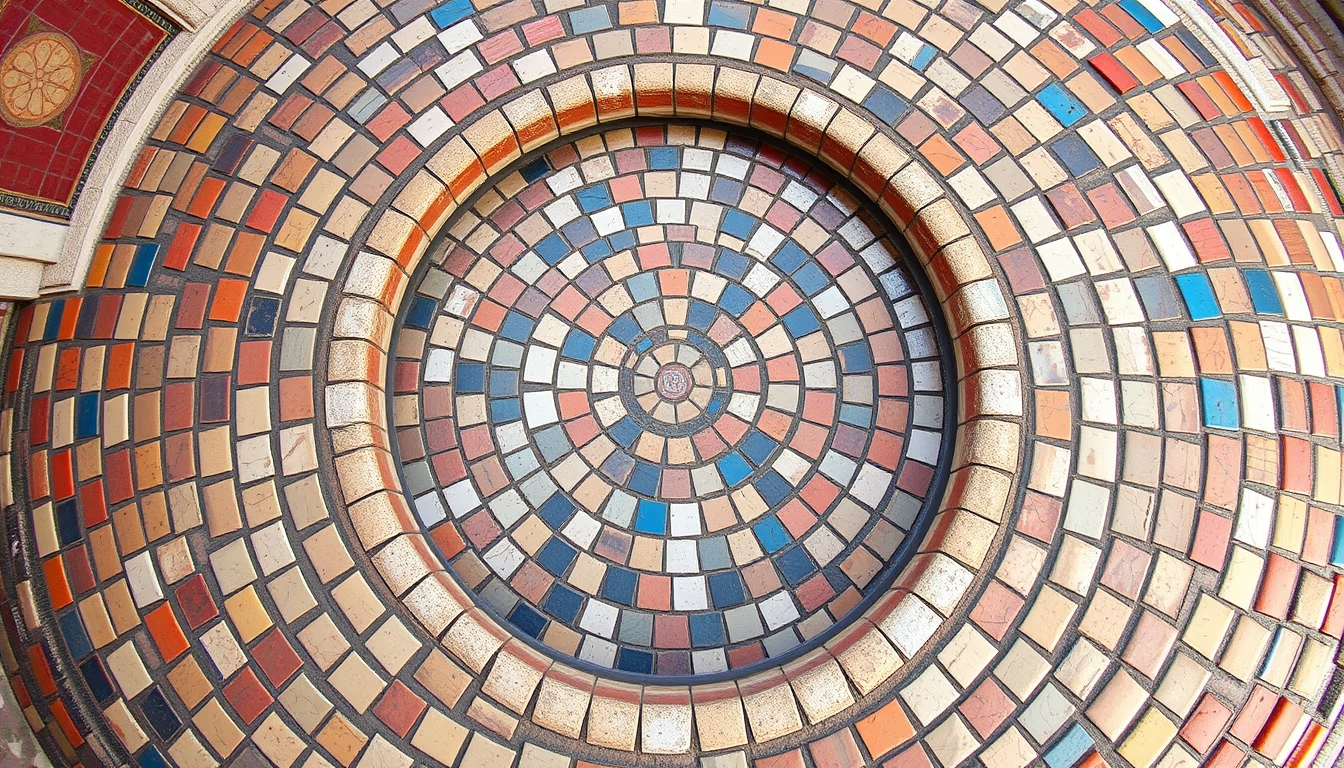
Roman mosaic floor, a handcrafted technique that adorned Roman villas and public buildings, depicting mythological, daily life, and geometric scenes.
About this subject
Roman mosaic floors, particularly the opus tessellatum technique, were a prevalent decorative art form from the 2nd century BCE to the 5th century CE. Tiny cubes of stone, glass, or ceramic known as tesserae were embedded in mortar to create intricate patterns and scenes. This craft, inherited from the Greeks and refined by Romans, reached high sophistication, as seen in Hadrian's Villa in Tivoli and the houses of Pompeii. Mosaics commonly adorned triclinia (dining rooms), atria, and public baths, reflecting the owner's wealth and cultural refinement. Themes ranged from mythological gods and heroes to hunting scenes, gladiator combats, and geometric designs. The eruption of Mount Vesuvius in 79 CE preserved many mosaics in Pompeii and Herculaneum, offering a unique window into Roman artistry. Artisans began with a preliminary drawing, then layered mortar and placed tesserae with precise alignment. Colored marbles, such as red and green, were imported across the empire. Remarkably, the Alexander Mosaic from the House of the Faun in Pompeii depicts the Battle of Issus using around 1.5 million tesserae, many smaller than a centimeter. As the Roman Empire declined, the technique evolved into Byzantine mosaics, which shifted to wall panels with gold tesserae. Today, these floors endure as engineering and aesthetic marvels, with well-preserved examples in Italy, North Africa, the Middle East, and Europe, offering insights into ancient daily life, mythology, and craftsmanship.
Frequently Asked Questions
How were Roman mosaic floors made?
Roman mosaic floors were made by embedding small pieces of stone, glass, or ceramic called tesserae into fresh mortar. The process involved drawing the design, preparing layers of mortar, and manually placing the tesserae to form patterns and figures.
Where were Roman mosaics commonly found?
They were common in elite residences (villas and domus), especially in triclinia (dining rooms) and atria, as well as public buildings such as baths, temples, and forums. They also decorated walkways and piazzas.
What is the difference between Roman and Greek mosaics?
Greek mosaics (Hellenistic period) used natural pebbles in simple patterns, while Romans developed opus tessellatum using cut stone or glass tesserae, allowing more detail, vibrant colors, narrative scenes, and large-scale standardization.
Direct URL
https://pub-c7d6a6ea828543ac903a74a341ccb2e1.r2.dev/imagens/roman-mosaic-floor-fish-eye-wide-angle-p8.avifHow to credit
Include a visible link back to UtilizAí. Copy one of the snippets below:
<a href="https://xn--utiliza-eza.com/en/midia/imagens/roman-mosaic-floor-fish-eye-wide-angle-p8">Roman mosaic floor</a> by <a href="https://xn--utiliza-eza.com">UtilizAí</a>, licensed under <a href="https://creativecommons.org/licenses/by/4.0/">CC BY 4.0</a>.
[Roman mosaic floor](https://xn--utiliza-eza.com/en/midia/imagens/roman-mosaic-floor-fish-eye-wide-angle-p8) by [UtilizAí](https://xn--utiliza-eza.com), CC BY 4.0
License: CC-BY-4.0