Roman aqueduct ruins
1344×768 · AVIF · CC BY 4.0
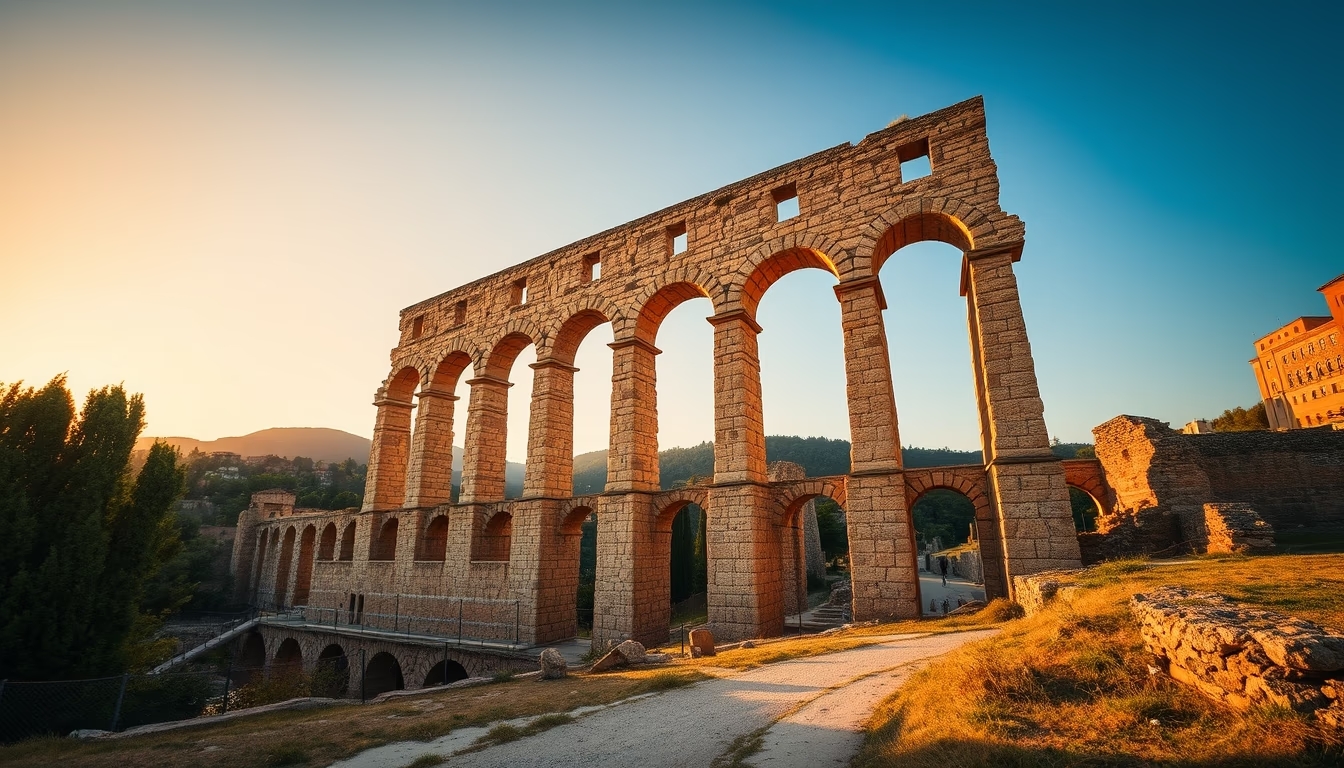
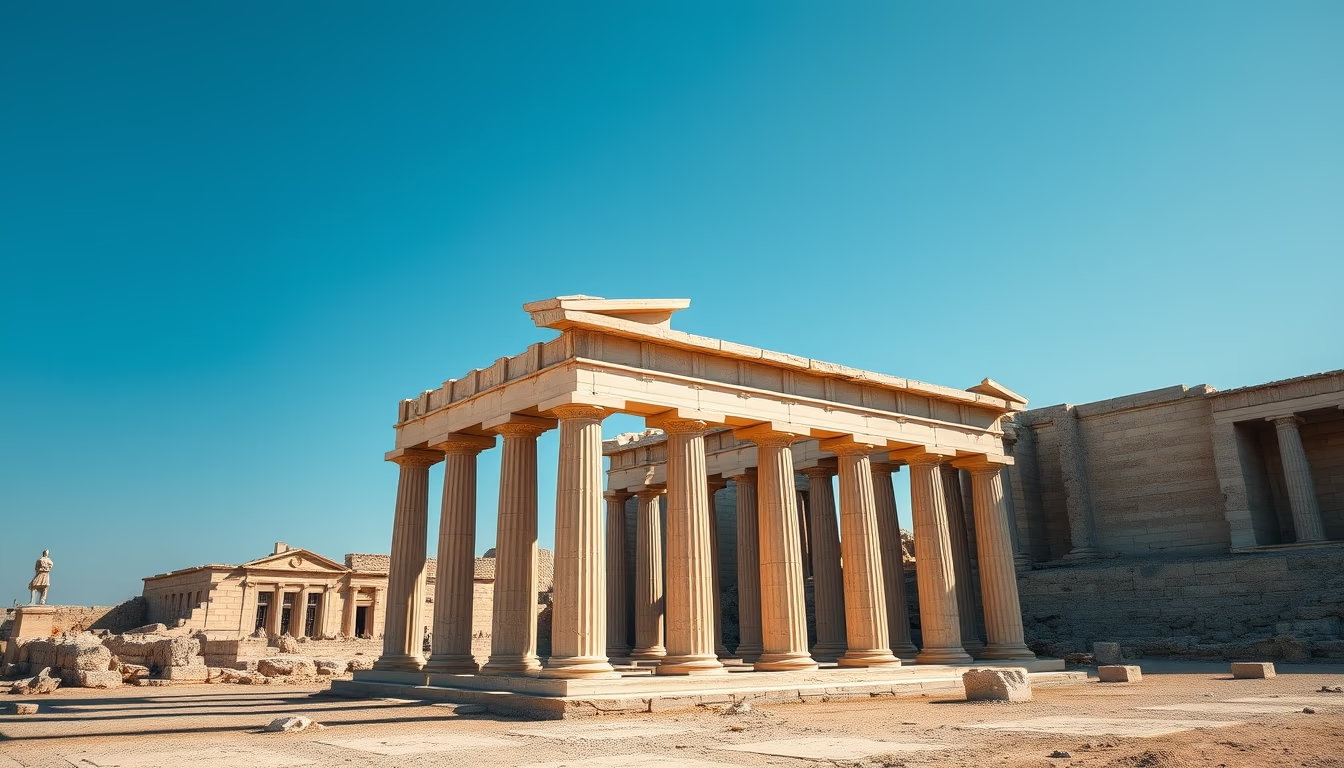
Ruins of Roman aqueducts reveal the hydraulic engineering that supplied cities of the Roman Empire for centuries.
About this subject
Roman aqueducts are among the most impressive legacies of ancient engineering. Built between the 4th century BC and the 3rd century AD, these structures carried water from distant sources to urban centers, enabling population growth and the development of public baths, fountains, and sewage systems. The most famous is the Aqueduct of Segovia in Spain, with its double arches stretching over 800 meters. Another notable example is the Pont du Gard in southern France, with three tiers of arches reaching 49 meters high. These constructions used gravity to maintain a constant flow, with precise slopes of only 0.5% to 1%. It is estimated that Rome's complete aqueduct system, about 500 kilometers long, transported more than 1 million cubic meters of water per day. Many ruins still stand, attracting travelers and historians. The preservation of these sites allows the study of Roman construction techniques, such as the use of opus caementicium (Roman concrete) and lime mortar. Beyond archaeological value, aqueducts symbolize the Roman ability to integrate landscapes and dominate water resources. Today, they are UNESCO World Heritage sites in countries like France, Spain, Italy, and Portugal. Visiting these ruins is a journey through time that connects the present to the genius of a civilization that shaped the West.
Frequently Asked Questions
How did Roman aqueducts work without pumps?
They used gravity: water flowed in a continuous downhill gradient from the source to the destination, with channels lined with impermeable mortar. The slope was carefully calculated to maintain proper speed.
What is the longest Roman aqueduct ever built?
The Aqua Claudia aqueduct in Rome was about 69 kilometers long. However, the complete system of the city totaled approximately 500 kilometers.
Where can I see the best-preserved Roman aqueduct ruins?
Sites like Pont du Gard (France), the Aqueduct of Segovia (Spain), and Aqua Claudia near Rome (Italy) are notable examples. Many are open to the public as tourist attractions and world heritage sites.
Direct URL
https://pub-c7d6a6ea828543ac903a74a341ccb2e1.r2.dev/imagens/roman-aqueduct-ruins-travel-photography-p1.avifHow to credit
Include a visible link back to UtilizAí. Copy one of the snippets below:
<a href="https://xn--utiliza-eza.com/en/midia/imagens/roman-aqueduct-ruins-travel-photography-p1">Roman aqueduct ruins</a> by <a href="https://xn--utiliza-eza.com">UtilizAí</a>, licensed under <a href="https://creativecommons.org/licenses/by/4.0/">CC BY 4.0</a>.
[Roman aqueduct ruins](https://xn--utiliza-eza.com/en/midia/imagens/roman-aqueduct-ruins-travel-photography-p1) by [UtilizAí](https://xn--utiliza-eza.com), CC BY 4.0
License: CC-BY-4.0