Roman aqueduct ruins
1344×768 · AVIF · CC BY 4.0
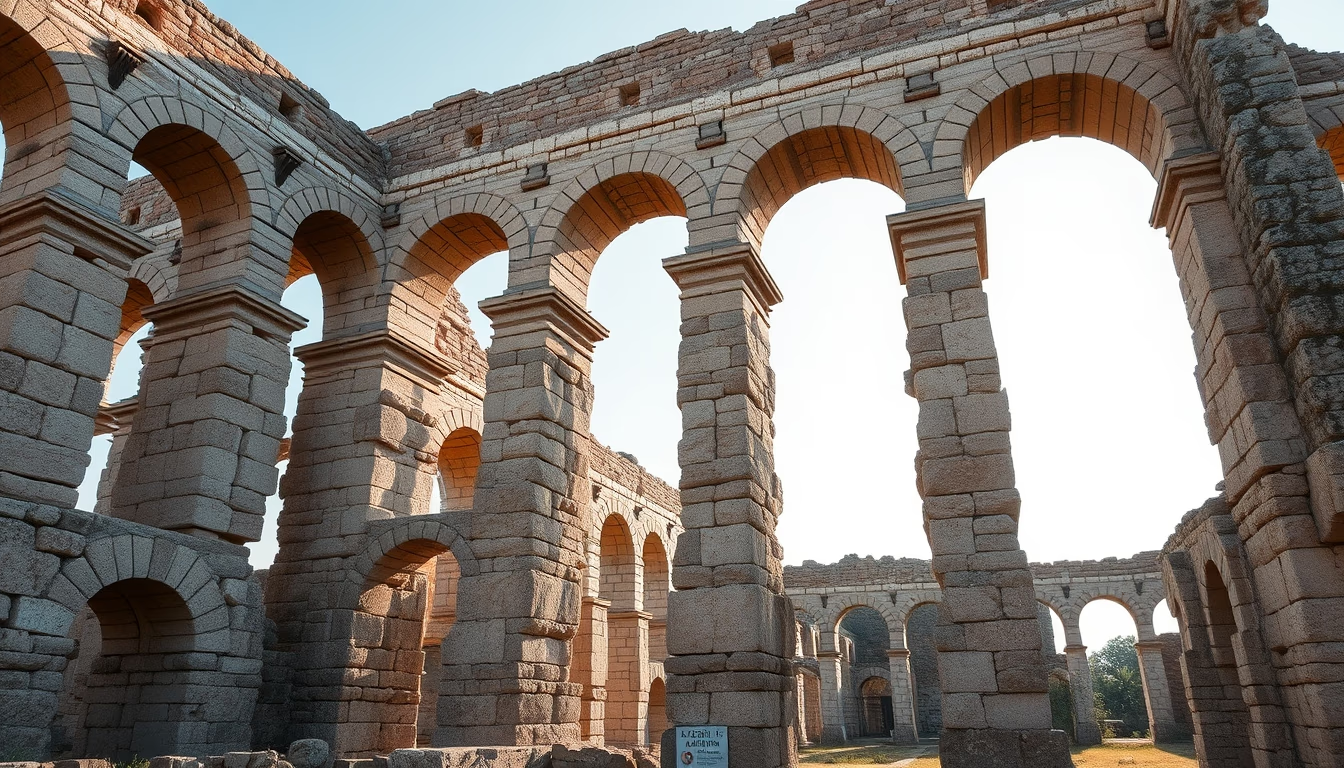
Ruins of Roman aqueducts reveal the hydraulic engineering that supplied cities of the empire millennia ago, with imposing structures like the Pont du Gard and the Aqueduct of Segovia.
About this subject
Roman aqueducts represent one of the greatest achievements of ancient engineering, designed to transport water from distant sources to urban centers. The network serving Rome, for instance, totaled about 500 km, with roughly 50 km raised on arcades. The average slope was only 0.5% to 1% to ensure continuous flow. Materials such as stone, Roman concrete (opus caementicium), and brick were widely used, with lime mortar and pozzolana for water resistance.
Built between the 4th century BC and 1st century AD, aqueducts like the Aqua Appia (312 BC) and Aqua Claudia (AD 38) supplied public fountains, baths, and elite homes. Water passed through settling tanks for purification, and excess fed sewers like the Cloaca Maxima. Iconic examples include the Pont du Gard in France, 50 meters high and 275 meters long, and the Aqueduct of Segovia in Spain, 28 meters high and over 800 meters preserved.
The fall of the Roman Empire led to neglect and decay of many aqueducts, but some continued in use during the Middle Ages. The Segovia aqueduct, for instance, operated until the 20th century. Today, ruins of these structures are UNESCO World Heritage Sites and tourist destinations that inspire awe for their precision and durability. Roman techniques influenced later projects, such as Renaissance aqueducts and modern canals.
Interestingly, the Acqua Vergine aqueduct in Rome still supplies water to the Trevi Fountain and other monuments. The ruins serve not only as a testament to the past but also as a lesson in sustainability and water management.
Frequently Asked Questions
How did Roman aqueducts manage to transport water at a constant downhill slope?
Roman engineers used a gentle gradient, usually between 0.5% and 1% slope, calculated with instruments like the groma and chorobate. They also built tunnels, bridges, and siphons to overcome natural obstacles, ensuring continuous flow by gravity.
What materials were used in building Roman aqueducts?
Predominantly stone, brick, and Roman concrete (opus caementicium), a mix of lime, pozzolana, and aggregate. Pozzolana, a volcanic ash, allowed concrete to harden underwater and gave it great durability.
Where are the best-preserved Roman aqueducts to visit?
Highlights include the Pont du Gard (France), the Aqueduct of Segovia (Spain), the Aqueduct of Los Milagros (Mérida, Spain), and Porta Maggiore (Rome, Italy). Many are UNESCO World Heritage Sites and open to the public.
Direct URL
https://pub-c7d6a6ea828543ac903a74a341ccb2e1.r2.dev/imagens/roman-aqueduct-ruins-national-geographic-style-p2.avifHow to credit
Include a visible link back to UtilizAí. Copy one of the snippets below:
<a href="https://xn--utiliza-eza.com/en/midia/imagens/roman-aqueduct-ruins-national-geographic-style-p2">Roman aqueduct ruins</a> by <a href="https://xn--utiliza-eza.com">UtilizAí</a>, licensed under <a href="https://creativecommons.org/licenses/by/4.0/">CC BY 4.0</a>.
[Roman aqueduct ruins](https://xn--utiliza-eza.com/en/midia/imagens/roman-aqueduct-ruins-national-geographic-style-p2) by [UtilizAí](https://xn--utiliza-eza.com), CC BY 4.0
License: CC-BY-4.0