Roman aqueduct ruins
1344×768 · AVIF · CC BY 4.0
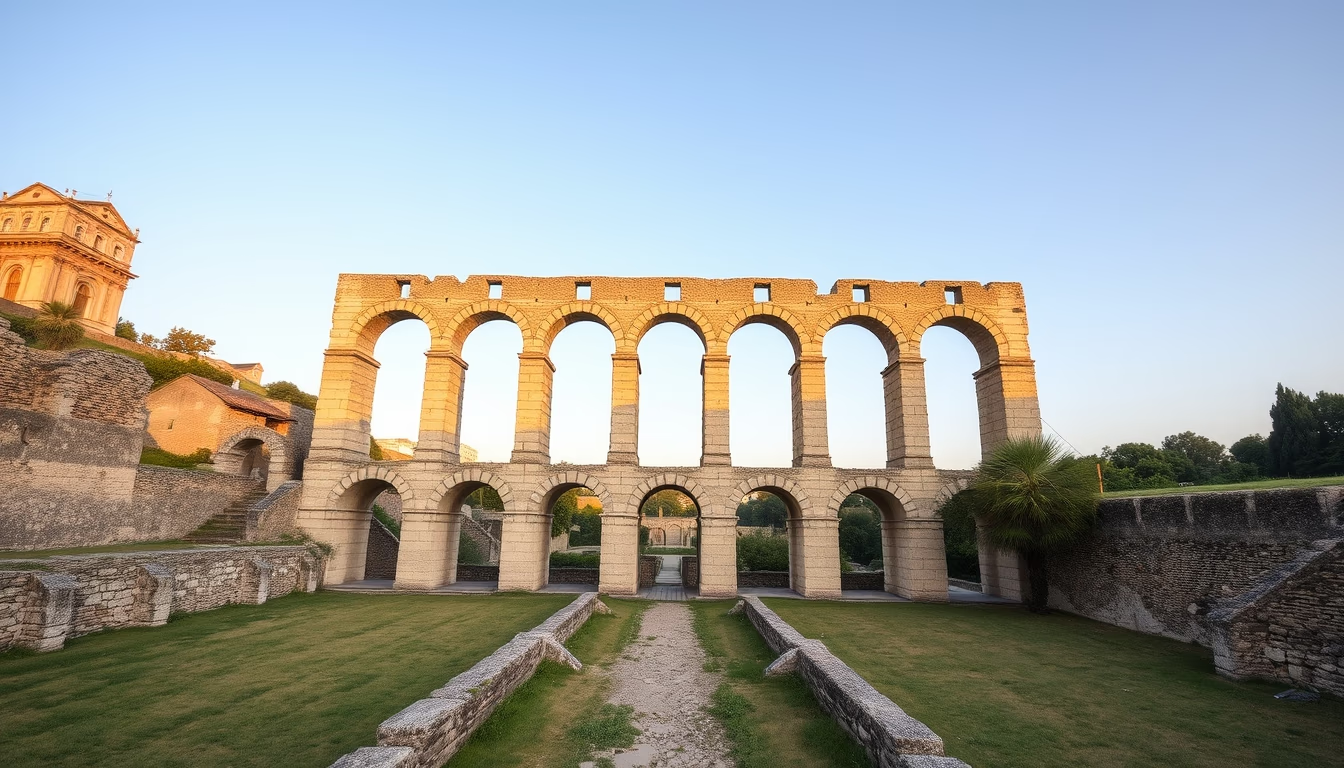
Roman aqueduct ruins reveal the hydraulic engineering that supplied cities across the Empire with fresh water over long distances.
About this subject
Roman aqueducts are among the most impressive engineering feats of antiquity. Built between the 4th century BCE and the 1st century CE, they transported water from springs and rivers to urban centers, public baths, fountains, and elite residences. The system combined underground channels, tunnels, and elevated arcades to maintain a constant gradient, allowing water to flow by gravity. The Aqua Claudia aqueduct in Rome spanned nearly 70 km, with 14 km on arches. Structures were built mainly of stone and Roman concrete (opus caementicium), a material that has withstood centuries, leaving iconic ruins such as the Pont du Gard in France and the Segovia Aqueduct in Spain. Besides functionality, aqueducts symbolized Roman power and organizational capacity. Many continued in use after the Empire's fall, and their techniques influenced water supply systems into the Modern Era. It is estimated that ancient Rome consumed about 1 million cubic meters of water per day, thanks to a network of 11 major aqueducts. Today, these ruins are UNESCO World Heritage sites, attracting researchers and tourists interested in Roman engineering and urbanism.
Frequently Asked Questions
How did the Romans maintain water flow in aqueducts without pumps?
Aqueducts used gravity. Engineers calculated a gentle, constant slope along the entire route, typically 0.5% to 1%, so water flowed naturally. Bridges and tunnels preserved the gradient even across uneven terrain.
Which Roman aqueducts are most famous and still exist today?
The best-known examples are the Pont du Gard in France and the Segovia Aqueduct in Spain. In Rome, ruins of the Aqua Claudia and Aqua Virgo are also notable, with the latter still supplying fountains like the Trevi Fountain.
Were Roman aqueducts used only for drinking water?
No. They supplied public baths, ornamental fountains, sewage systems, and even some industries. Water was distributed via water towers (castella) and lead or ceramic pipes, with priority given to public uses.
Direct URL
https://pub-c7d6a6ea828543ac903a74a341ccb2e1.r2.dev/imagens/roman-aqueduct-ruins-architectural-photography-p4.avifHow to credit
Include a visible link back to UtilizAí. Copy one of the snippets below:
<a href="https://xn--utiliza-eza.com/en/midia/imagens/roman-aqueduct-ruins-architectural-photography-p4">Roman aqueduct ruins</a> by <a href="https://xn--utiliza-eza.com">UtilizAí</a>, licensed under <a href="https://creativecommons.org/licenses/by/4.0/">CC BY 4.0</a>.
[Roman aqueduct ruins](https://xn--utiliza-eza.com/en/midia/imagens/roman-aqueduct-ruins-architectural-photography-p4) by [UtilizAí](https://xn--utiliza-eza.com), CC BY 4.0
License: CC-BY-4.0