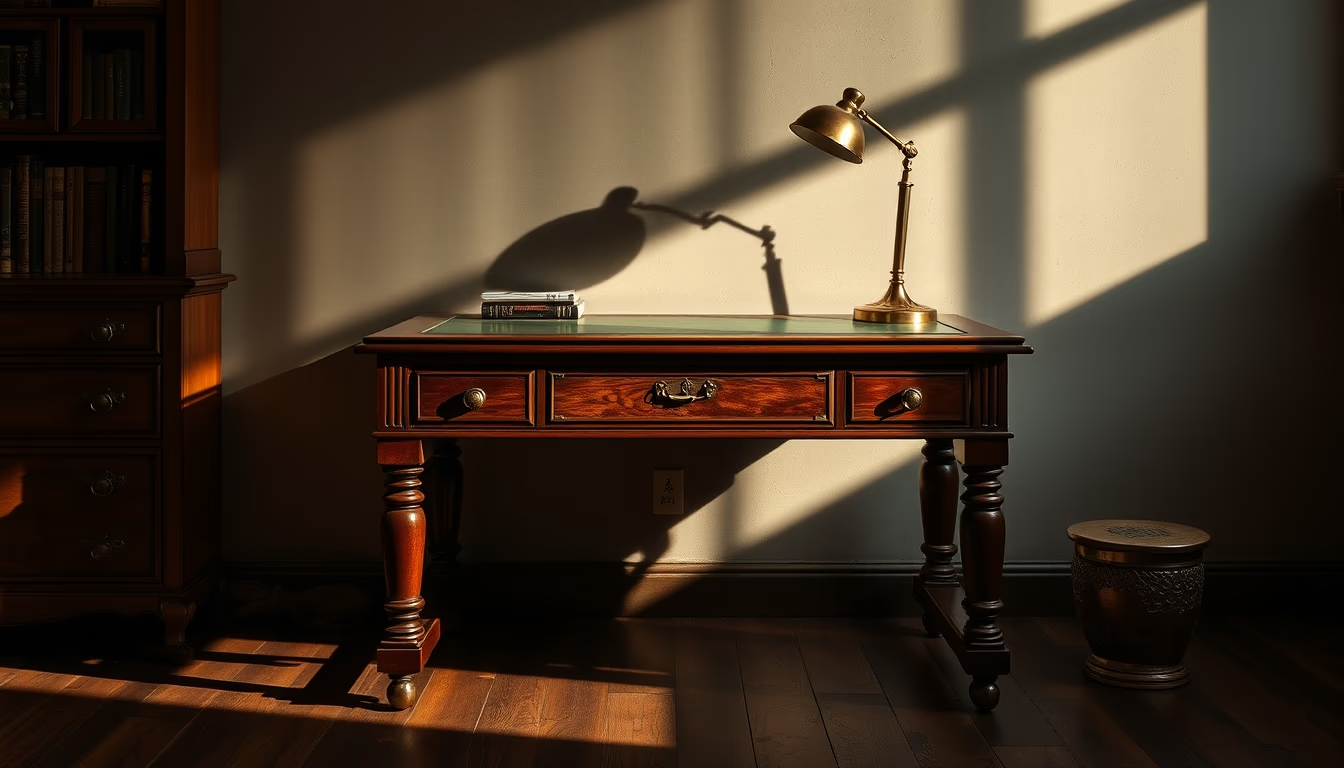
Roll top desk antique
1344×768 · AVIF · CC BY 4.0
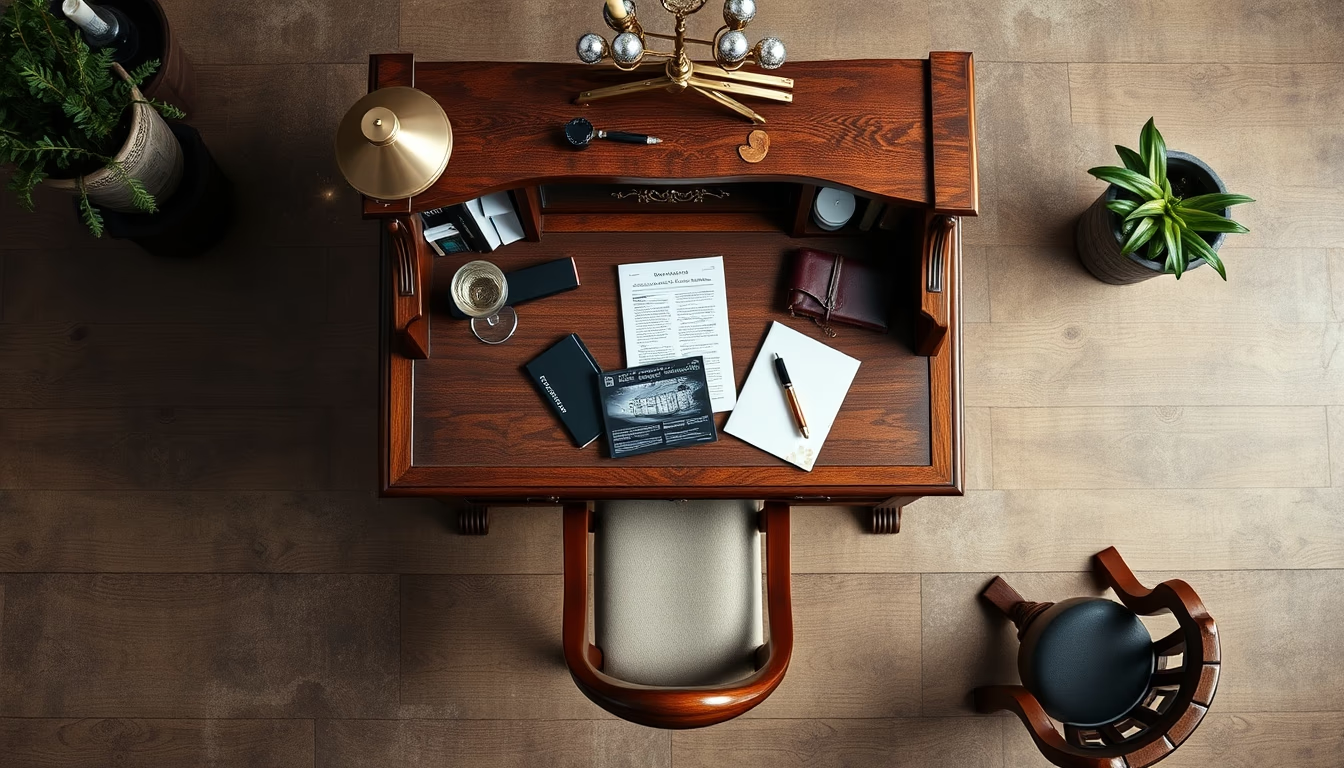
The antique roll top desk is a classic piece of furniture combining functionality and design, popular between the 19th and 20th centuries.
About this subject
The roll top desk, also known as a tambour desk, originated in the late 18th century and peaked during the Victorian era. Its innovative design features a flexible shutter made of narrow wooden slats that slide on tracks, allowing the workspace to be closed and locked compactly. Typically crafted from mahogany, oak, or walnut, these pieces were status symbols and organizational tools in commercial offices and elegant homes.
The opening and closing mechanism requires precise craftsmanship: thin slats are mounted on a canvas or leather base, ensuring flexibility without warping. Many models include side drawers, a pull-out writing surface, and internal compartments for documents. During the 19th century, industrialization enabled larger-scale production, but handcrafted examples by specialized cabinetmakers are the most prized.
Interestingly, the term "roll top" became popular in the United States, where these desks were common in law offices, accounting firms, and merchant shops. The design favored privacy, as the shutter could be quickly lowered to conceal papers. Today, they are collector's items and vintage decor, with prices varying based on rarity, condition, and provenance. Restorers dedicate efforts to recovering the mechanism and original varnish.
In Brazil, these pieces arrived with the Portuguese court and were adapted by local artisans using woods like jacaranda and cedar. Examples can still be found in antique shops and auctions, especially in São Paulo and Rio de Janeiro. The antique roll top desk is not merely functional furniture but a testament to the evolution of interior design and the history of clerical work.
Frequently Asked Questions
How to identify an original antique roll top desk?
Check the construction: thin wood slats over canvas or leather, metal or wood tracks, and hand tool marks. Natural patina and wood type (mahogany, oak, walnut) are indicators. Avoid imitations with plywood or modern mechanisms.
What is the difference between a roll top desk and a secretary desk?
A traditional secretary desk has a hinged front that opens downward, while a roll top desk has a shutter that slides vertically on tracks and rolls inside. The roll top offers more compact closure and greater privacy.
How to restore an antique roll top desk?
First, dust with a dry cloth. For the mechanism, lubricate tracks with paraffin wax. Do not use water or abrasives. Consult a professional restorer for repairs to broken slats or original varnish.
Direct URL
https://pub-c7d6a6ea828543ac903a74a341ccb2e1.r2.dev/imagens/roll-top-desk-antique-isometric-flat-lay-fresh14.avifHow to credit
Include a visible link back to UtilizAí. Copy one of the snippets below:
<a href="https://xn--utiliza-eza.com/en/midia/imagens/roll-top-desk-antique-isometric-flat-lay-fresh14">Roll top desk antique</a> by <a href="https://xn--utiliza-eza.com">UtilizAí</a>, licensed under <a href="https://creativecommons.org/licenses/by/4.0/">CC BY 4.0</a>.
[Roll top desk antique](https://xn--utiliza-eza.com/en/midia/imagens/roll-top-desk-antique-isometric-flat-lay-fresh14) by [UtilizAí](https://xn--utiliza-eza.com), CC BY 4.0
License: CC-BY-4.0