Rocking horse wooden
1344×768 · AVIF · CC BY 4.0
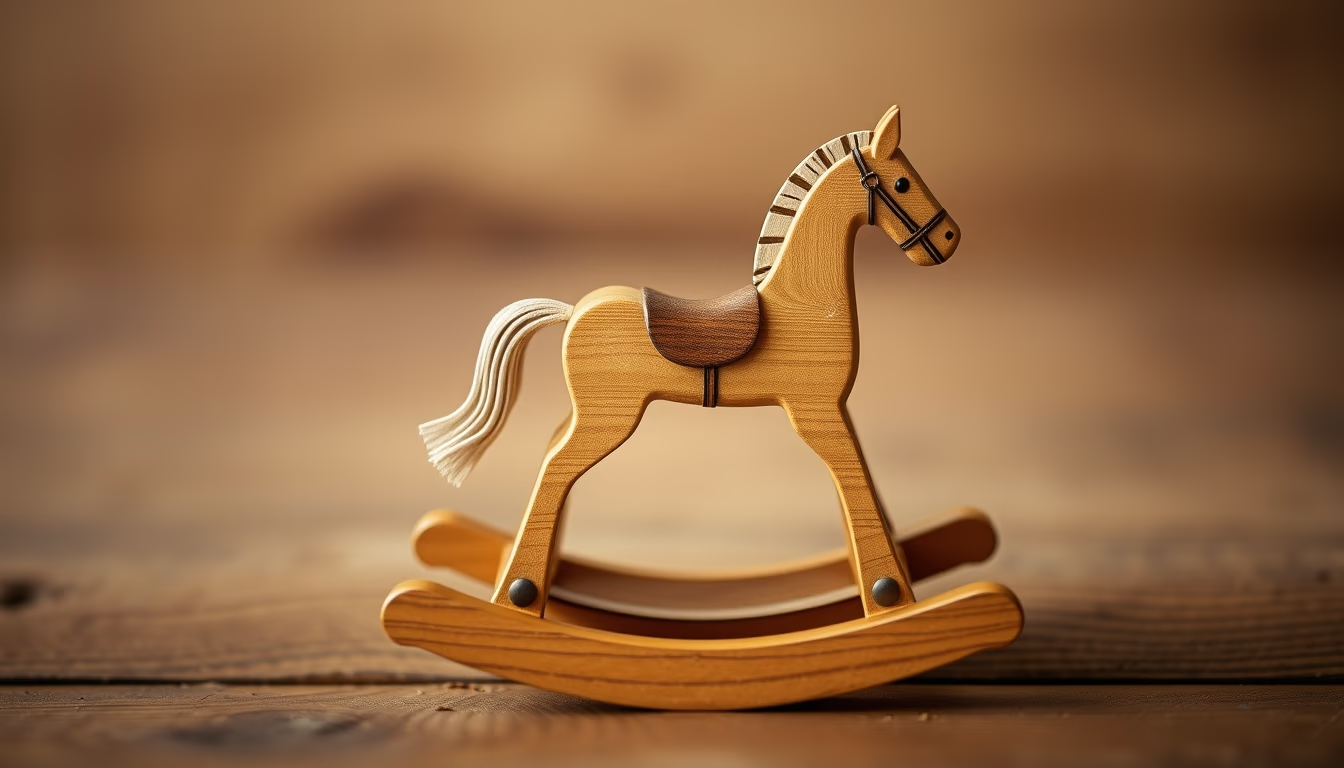
Wooden rocking horse, a classic toy that has marked generations.
About this subject
The wooden rocking horse is one of the most iconic childhood toys, with origins dating back to the 17th century. Initially a handmade item crafted by carpenters, it was often carved from solid wood like pine or oak and hand-painted with bright colors. In Brazil, these toys became popular among middle-class families during the 20th century, symbolizing nostalgia and tradition. The tilt-shift technique applied in photography creates a miniature effect that enhances details of the sculpture, such as carved manes and engraved saddles.
Beyond its playful value, the rocking horse holds historical importance. Before industrialization, it was a common Christmas or birthday gift, passed down among siblings and cousins. Its handcrafted production required skill in carving and painting, with regional variations: in northeastern Brazil, for example, some models incorporated elements of local craftsmanship, such as using reclaimed wood. The durability of the material allowed the toy to last for decades, becoming a family heirloom.
Interestingly, the rocking horse also appears in cultural references. In Brazilian children's literature, it is mentioned in works by Monteiro Lobato, like "Sítio do Picapau Amarelo." In other countries, especially England, the toy is associated with fairy tales and Victorian traditions. Despite the advent of electronic toys, it remains valued for its timeless design and benefits to child development, such as balance and motor coordination.
The wood used in making varies by region. While beech predominates in Europe, pine and cedar are common in Brazil. The finish, often with toxic varnish in the past, now follows safety standards. Collecting antique rocking horses is a growing hobby, with collectors seeking 19th-century examples that can fetch thousands of dollars at specialized auctions.
Frequently Asked Questions
What is the origin of the wooden rocking horse?
It originated in 17th-century Europe as a handmade toy by carpenters. It became popular among the nobility and later spread to other social classes.
What types of wood are used in manufacturing?
In Brazil, pine, cedar, or imbuia are used. In Europe, beech is common. Certified and treated woods are now preferred for safety.
Why are antique rocking horses valuable?
They are collectible due to rarity, craftsmanship, and history. Examples from the 19th century or by renowned carpenters can fetch thousands of dollars at auctions.
Direct URL
https://pub-c7d6a6ea828543ac903a74a341ccb2e1.r2.dev/imagens/rocking-horse-wooden-tilt-shift-miniature-fresh10.avifHow to credit
Include a visible link back to UtilizAí. Copy one of the snippets below:
<a href="https://xn--utiliza-eza.com/en/midia/imagens/rocking-horse-wooden-tilt-shift-miniature-fresh10">Rocking horse wooden</a> by <a href="https://xn--utiliza-eza.com">UtilizAí</a>, licensed under <a href="https://creativecommons.org/licenses/by/4.0/">CC BY 4.0</a>.
[Rocking horse wooden](https://xn--utiliza-eza.com/en/midia/imagens/rocking-horse-wooden-tilt-shift-miniature-fresh10) by [UtilizAí](https://xn--utiliza-eza.com), CC BY 4.0
License: CC-BY-4.0