Rocking chair mid century
1344×768 · AVIF · CC BY 4.0
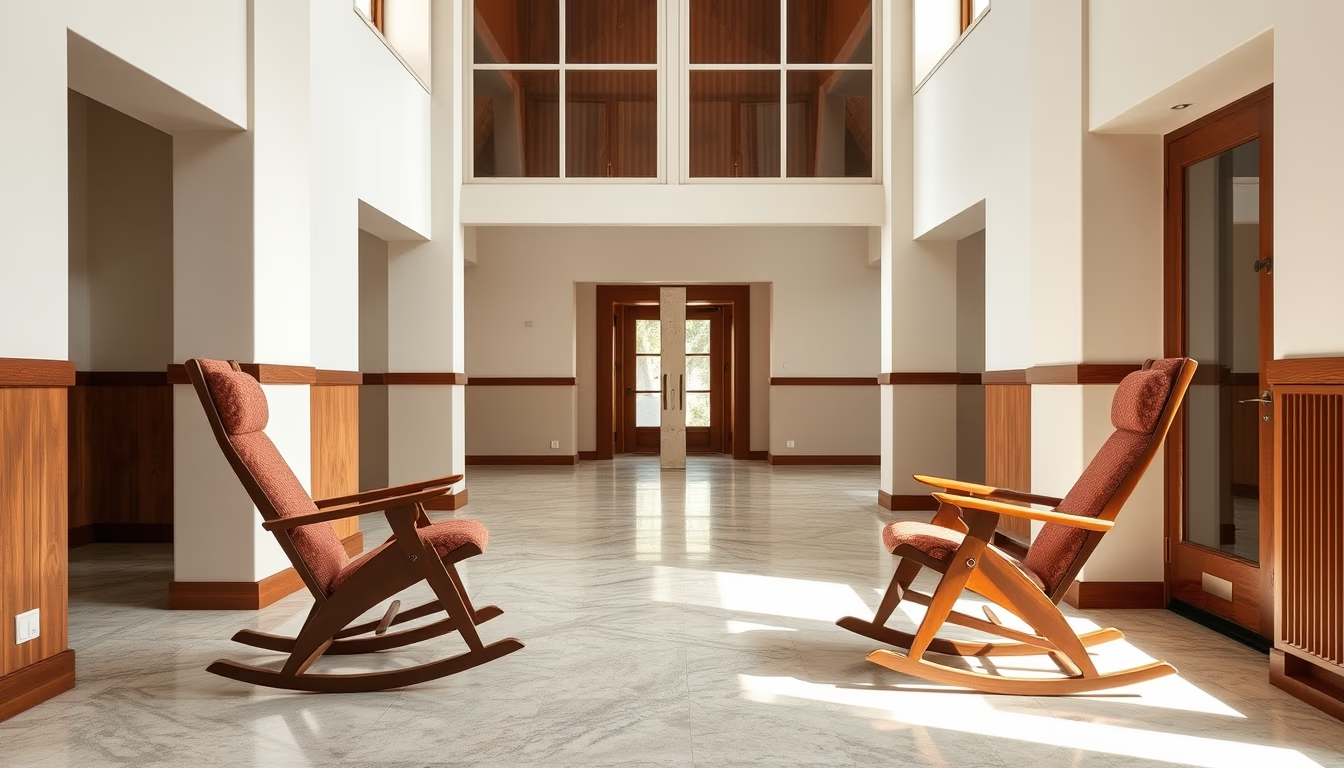
The mid-century rocking chair combines timeless design, organic lines, and functionality, becoming an icon of post-war modern furniture.
About this subject
The mid-century rocking chair represents the zenith of modernist design from 1945 to 1965. Inspired by the Bauhaus movement and Scandinavian design, it shed excessive ornamentation in favor of pure, functional, and ergonomic forms. Common materials included solid wood, molded plywood, and natural cane, highlighting texture and durability.
Designers such as Charles and Ray Eames popularized molded plywood shell chairs, but the rocking chair gained prominence mainly through creations by Hans Wegner, Arne Jacobsen, and George Nakashima. The gentle curve of the rockers enables a rhythmic motion that promotes relaxation, while the tall, angled backrest supports the spine. Architects often commissioned these pieces for modernist interiors, blending into open, integrated floor plans.
In Brazil, the mid-century rocking chair found resonance in the works of Sergio Rodrigues and Michel Arnoult, adapting the international aesthetic to tropical woods like jacaranda and freijó. Their popularity surged during the 1950s and 1960s housing boom, as families sought furniture combining comfort and style. Today, these chairs are coveted by collectors and can fetch high prices at design auctions.
Interestingly, the rocking chair has become a symbol of childhood and aging, associated with grandmothers and infants, evoking nostalgia. However, mid-century design brought a more mature and sophisticated approach, turning it into a coveted object for contemporary adults. Its versatility allows it to fit into minimalist living rooms, verandas, or guest bedrooms, remaining relevant for over 70 years.
Frequently Asked Questions
What are the typical woods used in mid-century rocking chairs?
Original mid-century rocking chairs used woods like walnut, teak, rosewood, and freijó. In Brazil, Bahia rosewood and freijó were very common. Molded plywood was also used, as in the famous Plycraft model.
How to tell an authentic mid-century rocking chair from a modern replica?
Authentic chairs show manufacturer marks, clever joinery (like dovetail joints), original screws, and natural patina. Replicas often use lighter woods, smooth surface finish, and slightly different dimensions.
What is the average price of an original mid-century rocking chair?
Prices vary widely: models by renowned designers like Hans Wegner can cost from $1,000 to $5,000 at auction. Brazilian pieces by Sergio Rodrigues range from $1,600 to $3,000. Unsigned versions cost between $300 and $800.
Direct URL
https://pub-c7d6a6ea828543ac903a74a341ccb2e1.r2.dev/imagens/rocking-chair-mid-century-architectural-photography-fresh10.avifHow to credit
Include a visible link back to UtilizAí. Copy one of the snippets below:
<a href="https://xn--utiliza-eza.com/en/midia/imagens/rocking-chair-mid-century-architectural-photography-fresh10">Rocking chair mid century</a> by <a href="https://xn--utiliza-eza.com">UtilizAí</a>, licensed under <a href="https://creativecommons.org/licenses/by/4.0/">CC BY 4.0</a>.
[Rocking chair mid century](https://xn--utiliza-eza.com/en/midia/imagens/rocking-chair-mid-century-architectural-photography-fresh10) by [UtilizAí](https://xn--utiliza-eza.com), CC BY 4.0
License: CC-BY-4.0