Rocket launch night fire
1344×768 · AVIF · CC BY 4.0
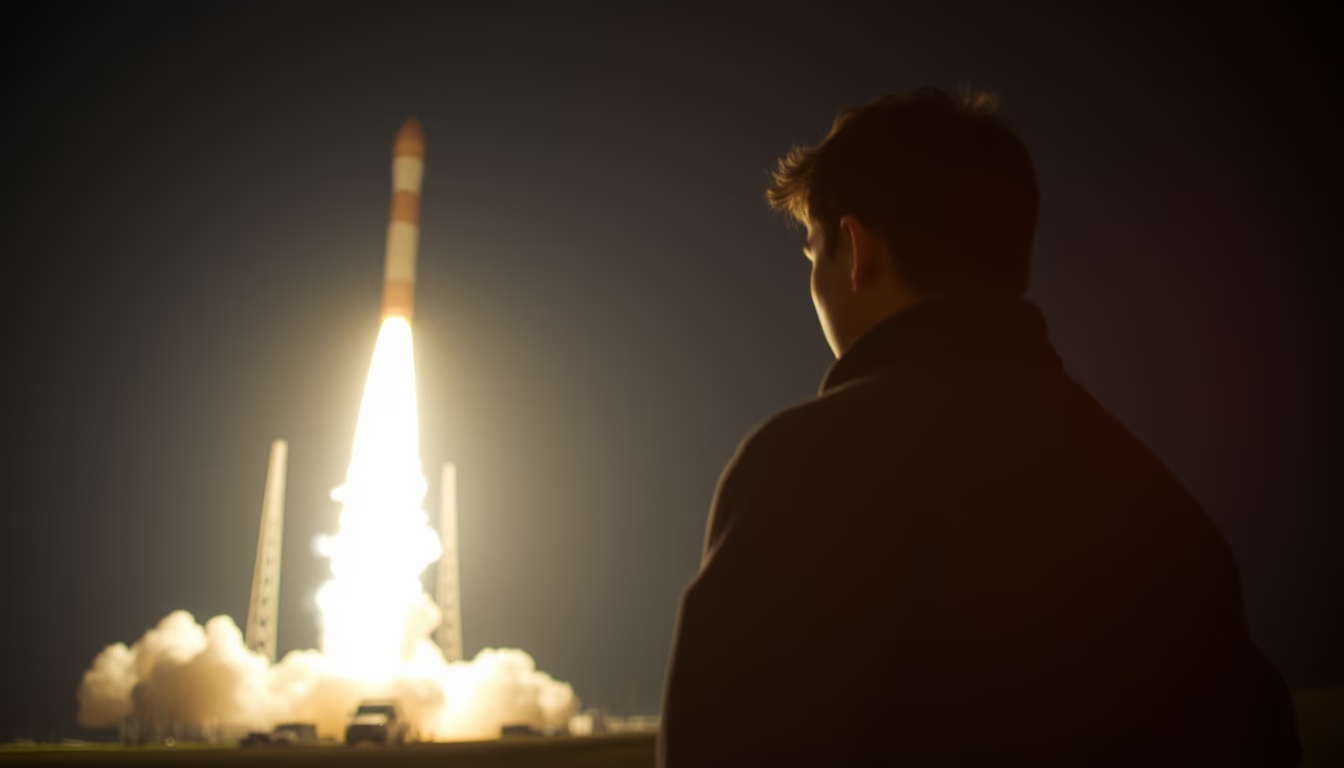
Night rocket launches blend science and visual spectacle. Discover the technical reasons and curiosities behind these events.
About this subject
Nighttime rocket launches are not just a pyrotechnic show but a strategic choice. Many space missions, such as those by SpaceX and NASA, are scheduled at night to optimize the launch window toward specific orbits, especially the International Space Station (ISS). Darkness also facilitates optical observation and sensor tracking during ascent, while reducing solar heating of cryogenic propellant tanks.
The trail of fire and smoke lighting up the night sky is one of the most photographed phenomena. Rockets like the Falcon 9 and Atlas V produce such intense flames that their glow can be seen hundreds of kilometers away. In regions like Florida's Space Coast, each launch draws thousands of spectators and live streamers, making it a cultural and tourist event.
Fun fact: The flame color varies with fuel type. Liquid hydrogen burns with a nearly invisible flame, while kerosene (RP-1) produces the typical orange hue. Lunar missions under the Artemis program, for example, use hydrogen and emit a bluer light. Military or sounding rockets may use solid propellants, leaving a thick white trail.
Historically, the first successful night launch was the German V-2 in 1942. Today, scheduling nighttime windows is so routine that space agencies announce probable dates in advance. For observers, the spectacle is guaranteed: a point of light that grows, splits into stages, and vanishes into space.
Frequently Asked Questions
Why are rockets launched at night?
Night launches help align the orbit with destinations like the ISS, facilitate optical tracking, and reduce solar heating of fuel tanks.
What is the difference in flame between liquid and solid fuels?
Liquid fuels like hydrogen produce a nearly invisible blue flame, while kerosene (RP-1) gives an orange flame. Solid fuels leave a thick white trail.
Where can I watch night launches live?
Channels of space agencies (NASA, SpaceX, ESA) and sites like Space.com stream events live. Locations like Cape Canaveral and Baikonur have public viewing points.
Direct URL
https://pub-c7d6a6ea828543ac903a74a341ccb2e1.r2.dev/imagens/rocket-launch-night-fire-documentary-photography-p6.avifHow to credit
Include a visible link back to UtilizAí. Copy one of the snippets below:
<a href="https://xn--utiliza-eza.com/en/midia/imagens/rocket-launch-night-fire-documentary-photography-p6">Rocket launch night fire</a> by <a href="https://xn--utiliza-eza.com">UtilizAí</a>, licensed under <a href="https://creativecommons.org/licenses/by/4.0/">CC BY 4.0</a>.
[Rocket launch night fire](https://xn--utiliza-eza.com/en/midia/imagens/rocket-launch-night-fire-documentary-photography-p6) by [UtilizAí](https://xn--utiliza-eza.com), CC BY 4.0
License: CC-BY-4.0