Robot vacuum on floor
1344×768 · AVIF · CC BY 4.0
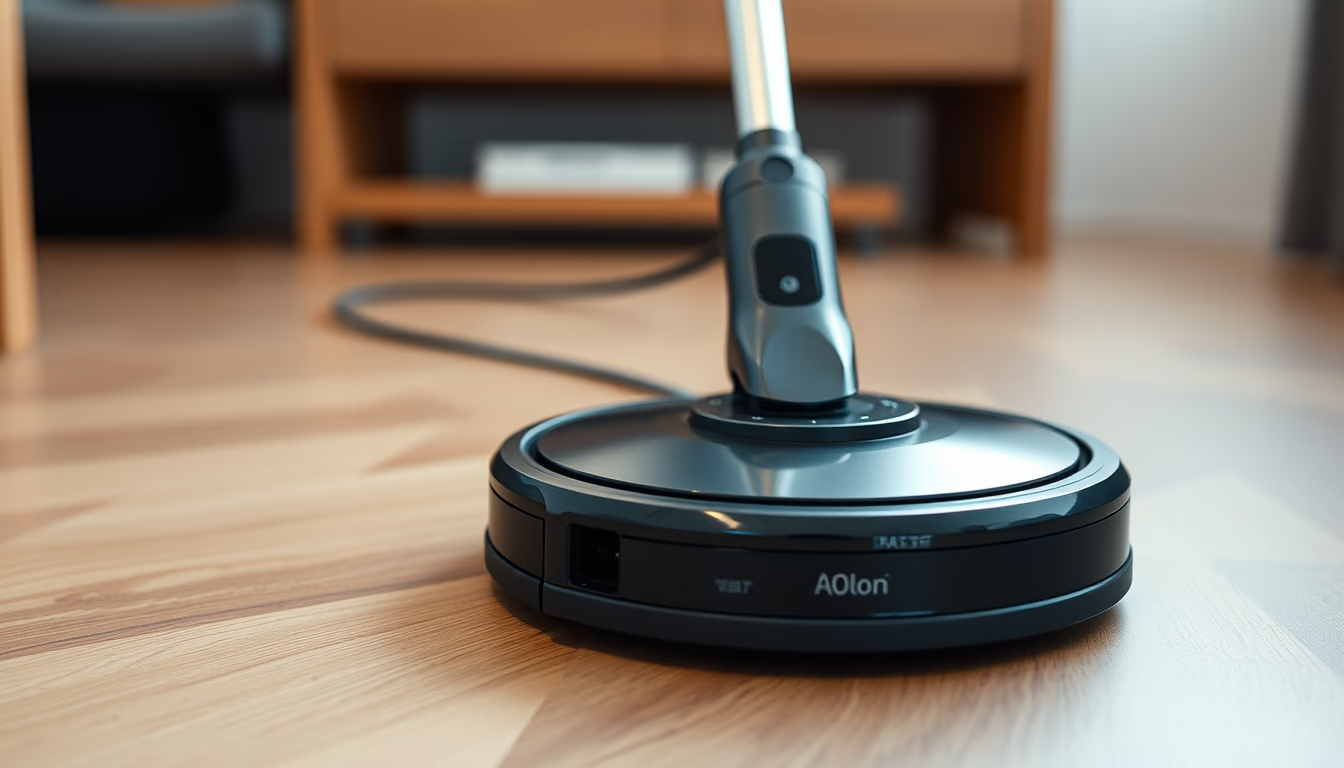
Macro close-up of a robot vacuum on the floor reveals sensors and compact design, a centerpiece of modern home automation.
About this subject
Robot vacuums have evolved from a novelty to an essential smart home device, especially since 2020. Equipped with LiDAR sensors, cameras, and gyroscopes, these devices map the environment in real time, avoiding obstacles and optimizing cleaning routes. Recent models, launched in 2025 and 2026, integrate artificial intelligence to recognize specific dirt (sand, pet hair, crumbs) and adjust suction power automatically.
In Brazil, adoption grew 40% between 2023 and 2025, driven by the search for convenience in homes with pets and small children. Brands like Xiaomi, Roborock, and iRobot dominate the market, with prices ranging from R$ 1,500 to R$ 8,000. Wi-Fi connectivity enables voice control via Alexa or Google Assistant, as well as scheduling via smartphone.
A curious aspect is the evolution of self-emptying bases: 2026 models can empty the dustbin for up to 60 days without human intervention. Battery life, which was around 90 minutes in 2020, now exceeds 180 minutes in high-end devices. Macro photography of the robot vacuum highlights details such as the sensorized bumper, side brushes, and suction inlet, crucial for the equipment's efficiency.
Frequently Asked Questions
How does a robot vacuum navigate without bumping into furniture?
It uses LiDAR sensors or cameras to map the environment in real time. LiDAR emits laser pulses that measure distances, creating a 2D or 3D map. Camera-based models use computer vision to identify obstacles. Both avoid collisions and enable systematic navigation.
What is the difference between an entry-level and a high-end robot vacuum in 2026?
Entry-level models ($300-$500) have random navigation, lower suction power, and ~90 min battery. High-end models ($800-$1,500) feature intelligent mapping, self-emptying, dirt recognition, 180+ min battery, and integration with voice assistants.
Is it worth buying a robot vacuum for pet owners?
Yes, especially models with side brushes and adjustable suction for pet hair. Many have a specific sensor to detect higher dirt concentration. Maintenance (cleaning the roller and filter) should be more frequent, but the convenience outweighs it.
Direct URL
https://pub-c7d6a6ea828543ac903a74a341ccb2e1.r2.dev/imagens/robot-vacuum-on-floor-macro-closeup-p4.avifHow to credit
Include a visible link back to UtilizAí. Copy one of the snippets below:
<a href="https://xn--utiliza-eza.com/en/midia/imagens/robot-vacuum-on-floor-macro-closeup-p4">Robot vacuum on floor</a> by <a href="https://xn--utiliza-eza.com">UtilizAí</a>, licensed under <a href="https://creativecommons.org/licenses/by/4.0/">CC BY 4.0</a>.
[Robot vacuum on floor](https://xn--utiliza-eza.com/en/midia/imagens/robot-vacuum-on-floor-macro-closeup-p4) by [UtilizAí](https://xn--utiliza-eza.com), CC BY 4.0
License: CC-BY-4.0