Robot vacuum on floor
1344×768 · AVIF · CC BY 4.0
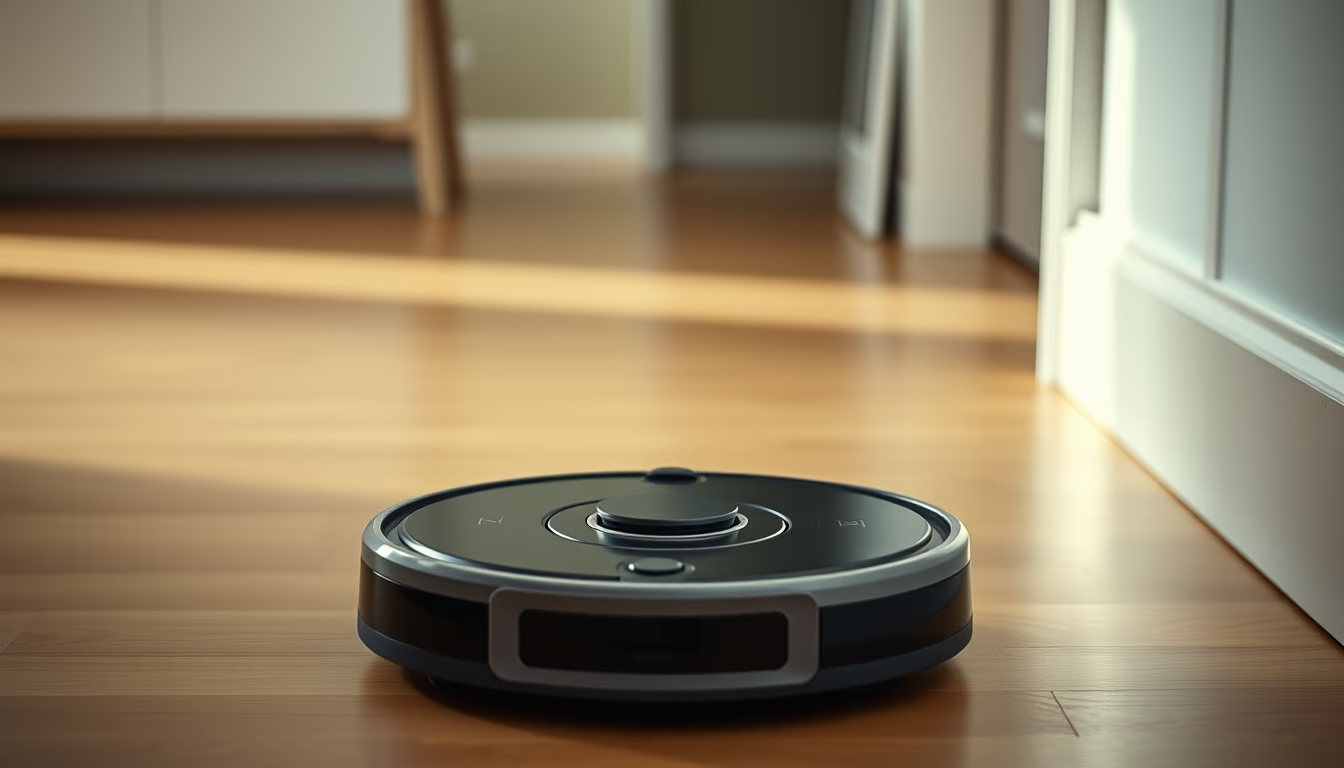
Robot vacuums revolutionized home cleaning with smart sensors and mapping, gaining popularity globally and in Brazil.
About this subject
Robot vacuums first emerged in the early 2000s with the launch of the Roomba by iRobot, marking the beginning of home automation. Since then, they have evolved significantly: current models use LiDAR navigation, cameras, and artificial intelligence algorithms to map rooms, avoid obstacles, and optimize cleaning routes. Many integrate with virtual assistants like Alexa and Google Assistant, enabling voice control and remote scheduling.
In Brazil, adoption is growing rapidly, driven by brands such as Electrolux, Positivo, Wap, and Xiaomi. A typical robot vacuum is equipped with drop sensors, bumper bars, and ramps to handle small thresholds. Premium models feature self-emptying stations that transfer dirt into a disposable bag, reducing maintenance to weeks. The trend for 2026 points to greater autonomy, with long-lasting batteries and the ability to clean multiple rooms without intervention.
Culturally, robot vacuums have become not only practical tools but also entertainment objects. Videos of cats riding on them or dogs interacting with the device go viral on social media. The global market is expected to grow at a compound annual rate of about 15% until 2030, driven by aging populations and the pursuit of convenience. In pet-friendly households, they are especially useful for handling fur and dander, though caution is needed with cords and small objects.
Frequently Asked Questions
How do robot vacuums work?
They use sensors such as infrared, LiDAR, and cameras to map the environment, detect obstacles, and plan automatic cleaning routes. Scheduling is done via app or voice command.
Do robot vacuums replace traditional vacuums?
It depends on the need. Robot vacuums are ideal for daily maintenance cleaning, but traditional vacuums are still better for deep cleaning, thick carpets, and tight corners.
What are the best robot vacuums in 2025?
Models with smart mapping and self-emptying are most recommended. Examples include Roomba j7, Roborock S8, Xiaomi S20, and Electrolux ERGORAPIDO.
Direct URL
https://pub-c7d6a6ea828543ac903a74a341ccb2e1.r2.dev/imagens/robot-vacuum-on-floor-fine-art-photography-p6.avifHow to credit
Include a visible link back to UtilizAí. Copy one of the snippets below:
<a href="https://xn--utiliza-eza.com/en/midia/imagens/robot-vacuum-on-floor-fine-art-photography-p6">Robot vacuum on floor</a> by <a href="https://xn--utiliza-eza.com">UtilizAí</a>, licensed under <a href="https://creativecommons.org/licenses/by/4.0/">CC BY 4.0</a>.
[Robot vacuum on floor](https://xn--utiliza-eza.com/en/midia/imagens/robot-vacuum-on-floor-fine-art-photography-p6) by [UtilizAí](https://xn--utiliza-eza.com), CC BY 4.0
License: CC-BY-4.0