Robot vacuum on floor
1344×768 · AVIF · CC BY 4.0
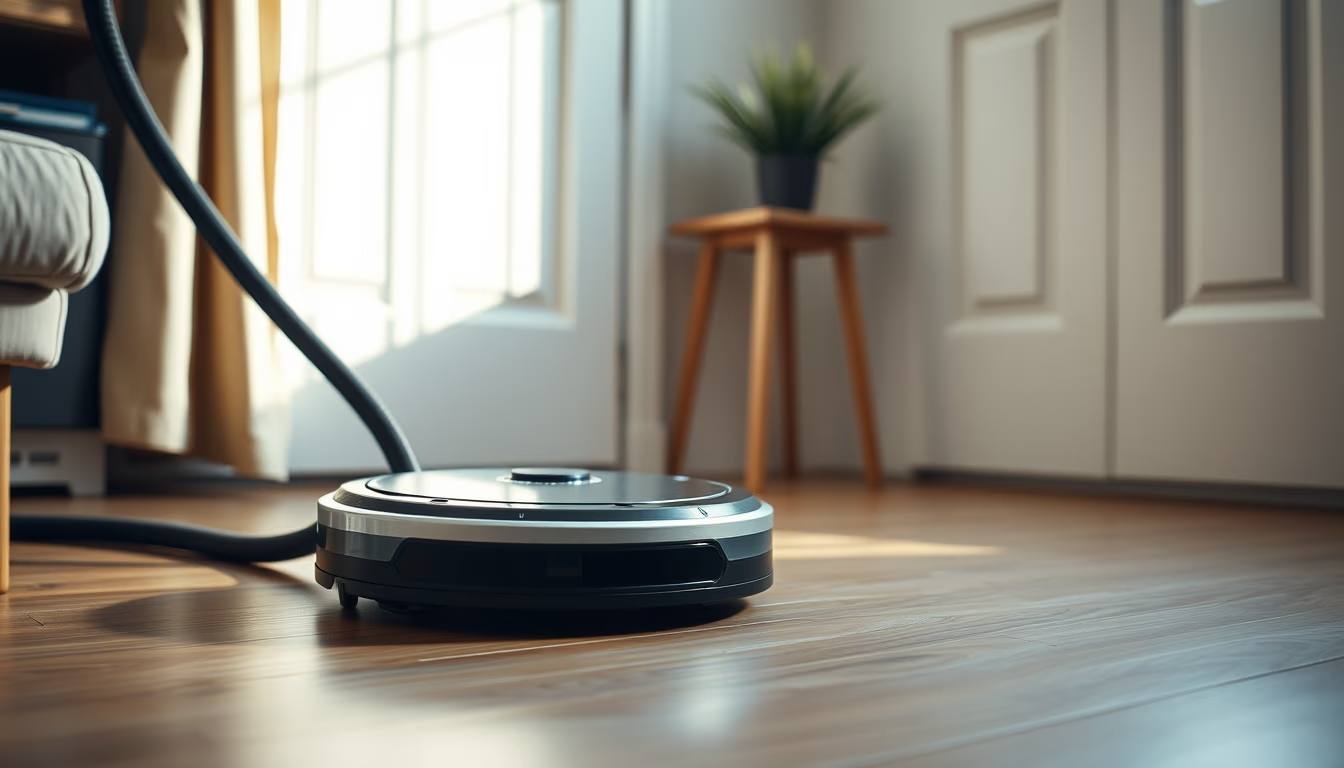
Robot vacuum operating on a hardwood floor, exemplifying modern home automation and technological convenience.
About this subject
Robot vacuums have become one of the most popular devices in the smart home category. Since the launch of the first commercial model, the Roomba in 2002, the technology has evolved dramatically. Today, these devices use laser sensors, cameras, and simultaneous localization and mapping (SLAM) algorithms to navigate efficiently, avoiding obstacles and covering the entire floor area.
Adoption of these devices has grown exponentially in Brazil, driven by falling prices and integration with voice assistants like Alexa and Google Assistant. The global robot vacuum market is expected to exceed $20 billion by 2026, with features such as auto-emptying, persistent mapping, and scheduled cleaning.
Besides convenience, robot vacuums represent an advance in energy efficiency: modern models consume less power than traditional vacuums and operate quietly. However, challenges remain, such as the need to prepare the environment by removing cords and small objects, and limitations on high-pile carpets or tight corners.
The 2026 trend points to the incorporation of predictive artificial intelligence, where the robot learns cleaning patterns and suggests optimal scheduling times. Brands like Xiaomi, iRobot, and Samsung lead the market, but Brazilian startups have also launched models adapted to local homes, with better performance on uneven floors and longer battery life.
Frequently Asked Questions
How does a robot vacuum map rooms?
It uses laser sensors, cameras, or a combination to create a real-time map. With SLAM algorithms, it identifies obstacles and plans cleaning routes.
What is the average battery life of a robot vacuum?
Most models offer between 90 and 180 minutes of continuous operation. When depleted, they automatically return to their dock to recharge.
Is a robot vacuum worth it for homes with carpets?
Yes, but check suction power. Models with side brushes and low-pile carpet design perform better; high-pile carpets may require more powerful or specialized units.
Direct URL
https://pub-c7d6a6ea828543ac903a74a341ccb2e1.r2.dev/imagens/robot-vacuum-on-floor-documentary-photography-p0.avifHow to credit
Include a visible link back to UtilizAí. Copy one of the snippets below:
<a href="https://xn--utiliza-eza.com/en/midia/imagens/robot-vacuum-on-floor-documentary-photography-p0">Robot vacuum on floor</a> by <a href="https://xn--utiliza-eza.com">UtilizAí</a>, licensed under <a href="https://creativecommons.org/licenses/by/4.0/">CC BY 4.0</a>.
[Robot vacuum on floor](https://xn--utiliza-eza.com/en/midia/imagens/robot-vacuum-on-floor-documentary-photography-p0) by [UtilizAí](https://xn--utiliza-eza.com), CC BY 4.0
License: CC-BY-4.0